Ertach Kernow - Three ports on the north Cornish coast

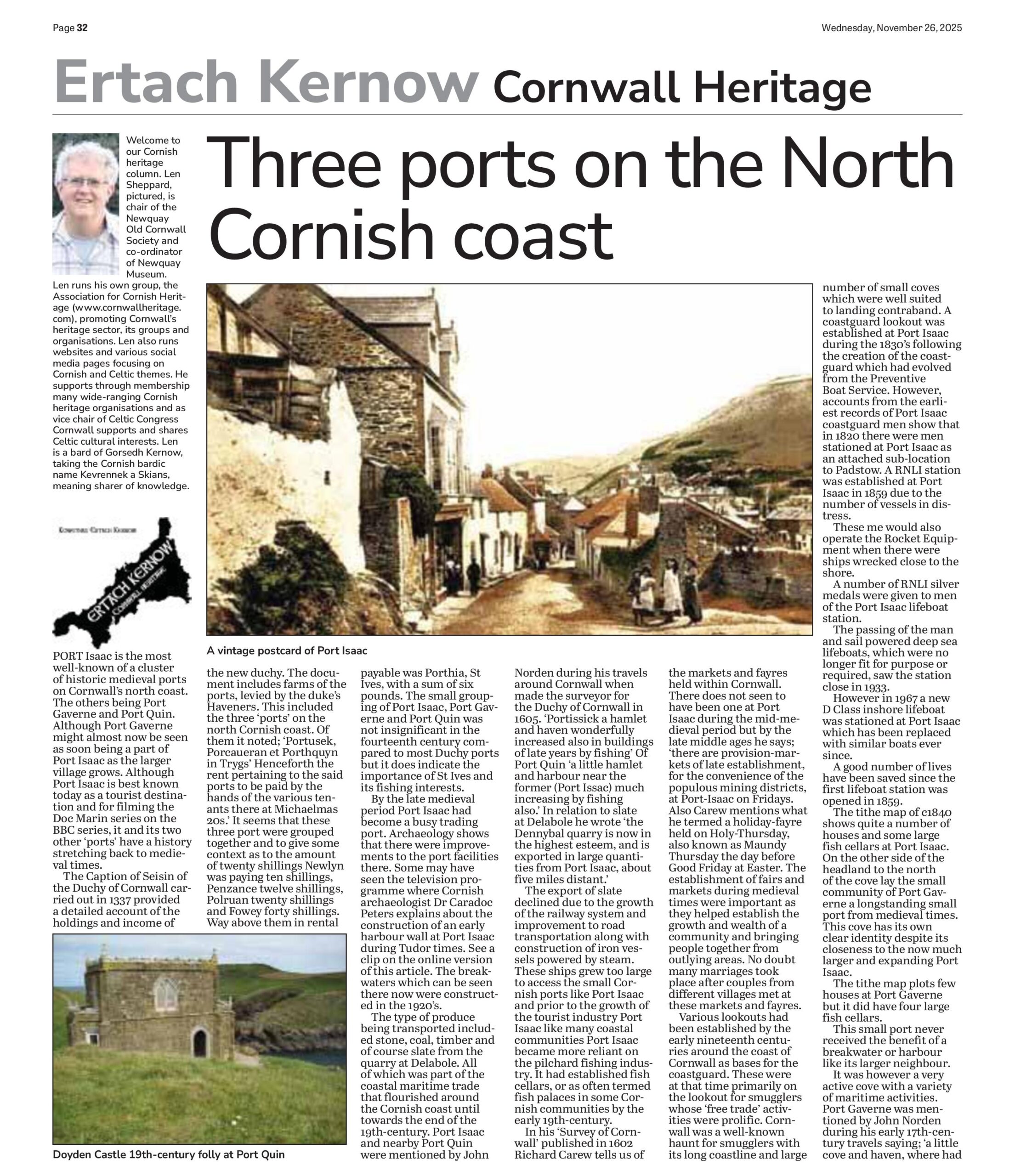
Port Isaac is the most well-known of a cluster of historic medieval ports on Cornwall’s north coast. The others being Port Gaverne and Port Quin. Although Port Gaverne might almost now be seen as soon being a part of Port Isaac as the larger village grows. Although Port Isaac is best known today as a tourist destination and for filming the Doc Marin series on the BBC series, it and its two other ‘ports’ have a history stretching back to medieval times.
The Caption of Seisin of the Duchy of Cornwall carried out in 1337 provided a detailed account of the holdings and income of the new duchy. The document includes farms of the ports, levied by the duke's Haveners. This included the three ‘ports’ on the north Cornish coast. Of them it noted; ‘Portusek, Porcaueran et Porthquyn in Trygs’ Henceforth the rent pertaining to the said ports to be paid by the hands of the various tenants there at Michaelmas 20s.’ It seems that these three port were grouped together and to give some context as to the amount of twenty shillings Newlyn was paying ten shillings, Penzance twelve shillings, Polruan twenty shillings and Fowey forty shillings. Way above them in rental payable was Porthia, St Ives, with a sum of six pounds. The small grouping of Port Isaac, Port Gaverne and Port Quin was not insignificant in the fourteenth century compared to most Duchy ports but it does indicate the importance of St Ives and its fishing interests.
Thank you for reading the online version of the Ertach Kernow weekly articles. These take some 12 hours each week to research, write and then upload to the website, and is unpaid. It would be most appreciated if you would take just a couple of minutes to complete the online survey marking five years of writing these weekly articles. Many thanks.
Click the link for survey: Ertach Kernow fifth anniversary survey link
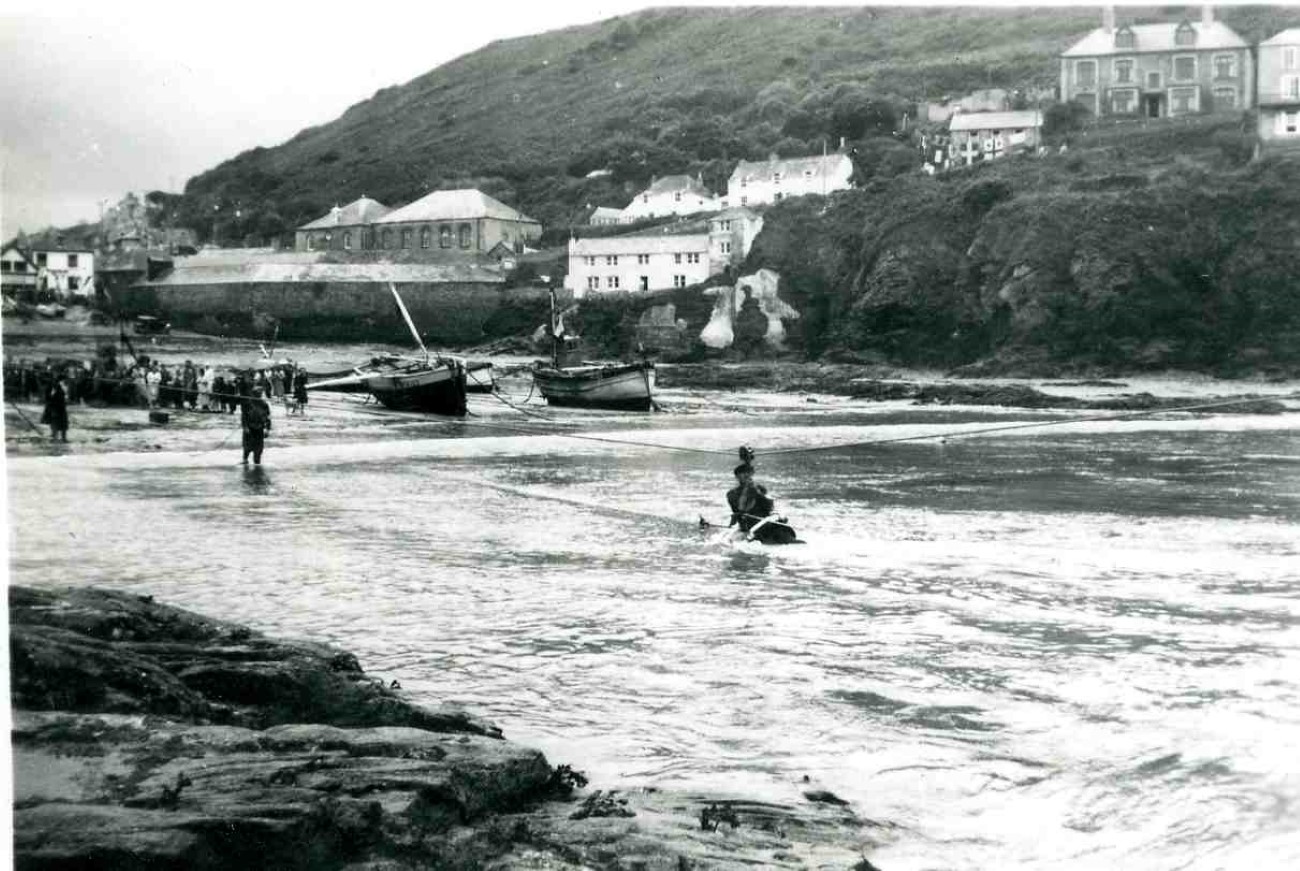
As always click the images for larger view
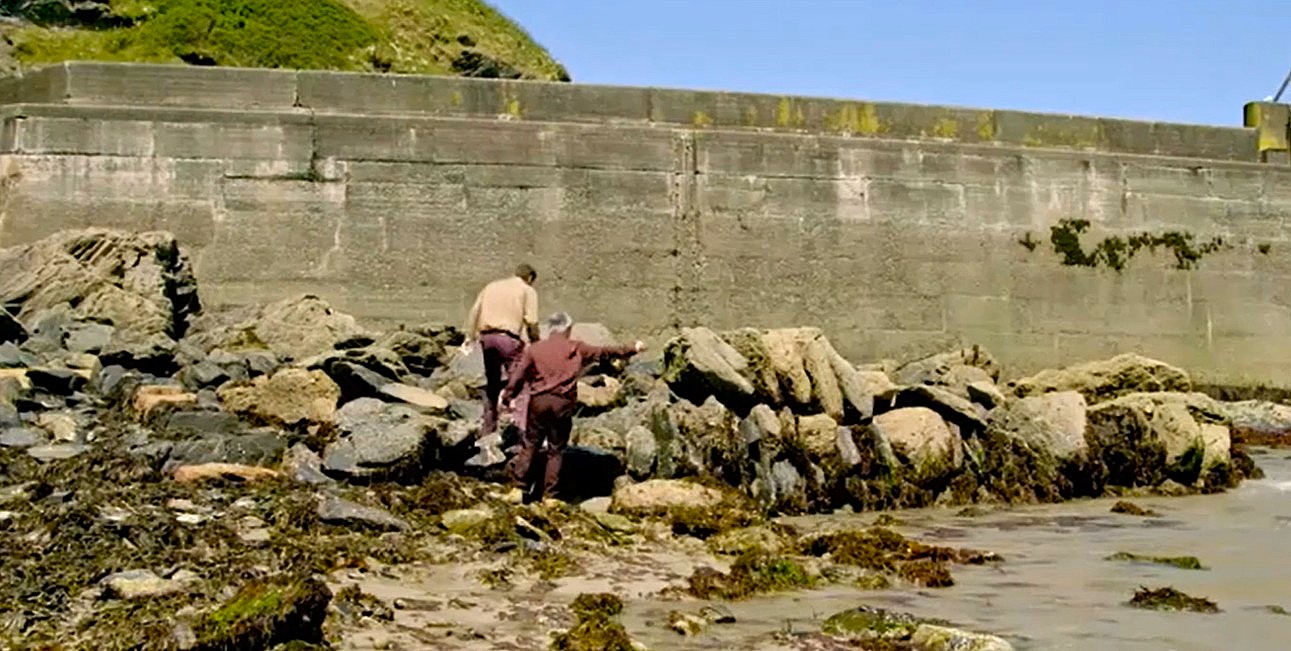
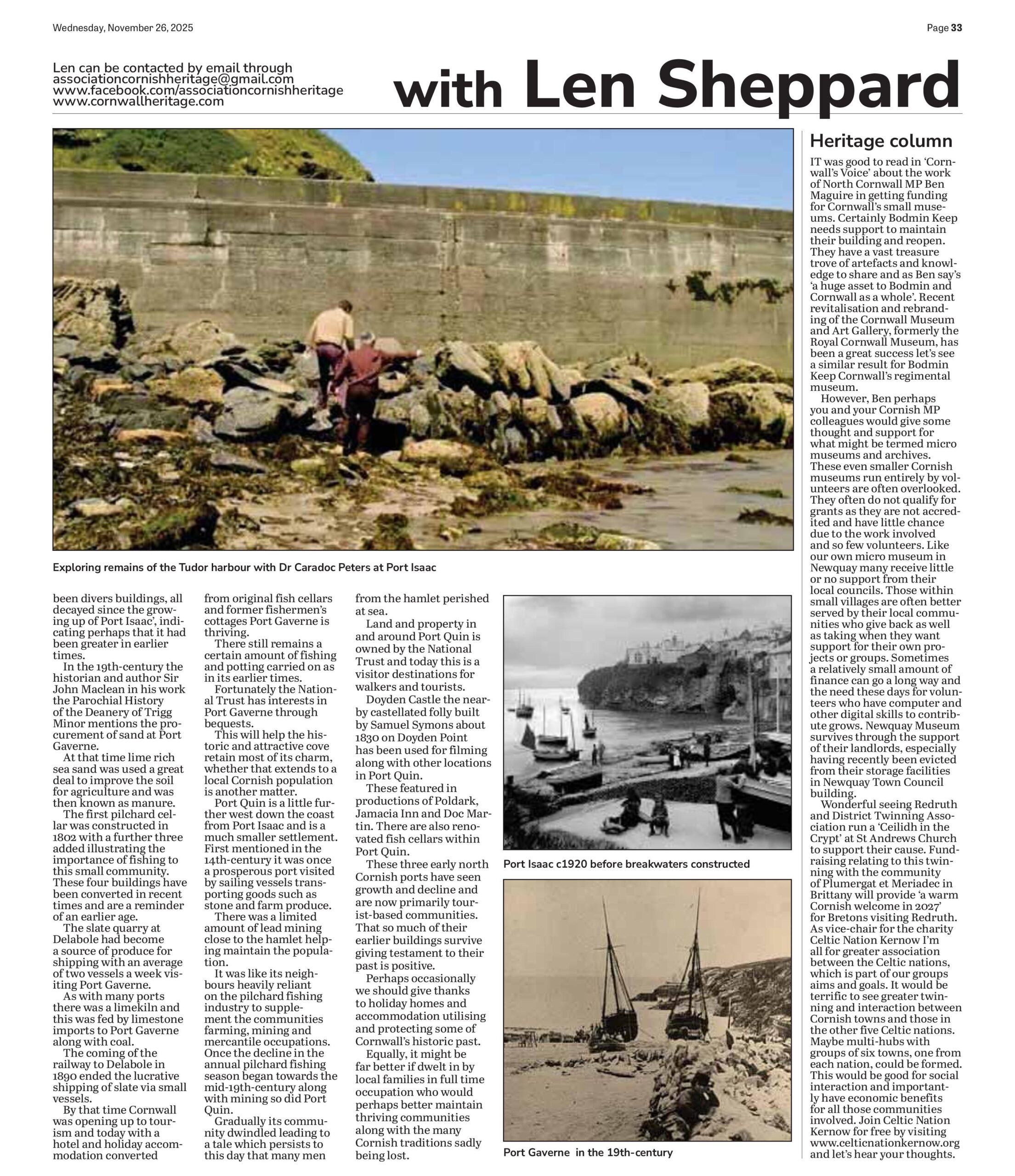
By the late medieval period Port Isaac had become a busy trading port. Archaeology shows that there were improvements to the port facilities there. Some may have seen the television programme where Cornish archaeologist Dr Caradoc Peters explains about the construction of an early harbour wall at Port Isaac during Tudor times. See a clip on the online version of this article. The breakwaters which can be seen there now were constructed in the 1920’s
The type of produce being transported included stone, coal, timber and of course slate from the quarry at Delabole. All of which was part of the coastal maritime trade that flourished around the Cornish coast until towards the end of the 19th century. Port Isaac and nearby Port Quin were mentioned by John Norden during his travels around Cornwall when made the surveyor for the Duchy of Cornwall in 1605. ‘Portissick a hamlet and haven wonderfully increased also in buildings of late years by fishing’ Of Port Quin ‘a little hamlet and harbour near the former (Port Issac) much increasing by fishing also.’ In relation to slate at Delabole he wrote ‘the Dennybal quarry is now in the highest esteem, and is exported in large quantities from Port Isaac, about five miles distant.’
The export of slate declined due to the growth of the railway system and improvement to road transportation along with construction of iron vessels powered by steam. These ships grew too large to access the small Cornish ports like Port Isaac and prior to the growth of the tourist industry Port Isaac like many coastal communities Port Isaac became more reliant on the pilchard fishing industry. It had established fish cellars, or as often termed fish palaces in some Cornish communities by the early 19th century.
In his ‘Survey of Cornwall’ published in 1602 Richard Carew tells us of the markets and fayres held within Cornwall. There does not seen to have been one at Port Isaac during the mid-medieval period but by the late middle ages he says; ‘there are provision-markets of late establishment, for the convenience of the populous mining districts, at Port-Isaac on Fridays. Also Carew mentions what he termed a holiday-fayre held on Holy-Thursday, also known as Maundy Thursday the day before Good Friday at Easter. The establishment of fairs and markets during medieval times were important as they helped establish the growth and wealth of a community and bringing people together from outlying areas. No doubt many marriages took place after couples from different villages met at these markets and fayres.
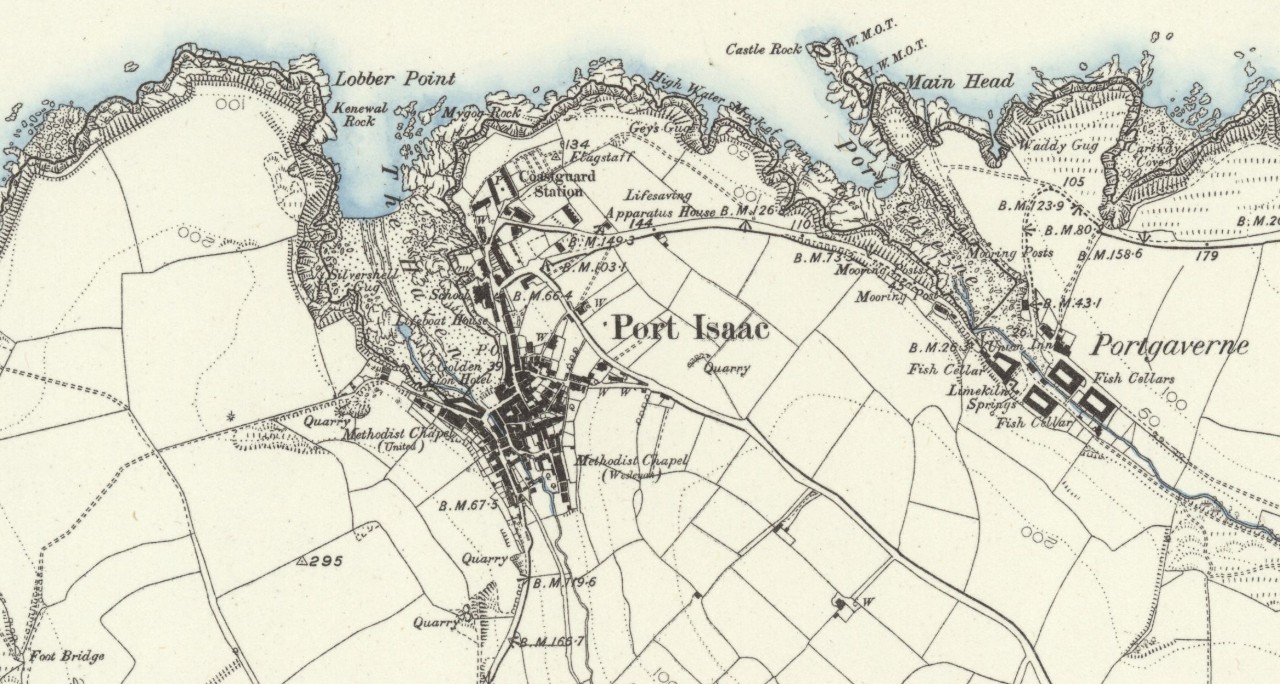
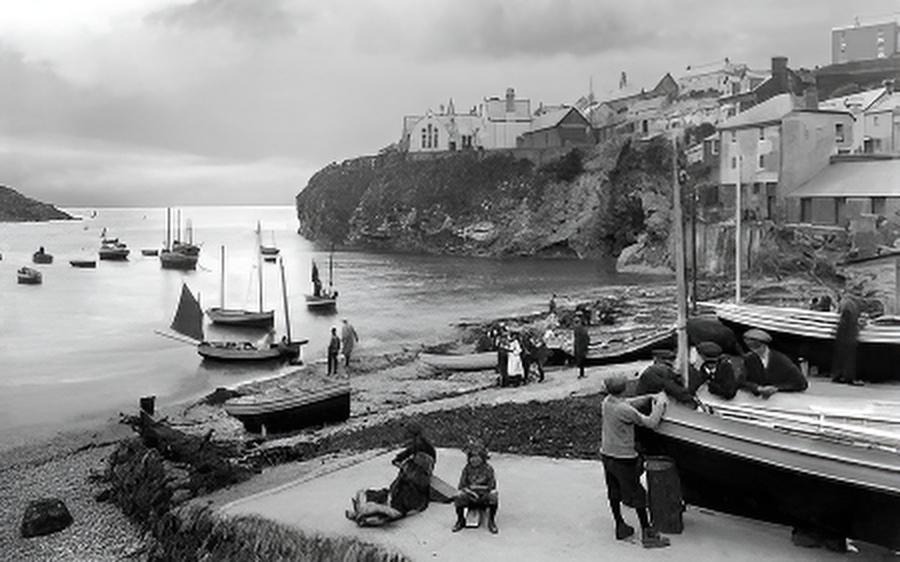
Various lookouts had been established by the early nineteenth centuries around the coast of Cornwall as bases for the coastguard. These were at that time primarily on the lookout for smugglers whose ‘free trade’ activities were prolific. Cornwall was a well-known haunt for smugglers with its long coastline and large number of small coves which were well suited to landing contraband. A coastguard lookout was established at Port Isaac during the 1830’s following the creation of the coastguard which had evolved from the Preventive Boat Service. However, accounts from the earliest records of Port Isaac coastguard men show that in 1820 there were men stationed at Port Isaac as an attached sub-location to Padstow. A RNLI station was established at Port Isaac in 1859 due to the number of vessels in distress. These me would also operate the Rocket Equipment when there were ships wrecked close to the shore. A number of RNLI silver medals were given to men of the Port Isaac lifeboat station. The passing of the man and sail powered deep sea lifeboats, which were no longer fit for purpose or required, saw the station close in 1933. However in 1967 a new D Class inshore lifeboat was stationed at Port Isaac which has been replaced with similar boats ever since. A good number of lives have been saved since the first lifeboat station was opened in 1859.
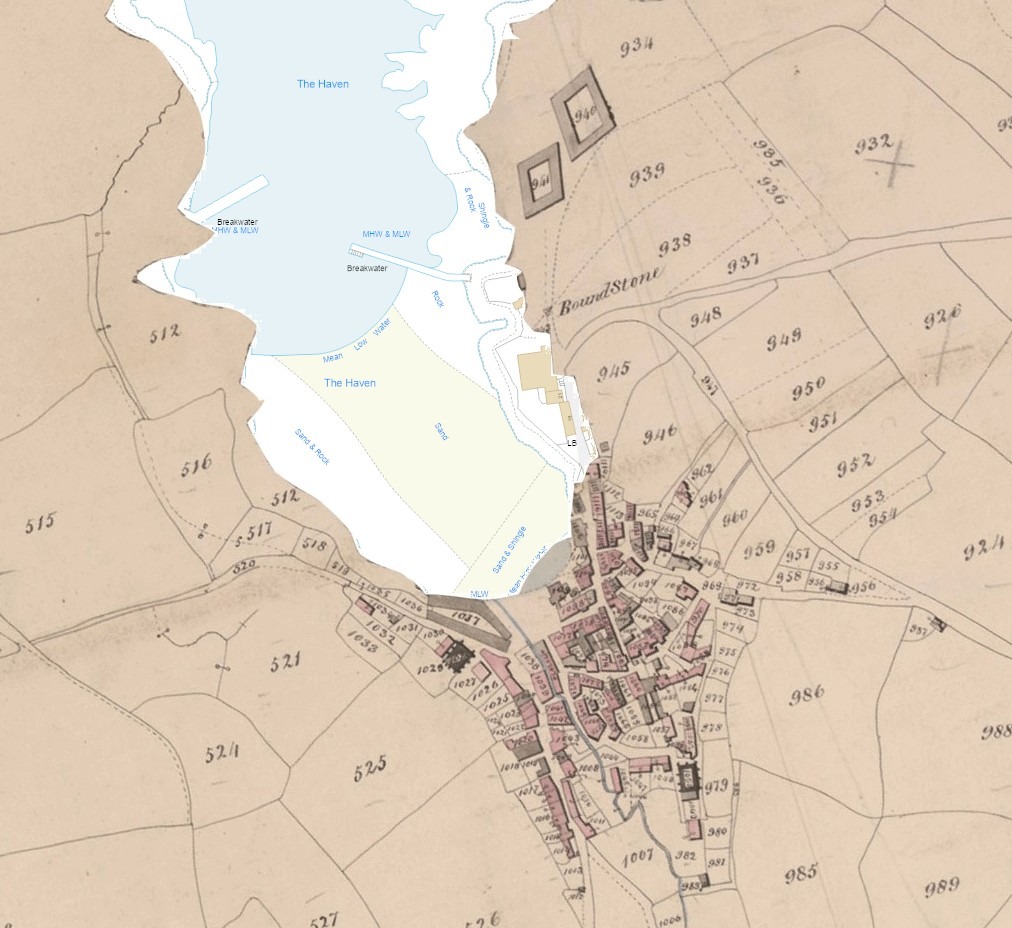
The tithe map of c1840 shows quite a number of houses and some large fish cellars at Port Isaac. On the other side of the headland to the north of the cove lay the small community of Port Gaverne a longstanding small port from medieval times. This cove has its own clear identity despite its closeness to the now much larger and expanding Port Isaac. The tithe map plots few houses at Port Gaverne but it did have four large fish cellars. This small port never received the benefit of a breakwater or harbour like its larger neighbour. It was however a very active cove with a variety of maritime activities. Port Gaverne was mentioned by John Norden during his early 17th century travels saying; ‘a little cove and haven, where had been divers buildings, all decayed since the growing up of Port Isaac’, indicating perhaps that it had been greater in earlier times. In the 19th century the historian and author Sir John Maclean in his work the Parochial History of the Deanery of Trigg Minor mentions the procurement of sand at Port Gaverne. At that time lime rich sea sand was used a great deal to improve the soil for agriculture and was then known as manure.
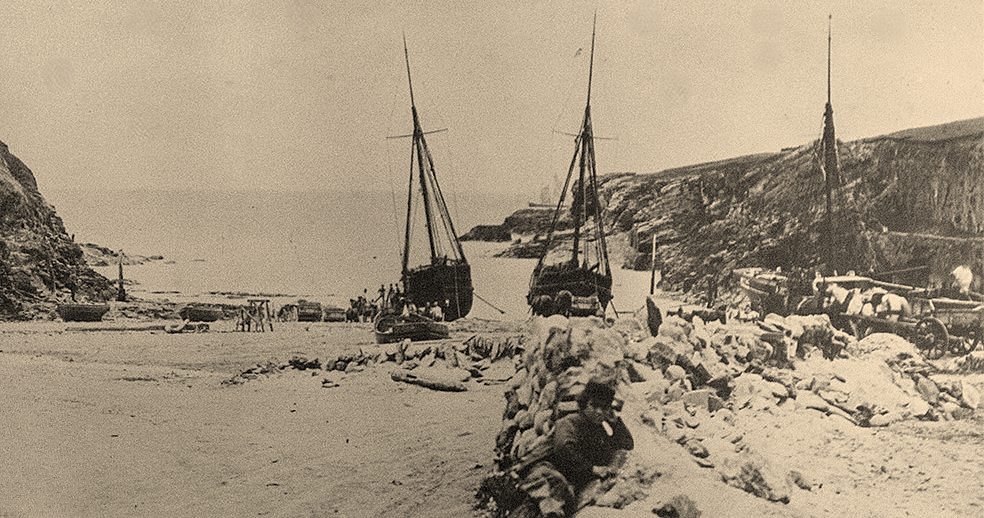
The first pilchard cellar was constructed in 1802 with a further three added illustrating the importance of fishing to this small community. These four buildings have been converted in recent times and are a reminder of an earlier age. The slate quarry at Delabole had become a source of produce for shipping with an average of two vessels a week visiting Port Gaverne. As with many ports there was a limekiln and this was fed by limestone imports to Port Gaverne along with coal. The coming of the railway to Delabole in 1890 ended the lucrative shipping of slate via small vessels. By that time Cornwall was opening up to tourism and today with a hotel and holiday accommodation converted from original fish cellars and former fishermen’s cottages Port Gaverne is thriving. There still remains a certain amount of fishing and potting carried on as in its earlier times. Fortunately the National Trust has interests in Port Gaverne through bequests. This will help the historic and attractive cove retain most of its charm, whether that extends to a local Cornish
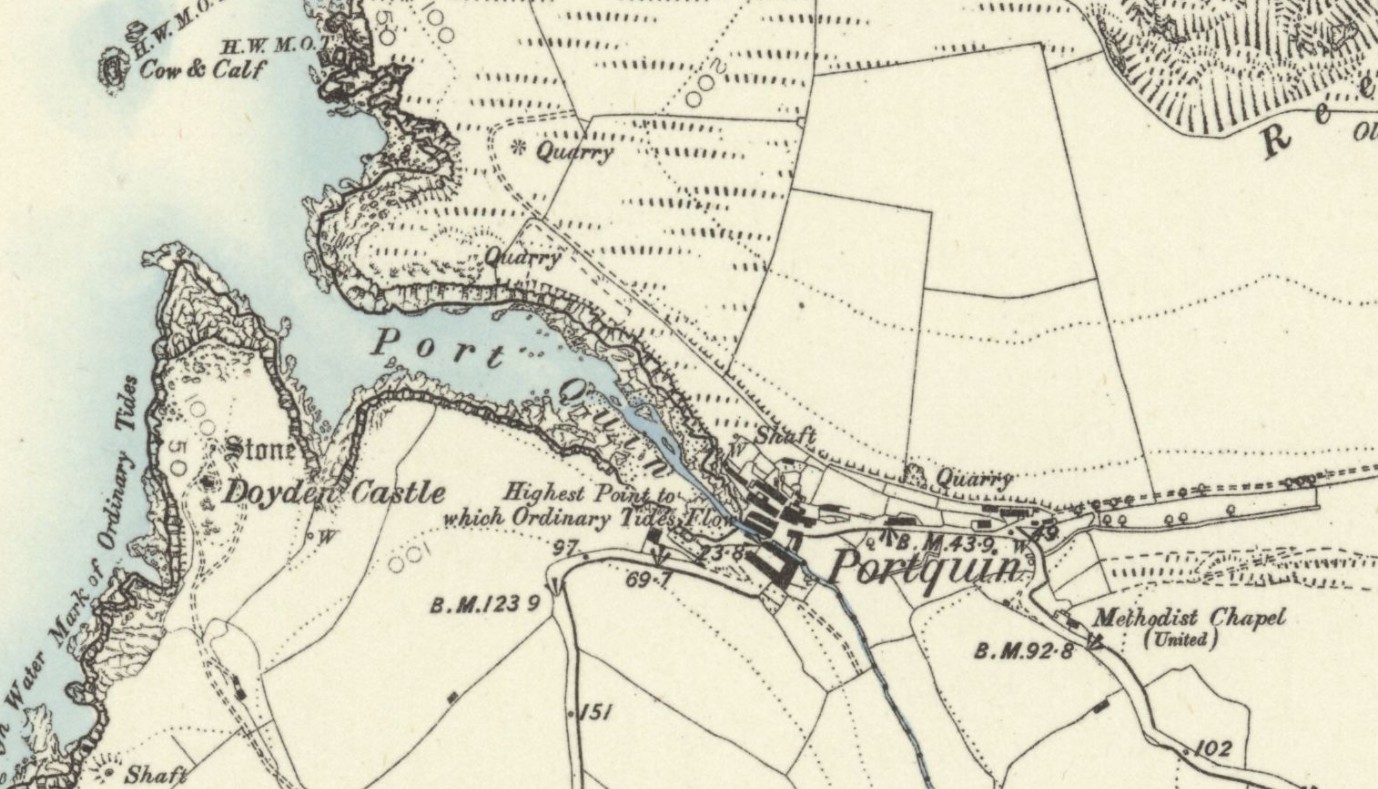
Port Quin is a little further west down the coast from Port Isaac and is a much smaller settlement. First mentioned in the 14th century it was once a prosperous port visited by sailing vessels transporting goods such as stone and farm produce. There was a limited amount of lead mining close to the hamlet helping maintain the population. It was like its neighbours heavily reliant on the pilchard fishing industry to supplement the communities farming, mining and mercantile occupations. Once the decline in the annual pilchard fishing season began towards the mid-19th century along with mining so did Port Quin. Gradually its community dwindled leading to a tale which persists to this day that many men from the hamlet perished at sea. Land and property in and around Port Quin is owned by the National Trust and today this is a visitor destinations for walkers and tourists.
Doyden Castle the nearby castellated folly built by Samuel Symons about 1830 on Doyden Point has been used for filming along with other locations in Port Quin. These featured in productions of Poldark, Jamacia Inn and Doc Martin. There are also renovated fish cellars within Port Quin.

These three early north Cornish ports have seen growth and decline and are now primarily tourist-based communities. That so much of their earlier buildings survive giving testament to their past is positive. Perhaps occasionally we should give thanks to holiday homes and accommodation utilising and protecting some of Cornwall’s historic past. Equally, it might be far better if dwelt in by local families in full time occupation who would perhaps better maintain thriving communities along with the many Cornish traditions sadly being lost.
Heritage Column