Ertach Kernow - Viaduct piers a reminder of our railway history
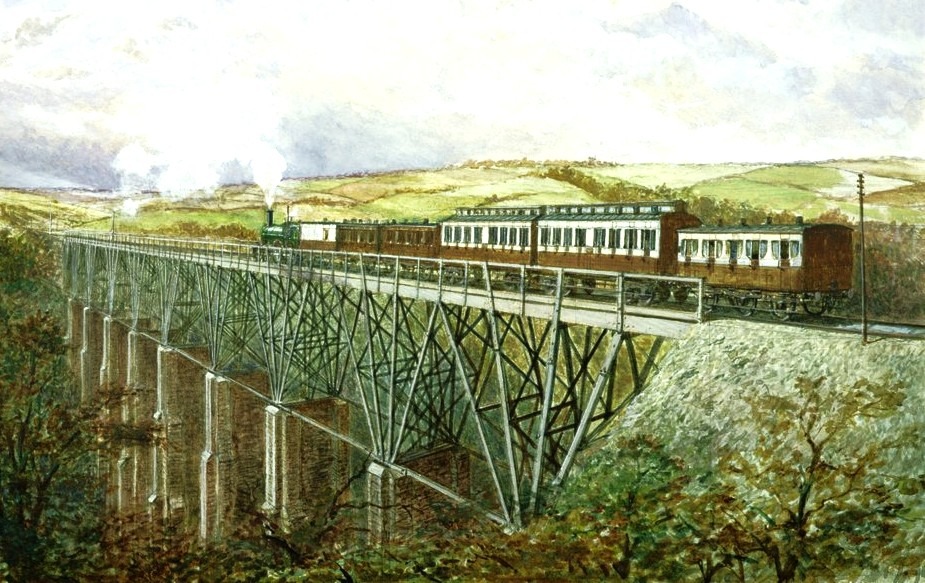
Cornish viaducts are an important part of Cornwall's landscape. Railways were the making of some Cornish towns during the 19th century; the mid-20th century closures could have created the opposite effect. If it were not for improved roads this may have had disastrous consequences for many communities, especially as Cornwall became more reliant on tourism.
As always click the images for larger view
By the time the Tamar Road Bridge was open for traffic in 1961 the death knell for a number of railway lines had already sounded. Although Dr Beeching in his report suggested the closure of many lines, some had already been closed and it was only the intervention of the Minister for Transport Barbara Castle which saved others. These include the Liskeard to Looe line. There has been new work undertaken to improve rail travel, such as the ‘Mid Cornwall Metro between Newquay and Falmouth. This also passes through St Austell and Truro linking four of the largest towns in Cornwall as well as taking in a number of smaller villages.
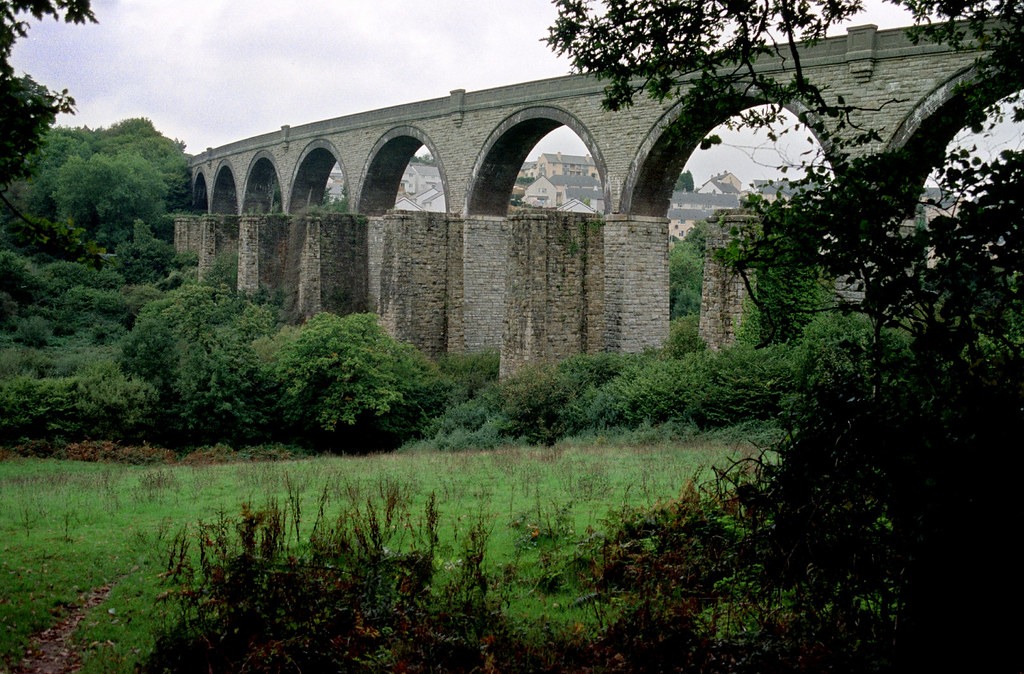
One highly visual aspect of Cornwall and its railways are the number of viaducts which were built to transport railway lines over the many valleys spanning the Cornish countryside. A good number of these also have the remains of earlier viaducts, the stone towers or stumps standing close by the later crossings. Sometimes there are viaducts standing in total isolation from railway lines or original mineral tramway, where the lines have been removed and little or no other evidence survives. These help serve as a reminder of Cornwall industrial past and also its railway history just as the countless mine stacks and engine houses are a memorial to the Cornish mining industry.
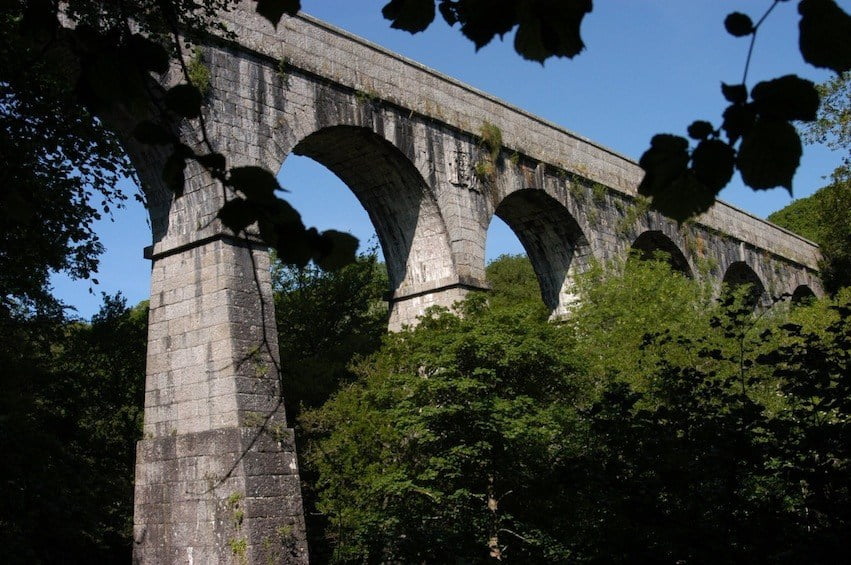
Perhaps the most famous of these is the Treffry Viaduct at Luxulyan now preserved and listed, maintained by the Cornwall Heritage Trust. This was far ahead of its time when the foundation stone was laid on Wednesday 5th March 1839, a day now recognise as St Piran’s Day. Said at the time it ‘will present a very beautiful appearance and be a great relief to the rugged and romantic valley which it is intended to cross.’ Today the viaduct rises above the trees creating a visually attractive feature amongst the woodland trees. The viaduct measures 650 feet long and 100 feet high and was said at the time of construction to be the most advanced engineering project in the western peninsula. Besides being a part of the wider Treffry Tramway System it also acted as an aqueduct incorporating a leat to carry water to operate waterwheel powered machinery. The remains of this can be seen amongst the woodland. This wonderful viaduct now approaching its bi-centennial was not however any part of the wider railway system with its original stone and timber Brunel viaducts built throughout Cornwall in later decades.
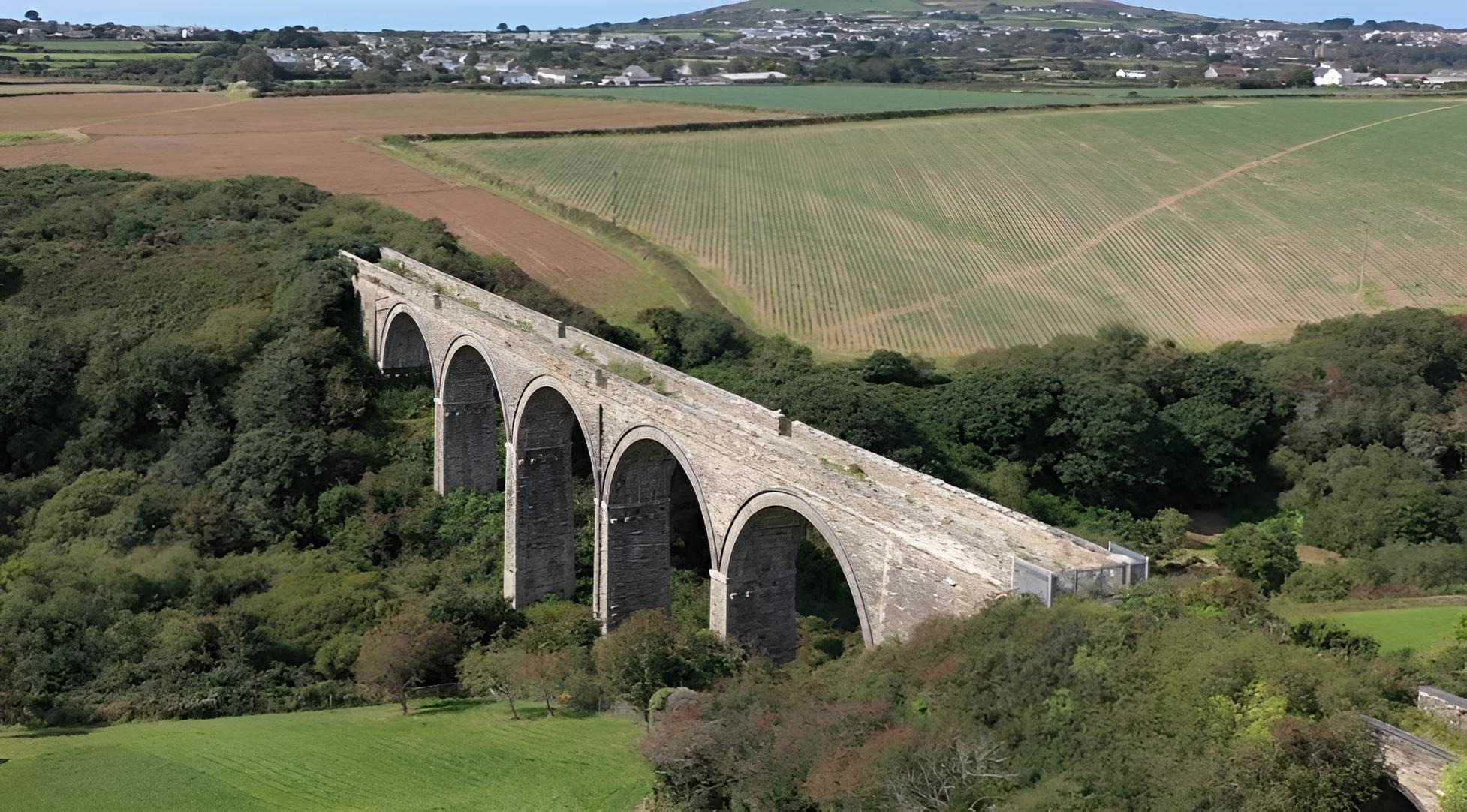
Although today there is a desire to reopen closed branch lines for many reasons, it is unfortunate some lines are truly lost forever. The line between Newquay and Chacewater which opened in 1905 is one of these. When it came to line closure the saviour of the Newquay to Par line was not tourism but the china clay industry which used part of this line in transporting its products. The Newquay Chacewater branch line had no real alternative other than just passenger travel. This line serviced towns which today are growing such as Perranporth and St Agnes but were still relatively small during the 1960’s. On this line between St Agnes and Perranporth lay two small stops at Mithian and Goonbell Halts. On this stretch of line was built the five arched viaduct known as the Goonbell or Wheal Liberty Viaduct at 140 yards long. Today it stands in splendid isolation a memorial to a lost railway line. There has been maintenance work on this structure as late as 2015 although it does not appear to be listed.
Many of the Railway viaducts in use today are listed due to their historical interest. It helps illustrates how reliant the United Kingdom remains on its Victorian infrastructure. What follows are just some of forty two viaducts originally built in Cornwall to an earlier Brunel fan design incorporating timber.
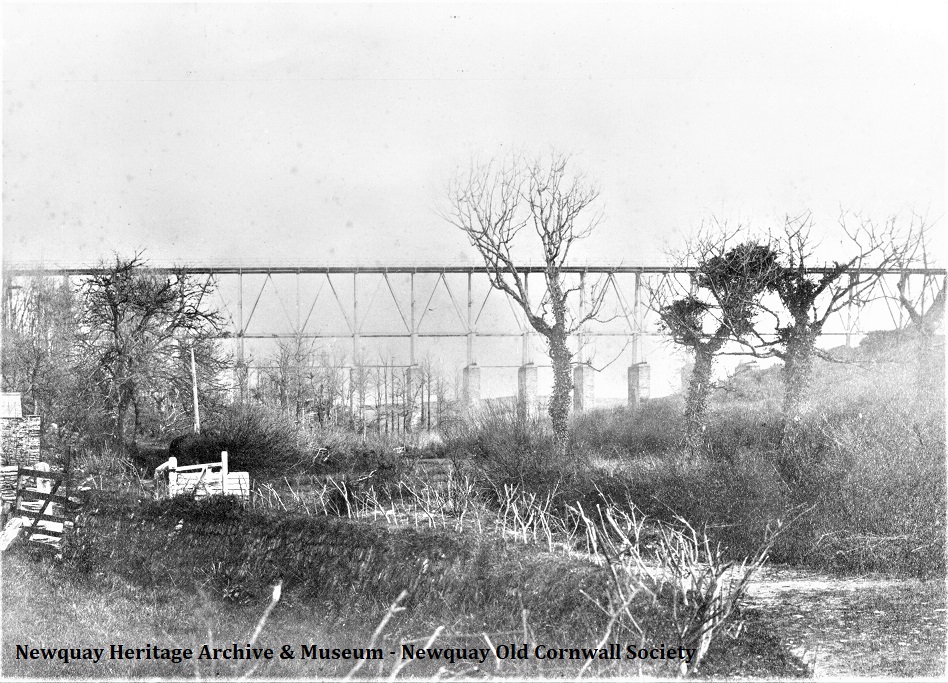
The Gover Railway Viaduct is a Cornish mainline viaduct lying between St Austell and Truro completed in 1898. Historic England listed this viaduct as Grade II in 1988 providing the following description; ‘The 1898 viaduct has eight round arches, with piers of rectangular plan, corbelled and battered. The arches have brick dressings and brick parapet.’ It dates this viaduct as the listing also includes a line of piers, the remains of the earlier crossing completed in 1859. This earlier viaduct was like others built in Cornwall with stone piers topped with elaborately fan designed timber structures. These were designed by Isambard Kingdom Brunel as part of a plan to roll out the railway quickly. The Gover Railway Viaduct had ten piers was ninety five feet tall and 690 feet long.
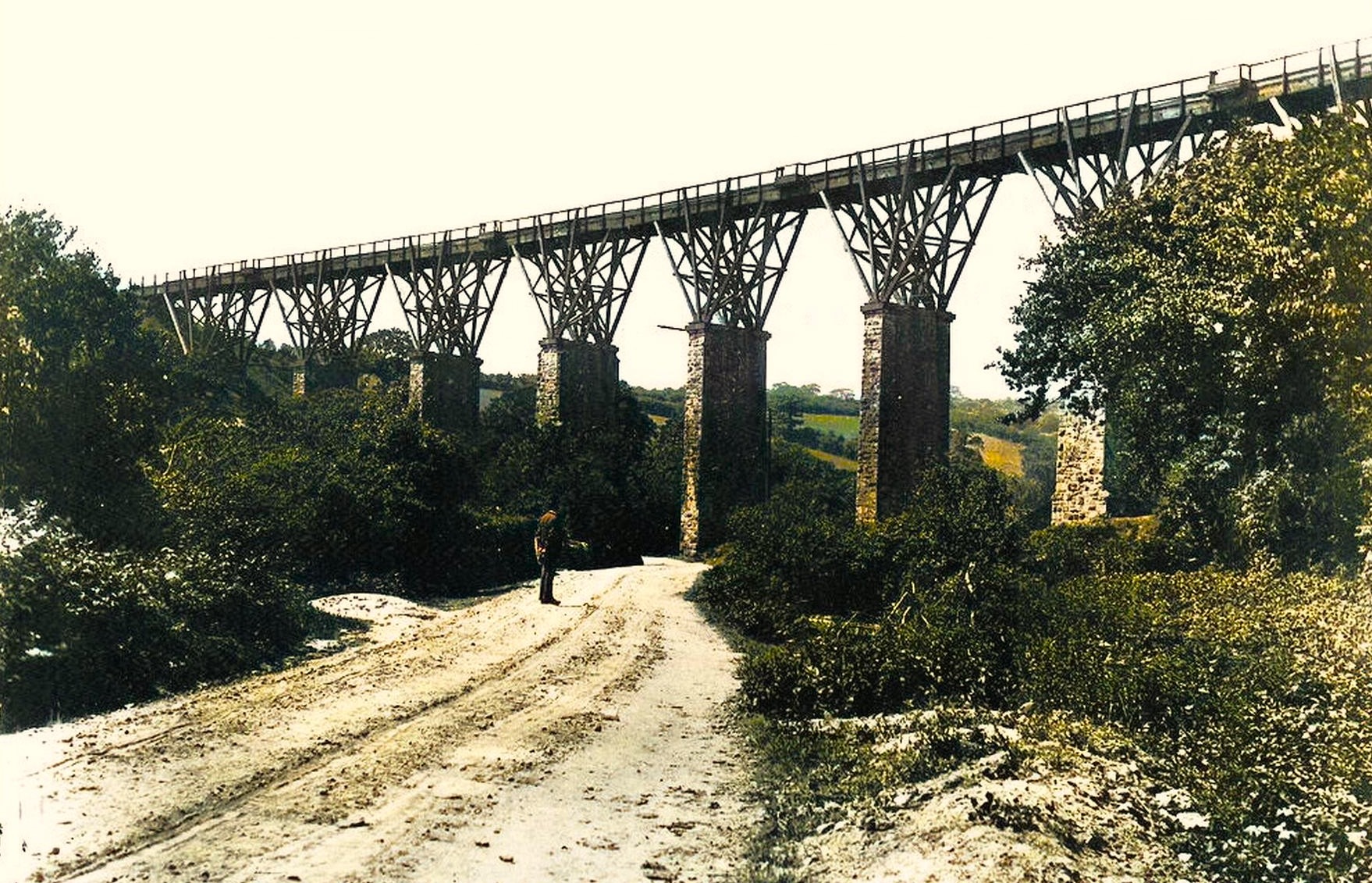
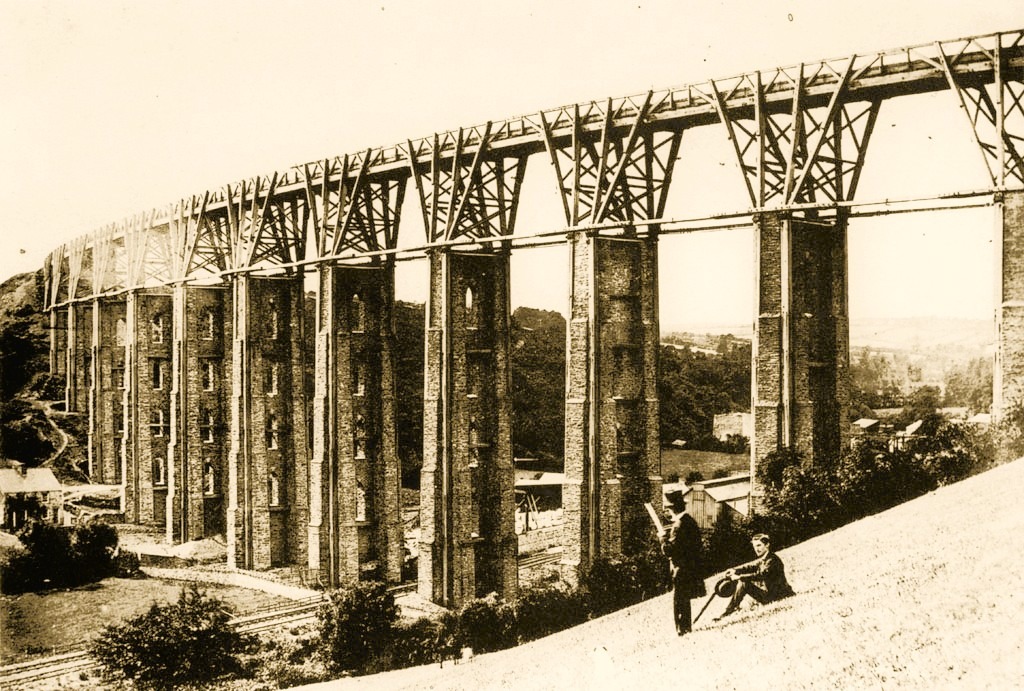
Another mainline railway viaduct which has earlier piers standing close by is the Moorswater Viaduct considered the most spectacular in Cornwall. Often known as the Liskeard Viaduct today this was completed in 1881 and is a Grade II listed building. It replaced the earlier Brunel crossing completed in 1859 with its fourteen piers, six of which can be seen adjacent to the newer viaduct today. The newer viaduct is some 943 feet long; the Railway Engineer of 1899 gave its height as 148 feet. All these earlier fan designed timber on stone pier viaducts were wide enough to carry the broad gauge trains used in Cornwall until 1892. The new Moorswater Viaduct was constructed to carry a double line of rails of 4 feet 8 inches gauge. Heavier and faster trains necessitated the replacement of the older viaducts as it was said the timber structures shook as trains passed over them.
Regarding the question of broad-gauge in Cornwall this was covered in the Ertach Kernow article of 29th May 2024. ‘The task of converting the existing GWR broad-gauge lines to standard gauge took place over the weekend of Saturday 21st and Sunday 22nd May 1892 following much preparatory work. All the broad-gauge engines and rolling stock had been moved back to the GWR Swindon Works previously. Some 177 miles of track including both mainline and branches were narrowed from 7ft 0¼ins to 4ft 8½ins with around 4,700 men taking part in this huge project.’
Travelling east from Truro Railway Station the Carvedras Viaduct crosses St George's Road and the River Kenwyn. The original viaduct was 86 feet high and 969 feet long topped with timber based on 15 piers. This Brunel viaduct was replaced in stone in 1902. The remains of the earlier viaduct piers can still be seen today, these along with the 1902 viaduct were Grade II listed in 1993. Beyond that is the short low bridge crossing the top end of Pydar Street followed by the Moresk Viaduct, also known as the Truro Viaduct, the longest in Cornwall. When first completed this stone and timber crossing had 20 piers 14 of which are still standing.
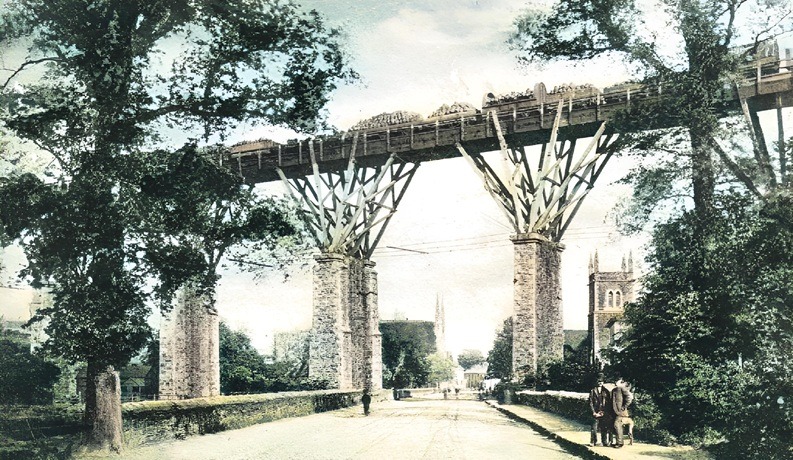
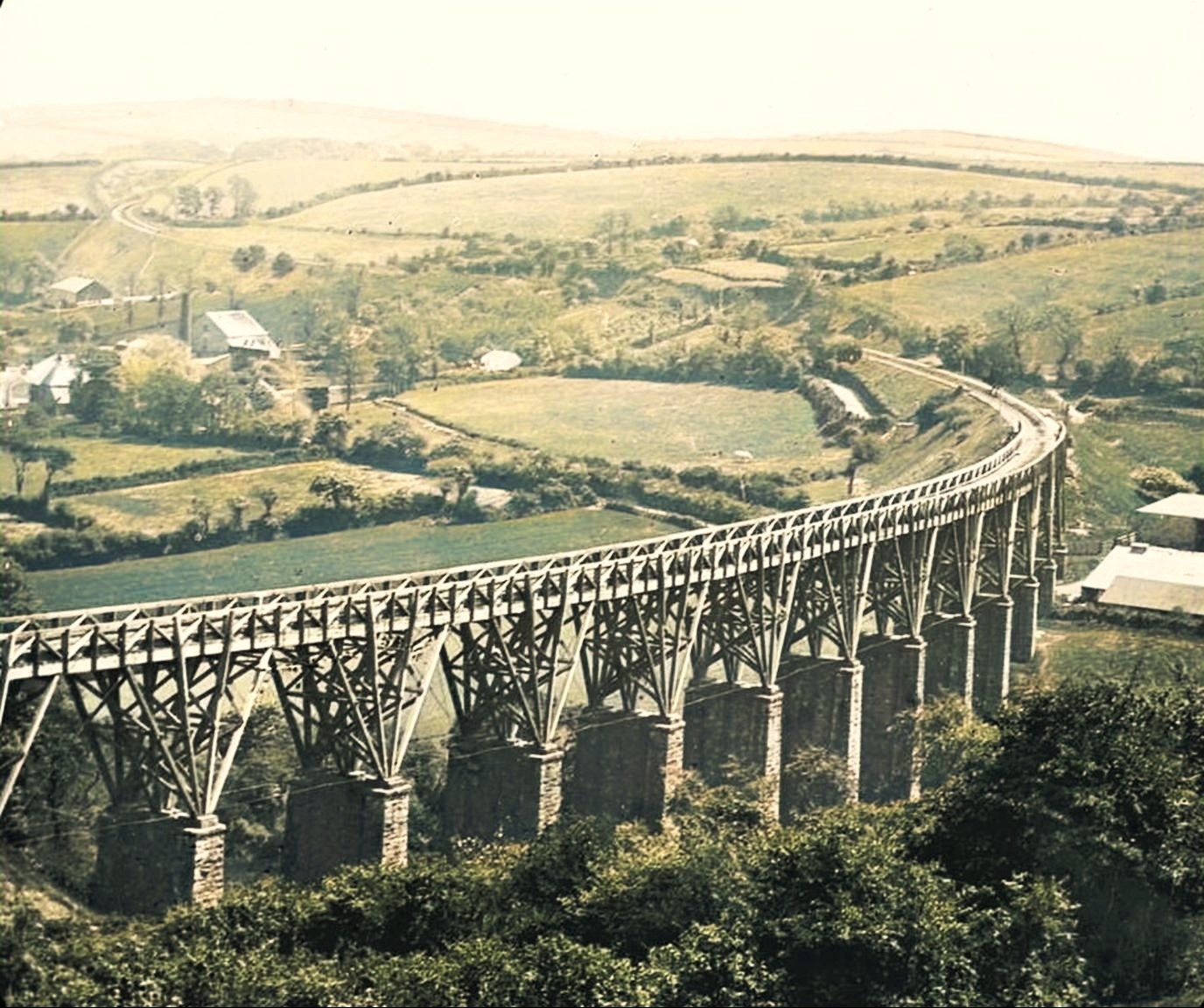
The final timber viaduct designed by Brunel to be deconstructed and replaced was the Collegewood Viaduct near Penryn. What a magnificent, merged construction of stone and timber this was as it curved beautifully around on its fifteen piers. This lay on the Truro to Falmouth line opened in 1863 and was the longest viaduct west of Truro. It was 100 feet high, 954 feet long. This was the last Brunel designed timber viaduct to be replaced in Cornwall, with the new stone viaduct opening on 22 July 1934. This along with the piers of the earlier viaduct are Grade II listed.
The viaduct approaching the Newquay railway station appears to be of a later design, which it is, being completed in 1938. However, it differs from many other replacement of earlier Cornish viaducts in that these were incorporated within the 20th century rebuilding. The earliest viaduct built by J T Treffry for his mineral tramway from south Cornwall to Newquay was of a Brunel type stone and timber construction in 1849. This was replaced by a single line stone viaduct in 1874 to enable heavier steam locomotives to bring passengers to the growing holiday resort. Heavier demand led to this too being rebuilt into what can be seen today, with space for a twin track. The piers of the two earlier viaducts can be seen incorporated within the piers supporting the 1938 rebuilding.
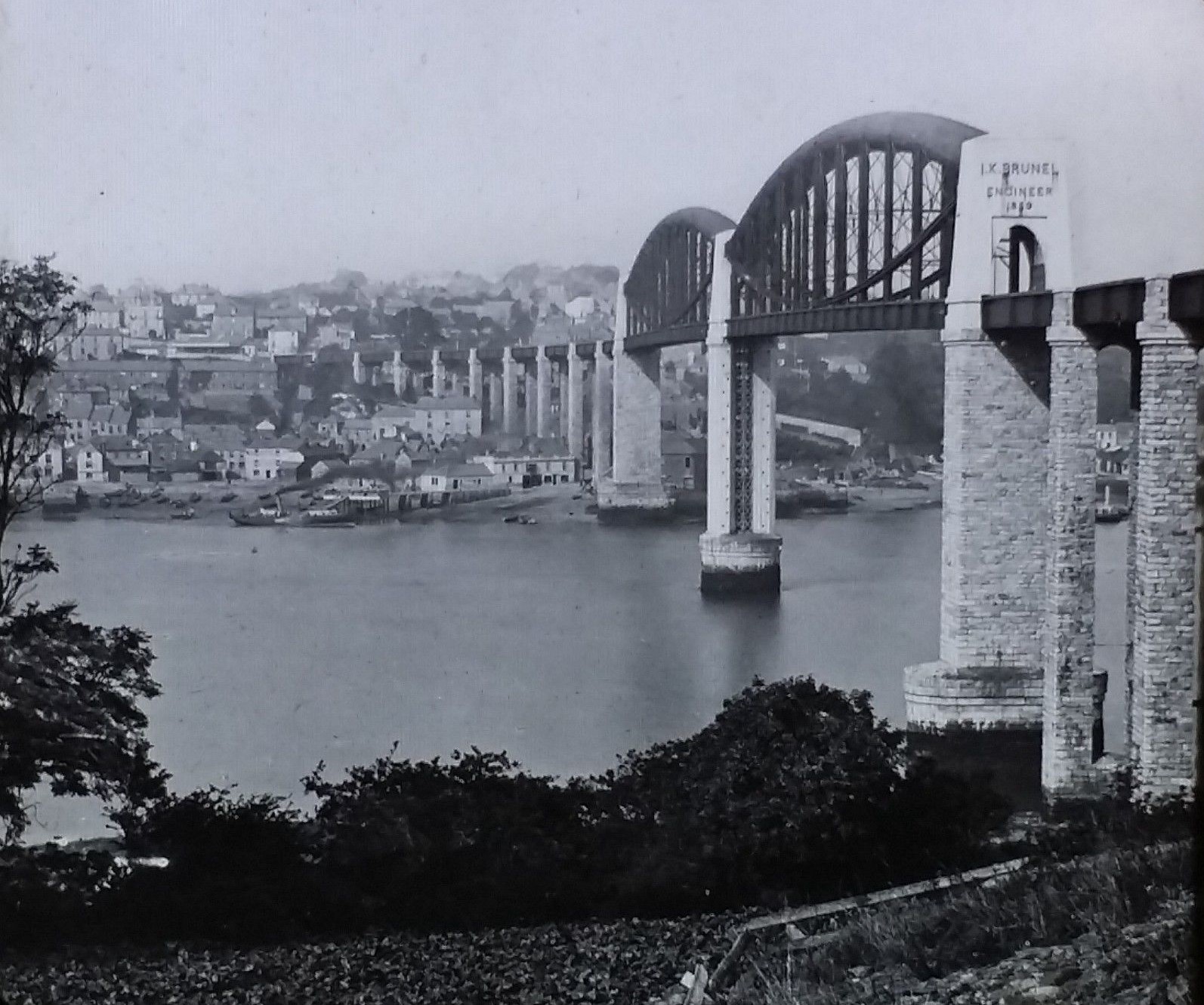
The coming of the railway and the opening of the Royal Albert Bridge came at a time when Cornwall’s mining industry was starting to fail. At sea, larger iron vessels were starting to be utilised, including by Brunel, with steam powered engines. These would mark the end of Cornwall’s century old mercantile maritime trade throughout the United Kingdom and Europe. Faster steam vessels ended the centuries old Falmouth Packet ships service in 1850. The railways would help reinvigorate the Cornish economy at a time when it could have been in terminal decline.
Today the remains of the earlier viaducts encourages questions about their existence and the history surrounding them, as with historic mining structures. There is an apparent renewal in utilising the existing railway system in Cornwall with the ‘Mid Cornwall Metro’. Let us hope this is successful in encouraging domestic travel and opening new economic opportunities with greater internal tourism.
Heritage Column