Ertach Kernow - Stithians a parish with more than a reservoir
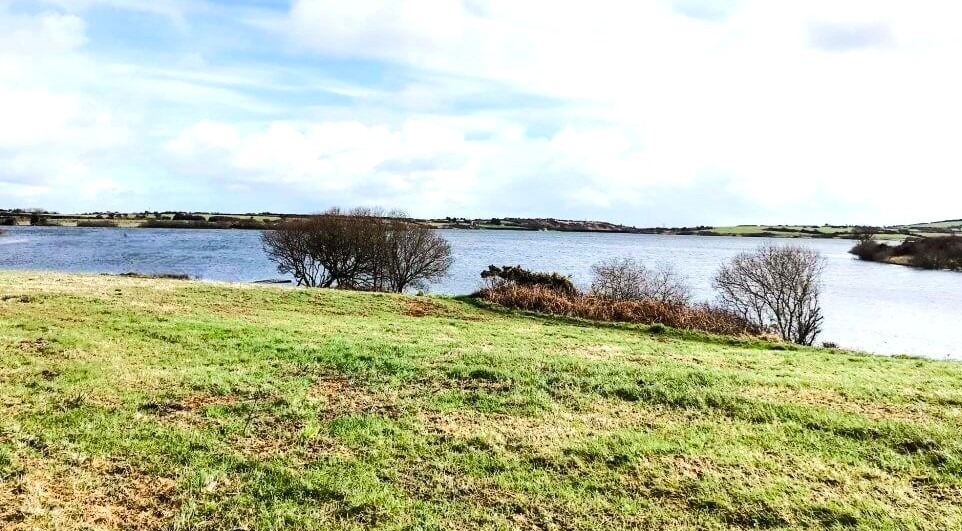
Cornwall’s reservoirs have become the focus of attention again as we once again have drought conditions placed on us. This was a topic covered in the 4th May 2022 Ertach Kernow article, number 76, which was a year Cornwall came close to emptying its largest reservoir at Colliford. It reached a low of just 13percent of full capacity. Although due to a wet spring at the moment it is well above levels of 2022 at 63percent. Levels are about to drop below those for the same time last year and dropping fast, so we need to conserve water where we can.
As always click the images for larger view
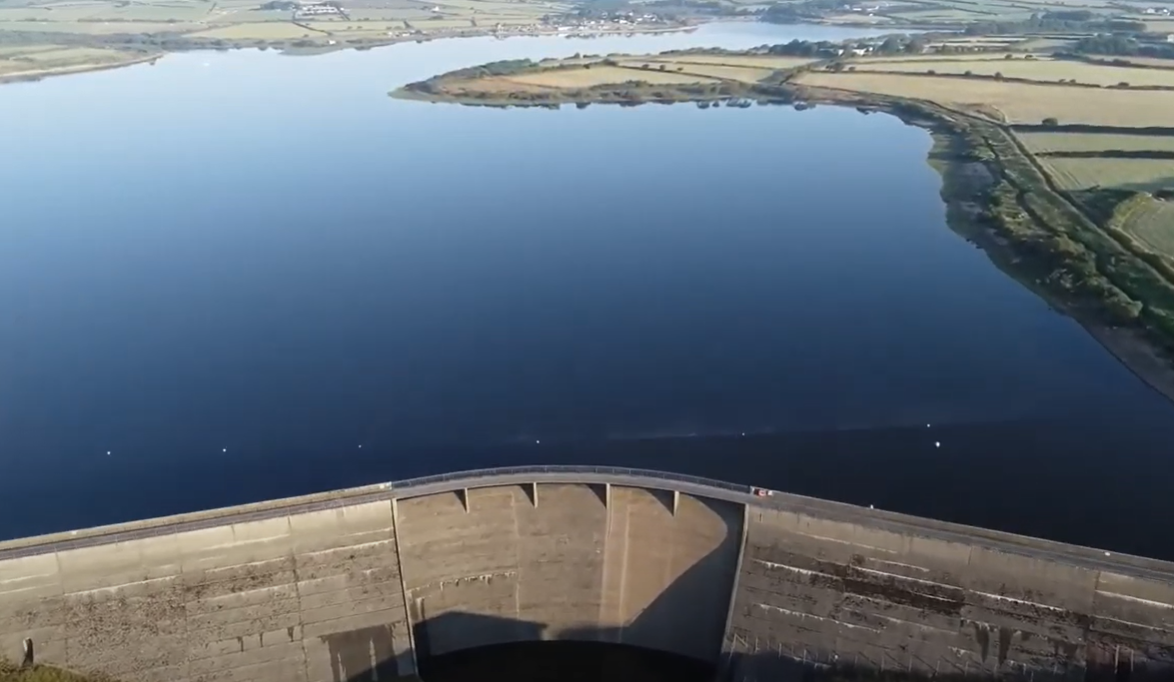
Drought has brought to mind this week’s topic, the parish of Stithians. This contains Cornwall’s second largest reservoir which lies on the Stithians parish border with the adjoining parish of Wendron. A much smaller reservoir Stithians has just 17% of the capacity of Colliford at 4,867 million litres and is currently less than 60percent full. Besides providing water for domestic and business use, Stithians Lake also allows for plenty of fun and activities. The Stithians Lake Activity Centre offers all types of camping and water based activities such as windsurfing, paddleboarding, kayaking, winging and eFoiling. There is also something more sedate, fishing.
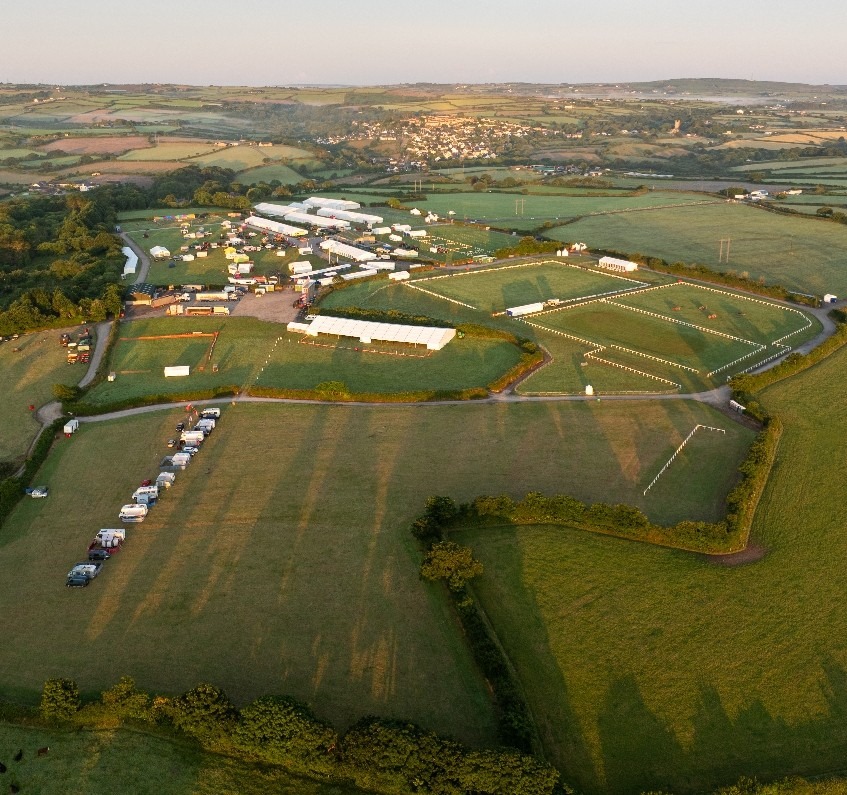
The parish of Stithians is not just about a reservoir; there is much more. Another event for which Stithians is famous is the Stithians Show organised by the Stithians Agricultural Association. This is recognised as one of the largest one day shows in the United Kingdom. First held in 1834 it has been held annually ever since with gaps only due to the two World Wars, a national foot and mouth outbreak in 2002 and the COVID pandemic in 2020 and 2021. The shows were held at various sites within the village and at Ennis and Carbis Farm, adjoining the playing field, until 1992. It was then that the Stithians Agricultural Association were able to purchase a sixty-five acre site at Kennal Farm allowing the show to become self-sufficient. Today the show covers seventy-five acres and has ample parking and all the facilities to host the show, with some 20,000 attendees, along with other major events. There is a huge range of agricultural events and activities and hundreds of trade stands, stalls and entertainment performances to enjoy. What a wonderful thing for one of Cornwall’s smaller communities to be able to undertake an event such as this for nearly two-hundred years. The next annual Stithians Show is on 12th July 2027 but before that there is also the hugely popular three day Fisherman’s Friends Festival at the end of May.
The history of various settlements within the boundaries of the village of Stithians goes back many hundreds of years. Saint Stythian’s the parish church within the village of Stithians is 14th century although there has been a church on the site since the 6th century. It was noted that from a 19th century survey that the church appeared to have been built within a circular earthwork lann, an early medieval ecclesiastical enclosure, with part of this remaining as seen on the north-east side of the church. Stithians was first mentioned in 1268 and the other settlements of Carbis was first recorded in 1327, Ennis in 1522 and Crellow in 1356. Early travellers who mention the Stithians area included William of Worcester in the 15th century and cartographer John Norden in the 16th century. Marked on his map of Kerrier he notes ‘Stythian, a parishe wherein riseth a river called Trethege water.’ Whilst the river Trethege water cannot be found on a modern map, it seems that this was likely an early name for the River Kennall.
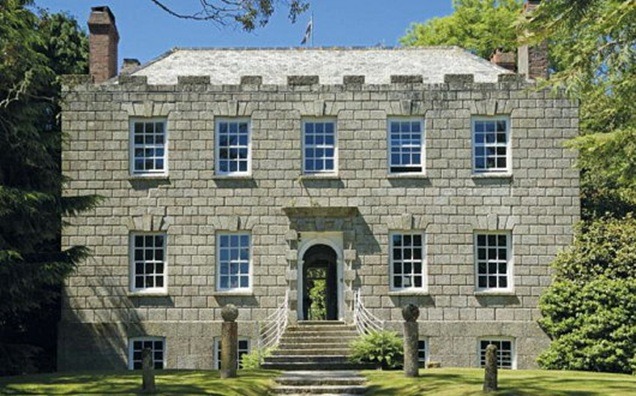
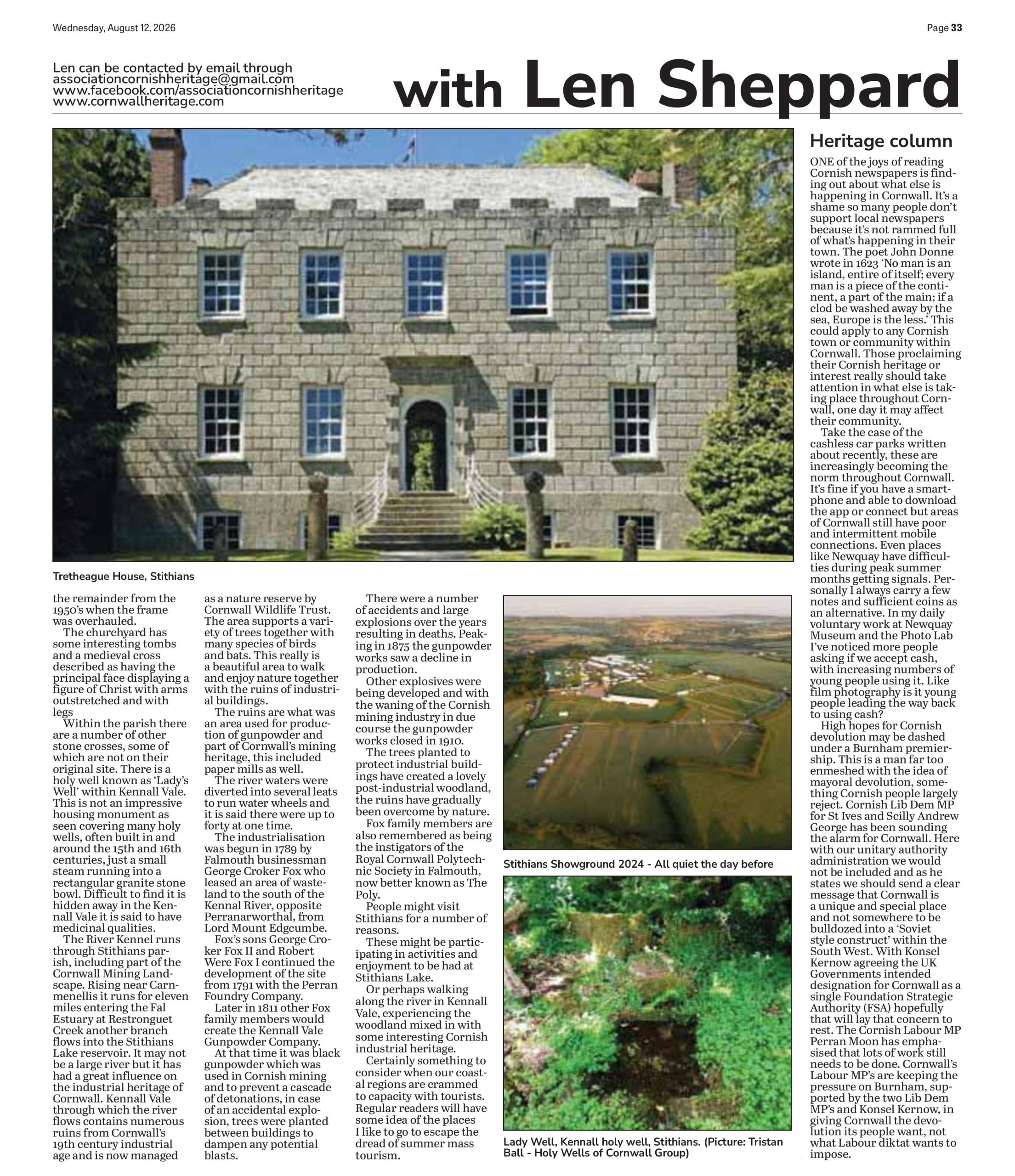
Within the historic ecclesiastical parish of Stithians were a number of manors. These included Helston in Kerrier, Kennal, Penhalurick, Roseth, Trebost, Tretheage and Ventonvedna (Fentonvedna). Considering one of these, Tretheage, although the manor was not mentioned by Norden the river by that name was. Although not a large or important manor it does have some illustrious connections. From 1351 the Manor of Tretheague belonged to the Bevill family. In 1622 Philip Beville of Killygarth the last of the male Bevill family members died. His daughter Elizabeth had married Sir Bernard Grenville but had died in 1607. Before her death Philip had willed the Killygarth estate, which included Tretheage and a huge range of land throughout Cornwall to Bernard. Sir Bernard Grenville was the eldest son and heir of Sir Richard Grenville of Stowe, who died a hero in 1591 fighting the Spanish Armada in his vessel the Revenge. Elizabeth and Bernard’s son was Bevil Grenville who became the leader of the Cornwall’s Royalist army in the English Civil War, another Cornish hero. It appears that the manor of Tretheage had been tenanted by a family of that name for three centuries until Walter died in 1602. Following the Tretheage’s were the Mourton’s followed by Nicholas Pearce in 1690. It was he who replaced the seven chimneyed Elizabethan house in 1744 with the Grade II listed building as it can be seen now. Besides the church it is only this small country manor house which has an entry in the Pevsner ‘Buildings of Britain’ for Stithians parish.
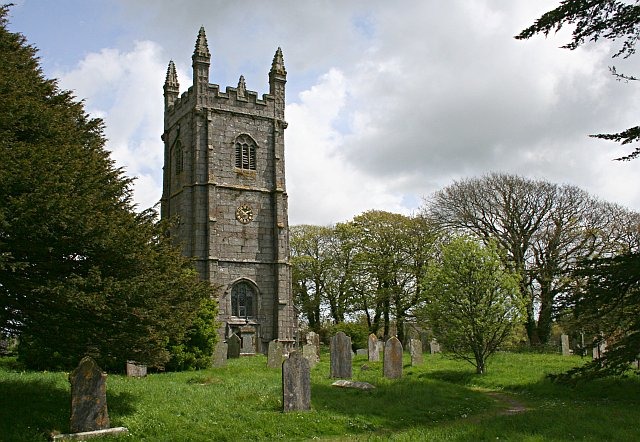
One other historic building worth a mention is Tretheague Farmhouse dating from the 17th century, which is a Grade II listed building. Although it was extended in the 19th century much of the earlier building survives. The church of Saint Stythian’s itself was heavily restored in 1873 in what has been described as a reckless manner. Much of the interior was replaced and the stairs leading from the lower door to the rood screen were destroyed during that renovation. The church tower is a three stage embattled and pinnacle construction completed in the 15th century. It contains six bells the oldest dating from 1790 with three from the 1930’s the remainder from the 1950’s when the frame was overhauled. The churchyard has some interesting tombs and a medieval cross described as having the principal face displaying a figure of Christ with arms outstretched and with legs extending part way down the shaft. This was moved to the churchyard in 1910.
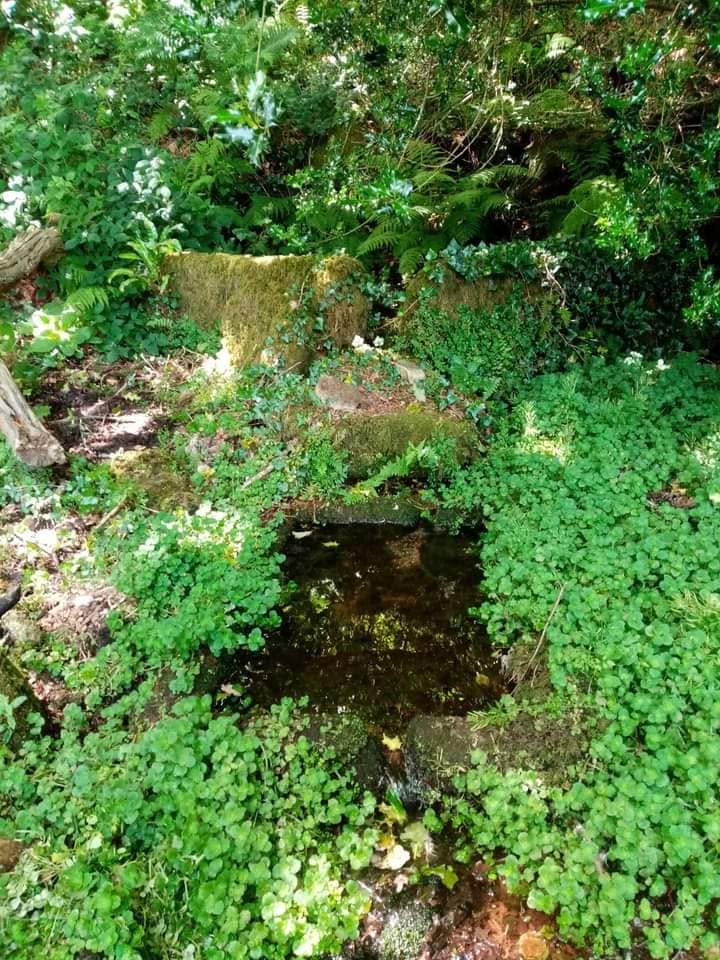
Within the parish there are a number of other stone crosses, some of which are not on their original site. There is a holy well known as ‘Lady’s Well’ within Kennall Vale. This is not an impressive housing monument as seen covering many holy wells, often built in and around the 15th and 16th centuries, just a small steam running into a rectangular granite stone bowl. Difficult to find it is hidden away in the Kennall Vale it is said to have medicinal qualities.
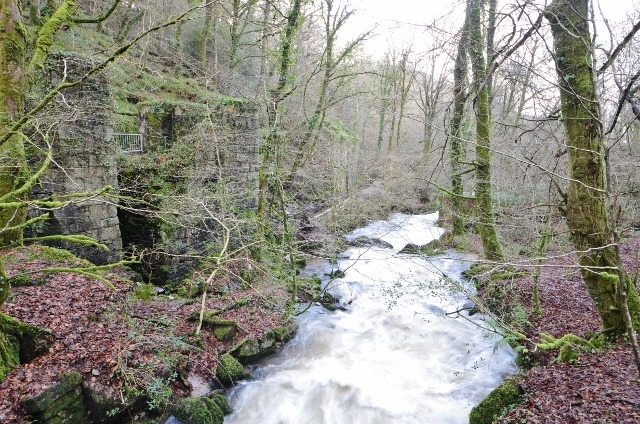
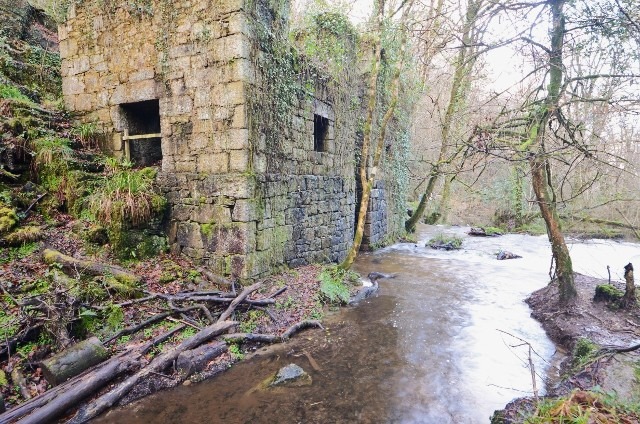
The River Kennel runs through Stithians parish, including part of the Cornwall Mining Landscape. Rising near Carnmenellis it runs for eleven miles entering the Fal Estuary at Restronguet Creek another branch flows into the Stithians Lake reservoir. It may not be a large river but it has had a great influence on the industrial heritage of Cornwall. Kennall Vale through which the river flows contains numerous ruins from Cornwall’s 19th century industrial age and is now managed as a nature reserve by Cornwall Wildlife Trust. The area supports a variety of trees together with many species of birds and bats. This really is a beautiful area to walk and enjoy nature together with the ruins of industrial buildings.
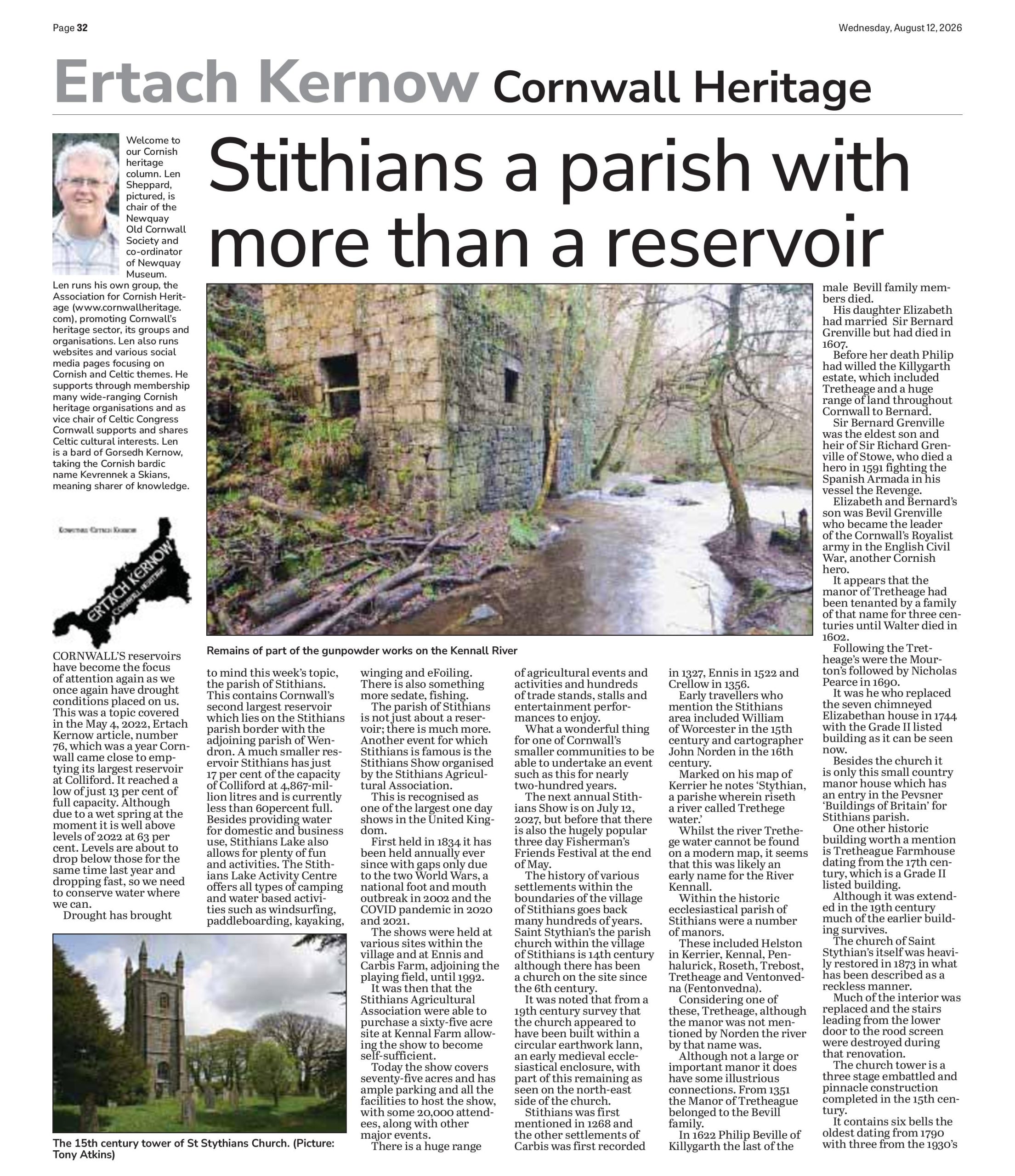
The ruins are what was an area used for production of gunpowder and part of Cornwall’s mining heritage, this included paper mills as well. The river waters were diverted into several leats to run water wheels and it is said there were up to forty at one time. The industrialisation was begun in 1789 by Falmouth businessman George Croker Fox who leased an area of wasteland to the south of the Kennal River, opposite Perranarworthal, from Lord Mount Edgcumbe. Fox’s sons George Croker Fox II and Robert Were Fox I continued the development of the site from 1791 with the Perran Foundry Company. Later in 1811 other Fox family members would create the Kennall Vale Gunpowder Company.
At that time it was black gunpowder which was used in Cornish mining and to prevent a cascade of detonations, in case of an accidental explosion, trees were planted between buildings to dampen any potential blasts. There were a number of accidents and large explosions over the years resulting in deaths. Peaking in 1875 the gunpowder works saw a decline in production. Other explosives were being developed and with the waning of the Cornish mining industry in due course the gunpowder works closed in 1910. The trees planted to protect industrial buildings have created a lovely post-industrial woodland, the ruins have gradually been overcome by nature. Fox family members are also remembered as being the instigators of the Royal Cornwall Polytechnic Society in Falmouth, now better known as The Poly.
People might visit Stithians for a number of reasons. These might be participating in activities and enjoyment to be had at Stithians Lake. Or perhaps walking along the river in Kennall Vale, experiencing the woodland mixed in with some interesting Cornish industrial heritage. Certainly something to consider when our coastal regions are crammed to capacity with tourists. Regular readers will have some idea of the places I like to go to escape the dread of summer mass tourism.
Heritage Column