Ertach Kernow - Rare Ogham stones have been found in Cornwall
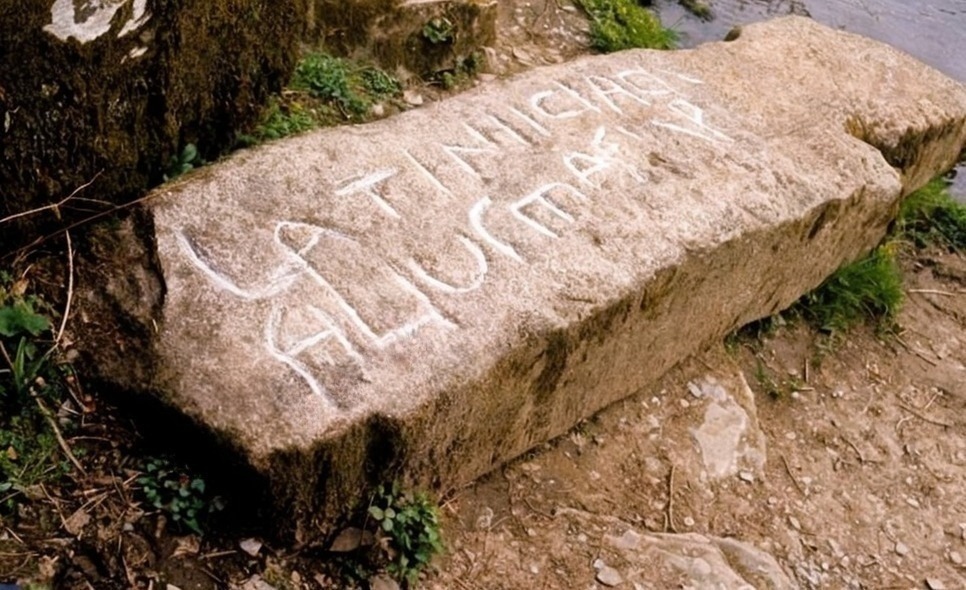
Cornwall is well-known for its ancient crosses and these have been well researched over the years and some excellent volumes produced. Many people reading this will have attended a talk by Andrew Langdon who can be considered the preeminent authority on Cornish crosses today. Perhaps what are far less well-known are the far fewer examples of inscribed stones and especially those containing Ogham script.
As always click the images for larger view
Almost everyone in Cornwall will be aware of St Piran and some of the other saints who are said to have travelled to Cornwall from other Celtic nations. St Piran was certainly not the first to arrive on the shores of Kernow from the Emerald Isle. Evidence can be found in the small number of inscribed Ogham stones found in Cornwall. These are in addition to the small number of Roman stones and others inscribed solely in Latin. In ignorance one might just see the lines on some ancient stones as scratches, perhaps done by an early graffiti artist. An expert in Ogham would likely see a name or part of one dating from some sixteen hundred years ago.
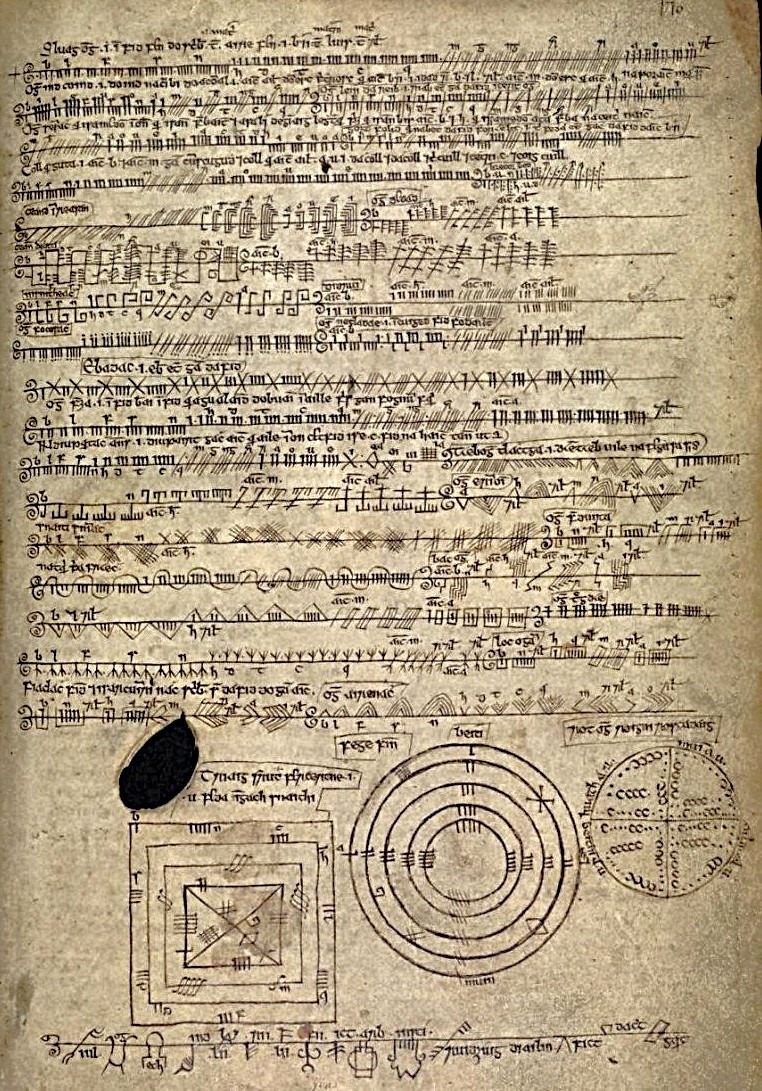
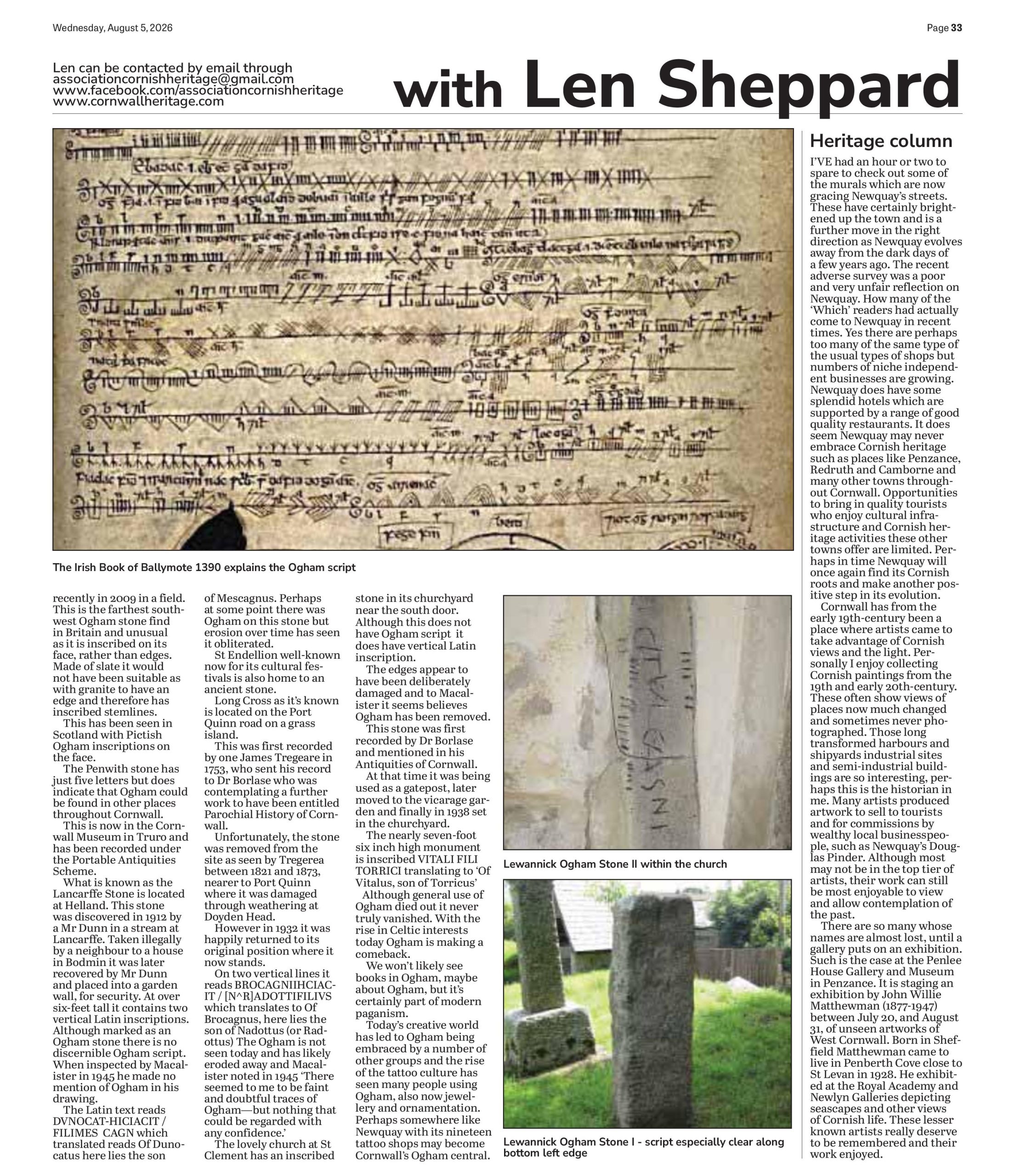
Simply put Ogham is seen on mostly monumental stones as a series of straight lines drawn at different angles. These are formed around a straight stemline line running through but on stones the edge would act as the stemline. The text would start at the bottom left running upwards and then down the right if it was a long inscription. Although it dates from the Celtic period Ogham is not a language but a writing system used by ancient peoples. Although the earliest surviving inscriptions are dated to around the 4th century CE it is thought to be much older. The alphabet largely used today for English and most European languages has the largest use worldwide and is based on Latin script derived from an earlier Greek system. It is believed by academics that Ogham originated to fit the Latin language or possibly the earlier Etruscan alphabet from which Latin evolved.
Originating in Ireland, where the largest number of inscribed stones are found in the Munster region. Ogham later spreading to mainland Britain. They are mainly found along the western side of Britain from Orkney through the Western Isles, Isle of Man, Wales and down to Cornwall. The largest number of confirmed Ogham stones outside Ireland are found in Dyfed, in the southwest of Wales with twenty-two stones. In total Wales has thirty-five confirmed Ogham stones in situ and in museums. There are four certain Ogham stones sites found in Cornwall, at Penwith, St Kew, Worthyvale and Lewannack. Three others with possible or unconfirmed Ogham inscriptions at St Clement’s St Endellion and Lancarffe.
Those found in Cornwall and a lesser extent Devon date to between the 5th to 8th centuries. This is when the ‘kingdom’ of Dumnonia existed, covering Cornwall and what would become counties in southwest England. There were known trading and religious connections with Ireland at that time and this would have led to Ogham being used here in Cornwall. The issue relating to the lack of preservation of Ogham inscriptions was due to the script being placed on the corners of stones as opposed to being on the face as with Latin inscriptions. It could be that some of the stones found in Cornwall with Latin inscriptions originally had Ogham but time and the elements have eroded these away.
Although inscribed stones are few in number, especially those with surviving Ogham which do tell a story. They prove the interaction between Cornwall and Ireland during the period known as the ‘Age of Saints’ confirming trading and that peoples from Ireland and Wales were visiting, living and dying in Cornwall. One of the most distinguished academics to have studied these was the Irish Professor R A S Macalister during the 1940’s.
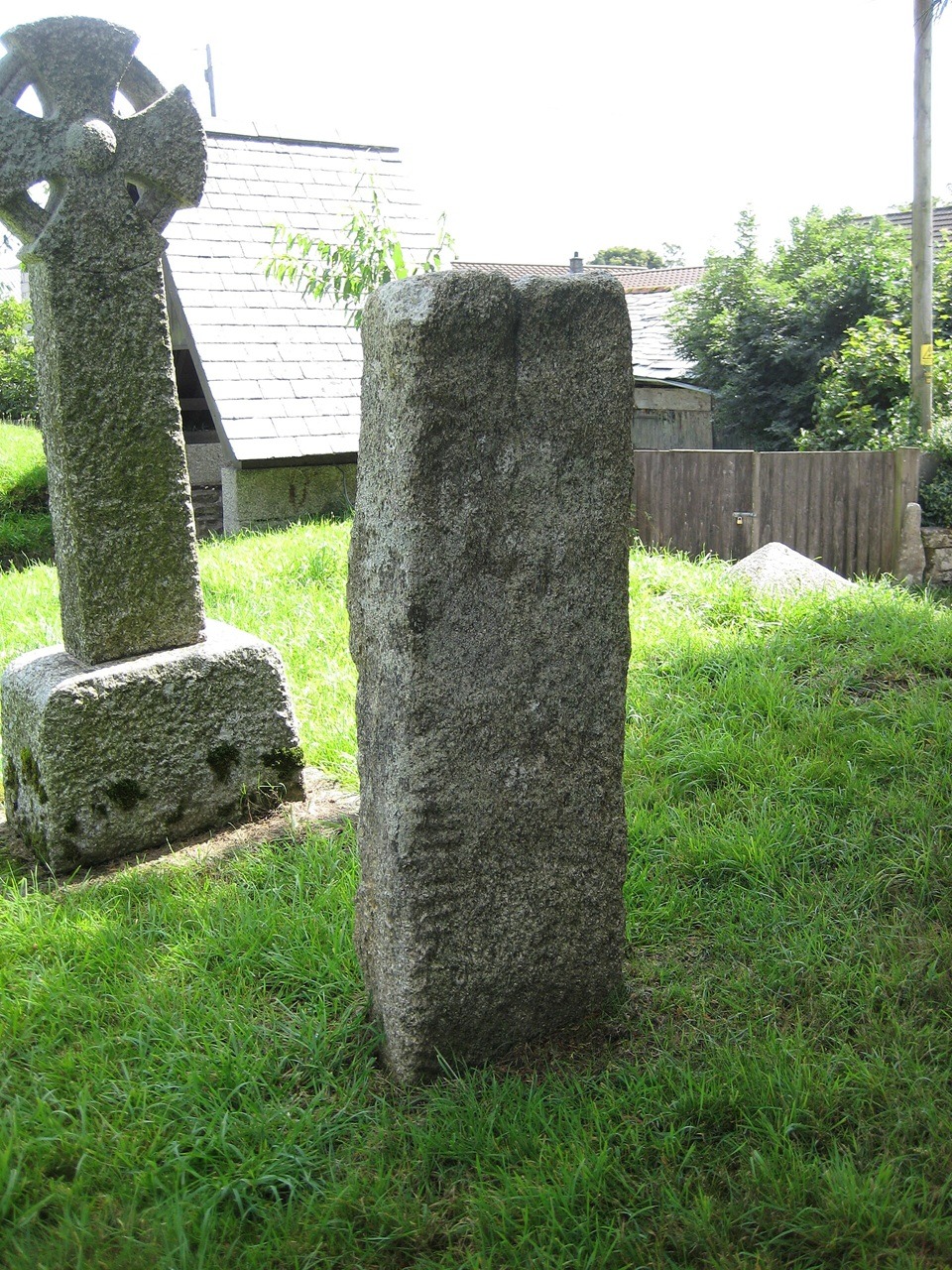
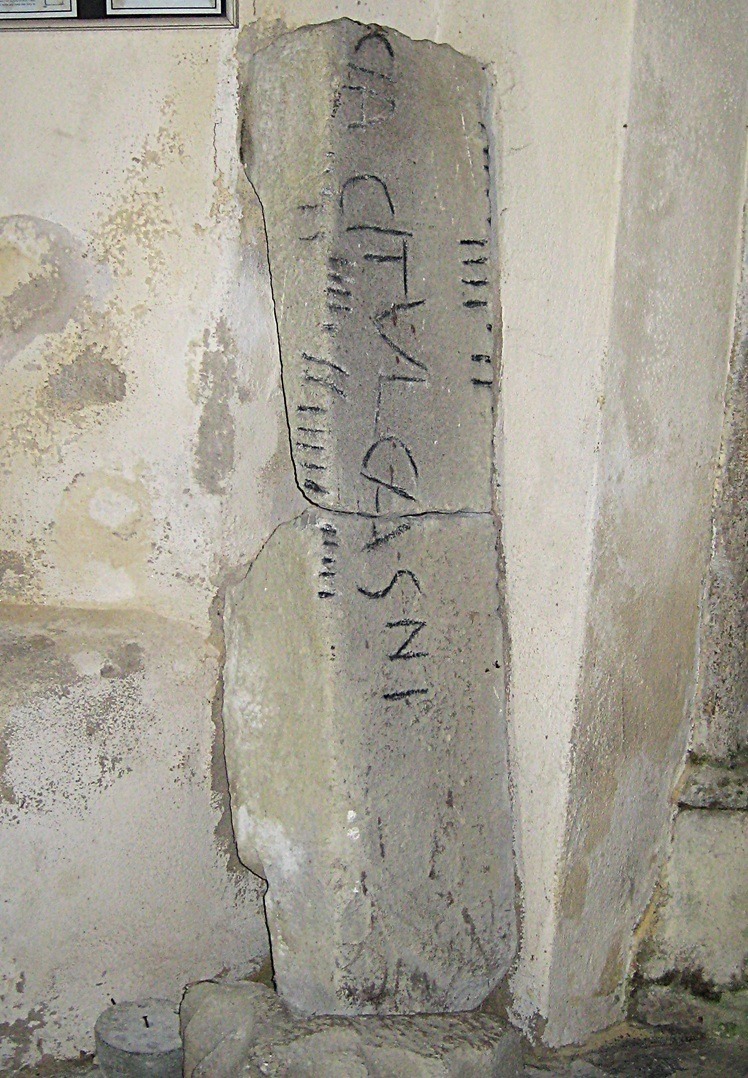
In the churchyard of St Martins Church at Lewannick is one which was discovered by A G Langdon in 1892. This was found buried on the south side of the churchyard and can now be found to the left of the lychgate to the south of the churchyard. This is a pillar some 4-feet high of reddish granite with Latin inscription on its face and Ogham along the left edge of the monument. The four-line Latin inscription reads INGEN VI MEM ORIA the translation being ‘The memoria of Ingenuus’, with the Ogham having a similar translation. Within the church is a second Ogham stone on the north side of the church. This nearly five-foot monument has Ogham both sides of the Latin inscription. Found broken in two built into the wall of the church in 1894 the Latin inscription reads [..]C IACIT VLCAGNUS, English translation Here lies Ulcagnus.
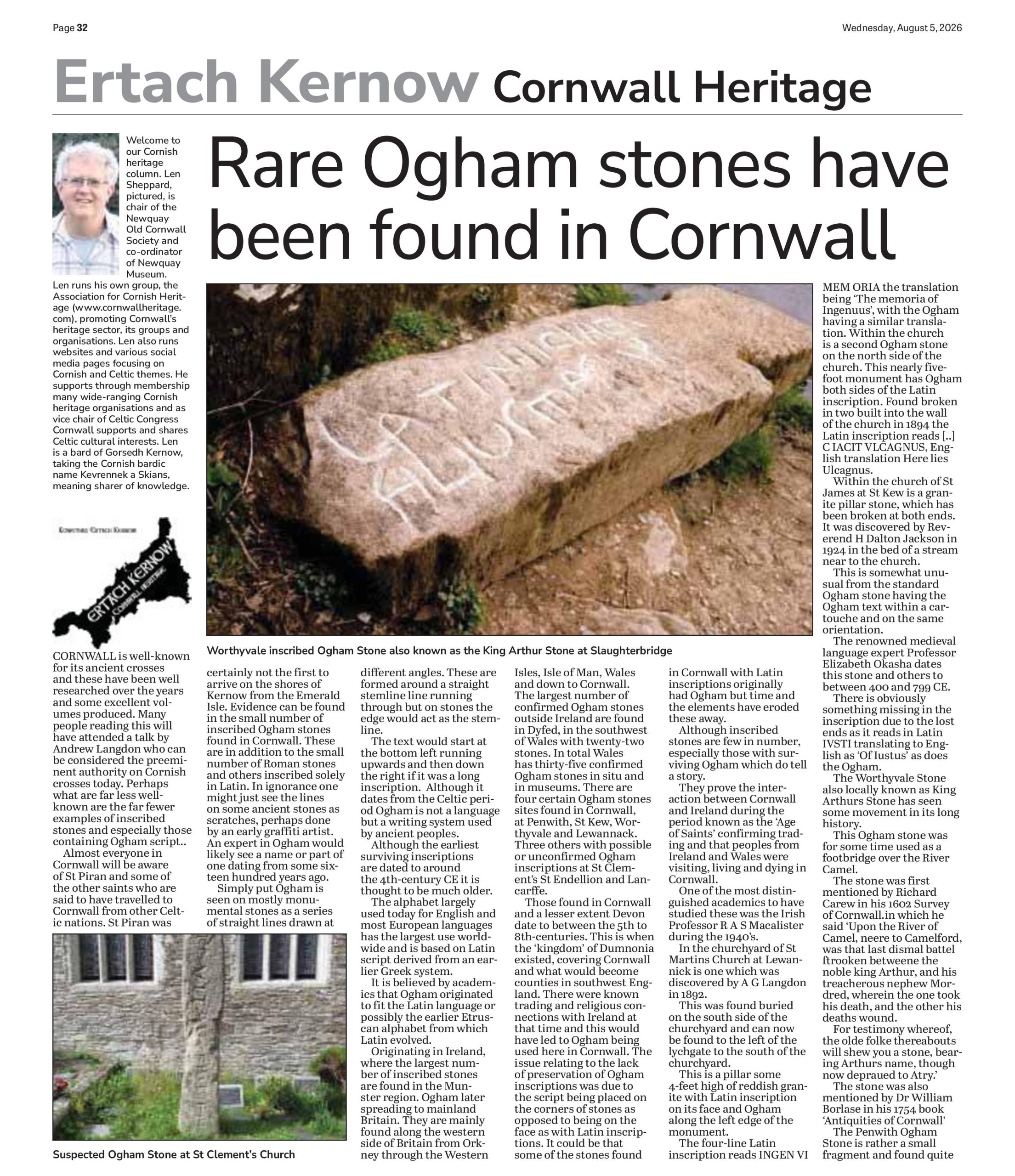
The Worthyvale Stone also locally known as King Arthurs Stone has seen some movement in its long history. This Ogham stone was for some time used as a footbridge over the River Camel. The stone was first mentioned by Richard Carew in his 1602 Survey of Cornwall.in which he said ‘Upon the River of Camel, neere to Camelford, was that last dismal battel ſtrooken betweene the noble king Arthur, and his treacherous nephew Mordred, wherein the one took his death, and the other his deaths wound. For testimony whereof, the olde folke thereabouts will shew you a stone, bearing Arthurs name, though now depraued to Atry.’ The stone was also mentioned by Dr William Borlase in his 1754 book ‘Antiquities of Cornwall’
The Penwith Ogham Stone is rather a small fragment and found quite recently in 2009 in a field. This is the farthest southwest Ogham stone find in Britain and unusual as it is inscribed on its face, rather than edges. Made of slate it would not have been suitable as with granite to have an edge and therefore has inscribed stemlines. This has been seen in Scotland with Pictish Ogham inscriptions on the face. The Penwith stone has just five letters but does indicate that Ogham could be found in other places throughout Cornwall. This is now in the Cornwall Museum in Truro and has been recorded under the Portable Antiquities Scheme.
What is known as the Lancarffe Stone is located at Helland. This stone was discovered in 1912 by a Mr Dunn in a stream at Lancarffe. Taken illegally by a neighbour to a house in Bodmin it was later recovered by Mr Dunn and placed into a garden wall, for security. At over six-feet tall it contains two vertical Latin inscriptions. Although marked as an Ogham stone there is no discernible Ogham script. When inspected by Macalister in 1945 he made no mention of Ogham in his drawing. The Latin text reads DVNOCAT-HICIACIT / FILIMES CAGN which translated reads Of Dunocatus here lies the son of Mescagnus. Perhaps at some point there was Ogham on this stone but erosion over time has seen it obliterated.
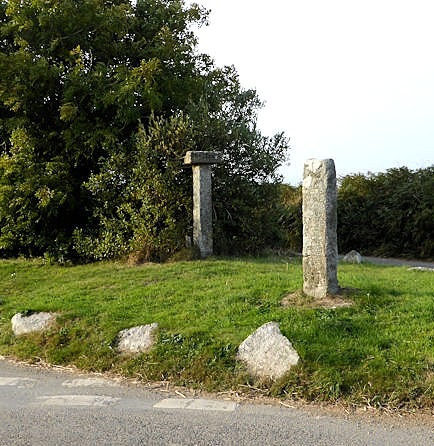
St Endellion well-known now for its cultural festivals is also home to an ancient stone. Long Cross as it’s known is located on the Port Quinn road on a grass island. This was first recorded by one James Tregeare in 1753, who sent his record to Dr Borlase who was contemplating a further work to have been entitled Parochial History of Cornwall. Unfortunately, the stone was removed from the site as seen by Tregerea between 1821 and 1873, nearer to Port Quinn where it was damaged through weathering at Doyden Head. However in 1932 it was happily returned to its original position where it now stands. On two vertical lines it reads BROCAGNIIHCIACIT / [N^R]ADOTTIFILIVS which translates to Of Brocagnus, here lies the son of Nadottus (or Radottus) The Ogham is not seen today and has likely eroded away and Macalister noted in 1945 ‘There seemed to me to be faint and doubtful traces of Ogham—but nothing that could be regarded with any confidence.’
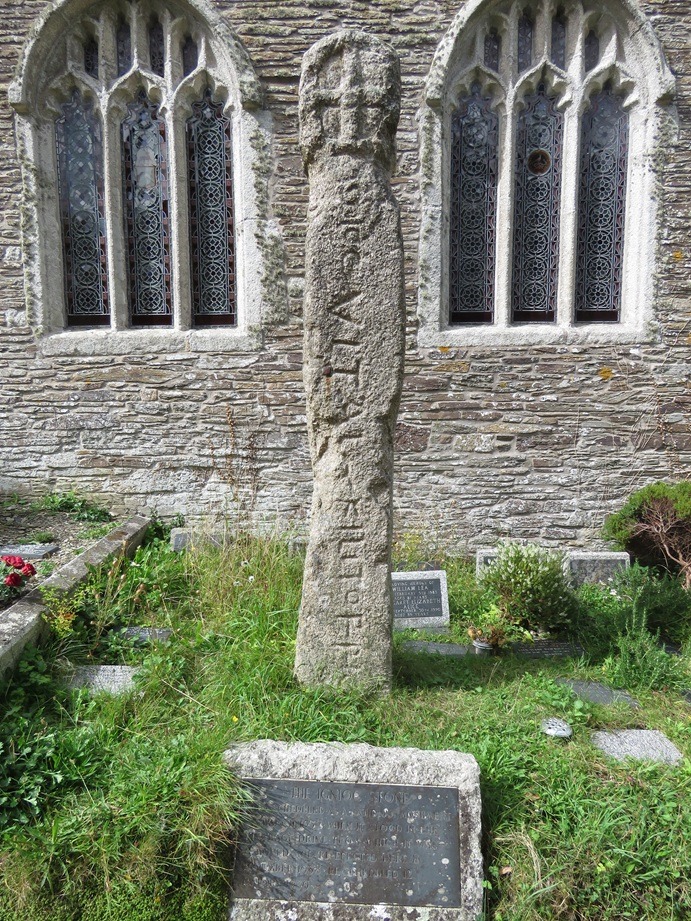
The lovely church at St Clement has an inscribed stone in its churchyard near the south door. Although this does not have Ogham script it does have vertical Latin inscription. The edges appear to have been deliberately damaged and to Macalister it seems believes Ogham has been removed. This stone was first recorded by Dr Borlase and mentioned in his Antiquities of Cornwall. At that time it was being used as a gatepost, later moved to the vicarage garden and finally in 1938 set in the churchyard. The nearly seven-foot six inch high monument is inscribed VITALI FILI TORRICI translating to ‘Of Vitalus, son of Torricus’
Although general use of Ogham died out it never truly vanished. With the rise in Celtic interests today Ogham is making a comeback. We won’t likely see books in Ogham, maybe about Ogham, but it’s certainly part of modern paganism. Today’s creative world has led to Ogham being embraced by a number of other groups and the rise of the tattoo culture has seen many people using Ogham, also now jewellery and ornamentation. Perhaps somewhere like Newquay with its nineteen tattoo shops may become Cornwall’s Ogham central.
Heritage Column