Ertach Kernow - Cornwall tour of Lewis Hind in 1907 continues
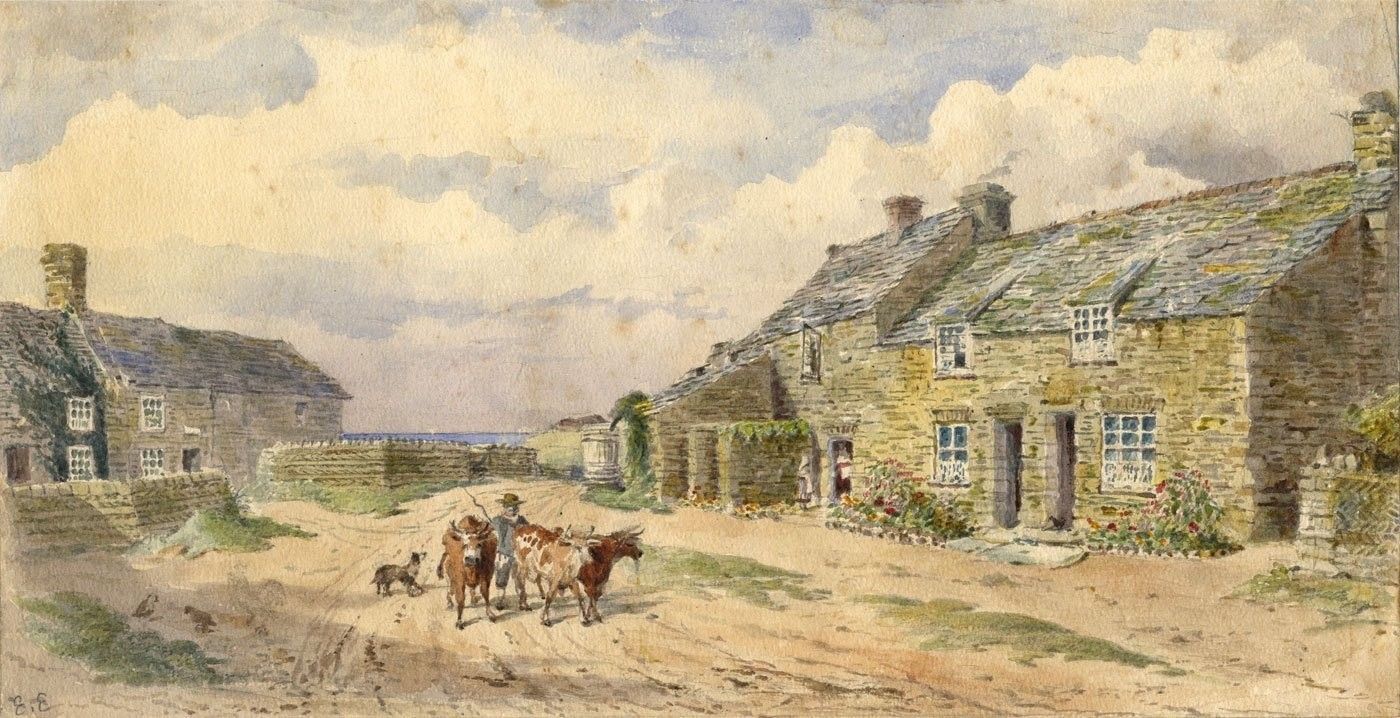
Cornwall in the early 20th century was still somewhat wild beyond the larger towns with their railway connections and growing tourist industry. So it’s interesting to follow in the footsteps of Lewis Hind an author and journalist as he travelled around Cornwall during that centuries first decade. He’s crossed the River Tamar and even looked for its source and was now walking down the North Cornish coast leaving Boscastle towards Tintagel. He was obviously aware of the legends of King Arthur and being well-read had no doubt browsed the very many books written about this mysterious warrior king.
As always click the images for larger view
Travelling from Boscastle to the hamlet of Bossiney would normally have been a pleasant four mile stroll. It seems that Lewis’ tour was during one of those winters we are suffering today, extremely wet. The streams were swollen and he moved inland to avoid the rougher cliff path. He had contemplated following a brook much enlarged by weeks of rain which would have taken him to St Nighton's Kieve, or as we would better know it St Nectan’s Glen. He eventually found a place to ford the stream soon afterwards reaching Bossiney. Lewis noted that this hamlet was much reduced once even boasting two members of parliament and had also been visited by the Tudor traveller John Leland. It seems that even Leland some four hundred years previously hadn’t been impressed including noting a number of ruined houses.
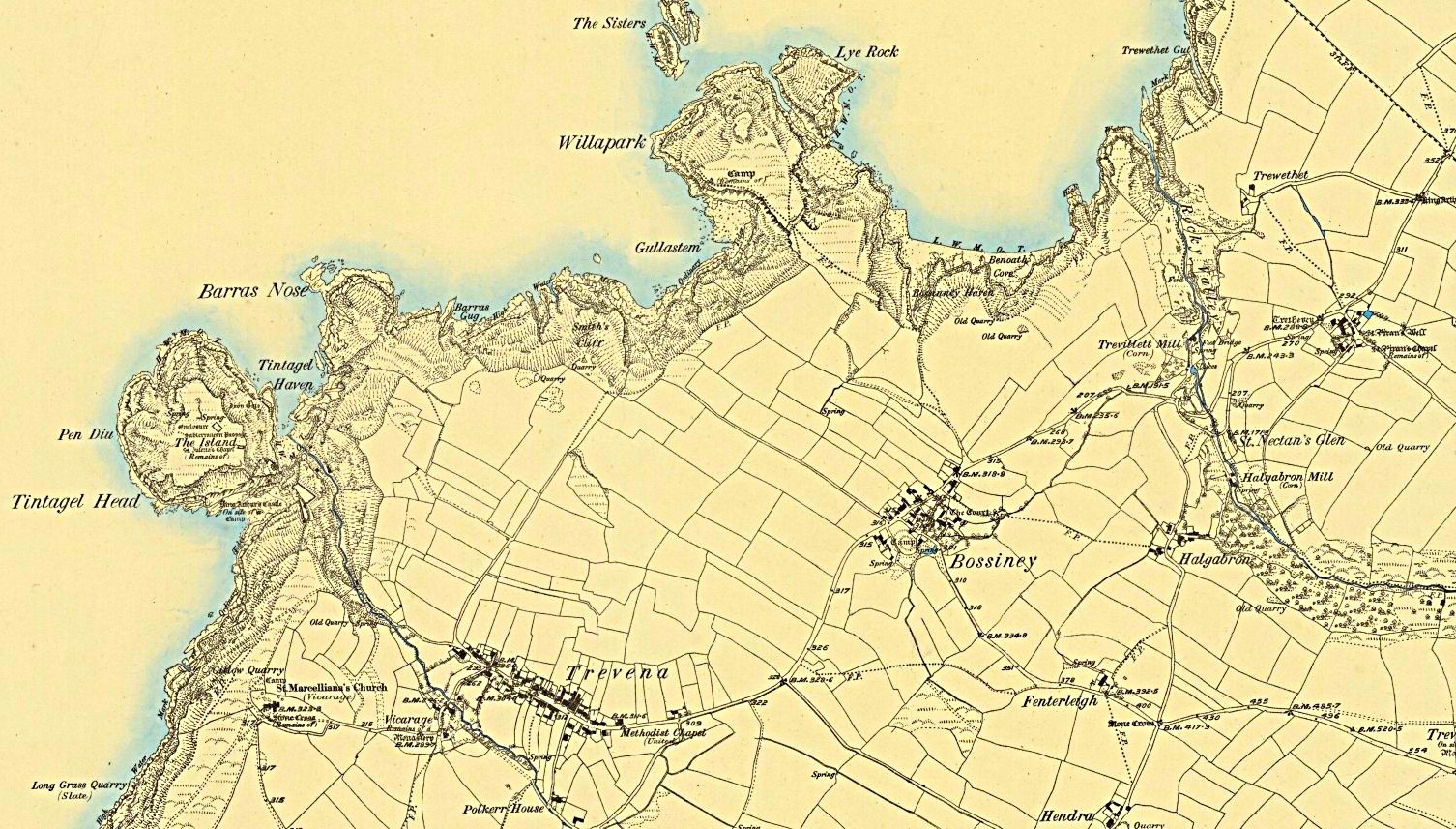

‘The approach to Tintagel was not inviting’ wrote Lewis Hind. Continuing, ‘one sees only a bare and ugly village meandering along the brow of the hill, but it was plain that I was in King Arthur's country. A placard on the side of a house advertised ‘King Arthur boots’ and an adjoining poster warned the visitor of the penalty he would incur by taking the eggs of the Cornish chough.’ It seems tourism had reached Tintagel in quite a big way by 1907 and Lewis Hind believed it was the most popular place in Cornwall. The variety of postcards and paintings of the village and the castle from the time seems to support that view. Besides the historic 12th century work by Geoffrey of Monmouth, which included King Arthur, Thomas Malory had added to that piece of historic fiction with his 15th century work ‘Le Morte d’Arthur’. By 1885 the poet laureate Alfred Lord Tennyson had written his cycle of twelve narrative poems ‘Idylls of the King’ and been joined by Morwenstow’s famous vicar R S Hawker with his own Arthurian offering ‘Quest of the Sangraal’. These works, especially Tennyson’s, Lewis Hind indicated had made Tintagel what it then was. If readers are tempted to have a look at Hawkers ‘Quest of the Sangraal’, take my advice don’t, it’s certainly not a page turner but maybe a remedy for insomnia.
Besides providing an interesting account of his travels Lewis Hind also often included some additional information about aspects of places he visited. He tells readers about the historical legend of Tintagel leading to the eventual birth of Arthur. Extracts from Tennyson’s diary noted the great poets visit to Cornwall in 1848 and his interaction with the Reverend R S Hawker, as well as his later visit in 1860. Hind then gives some historical background to the castle, somewhat different to what we better know now. He describes the castle as somewhere the earls of Cornwall lived following the Norman Conquest. He mentions Geoffrey of Monmouth who he quite accurately describes as ‘the first of our historical novelists’ whose writing as we now know included flights of fantasy regarding King Arthur. I’m pleased to read that he did include a mention of Richard Earl of Cornwall who we also now know was the builder of Tintagel Castle more or less as we now know it, albeit now in ruination.

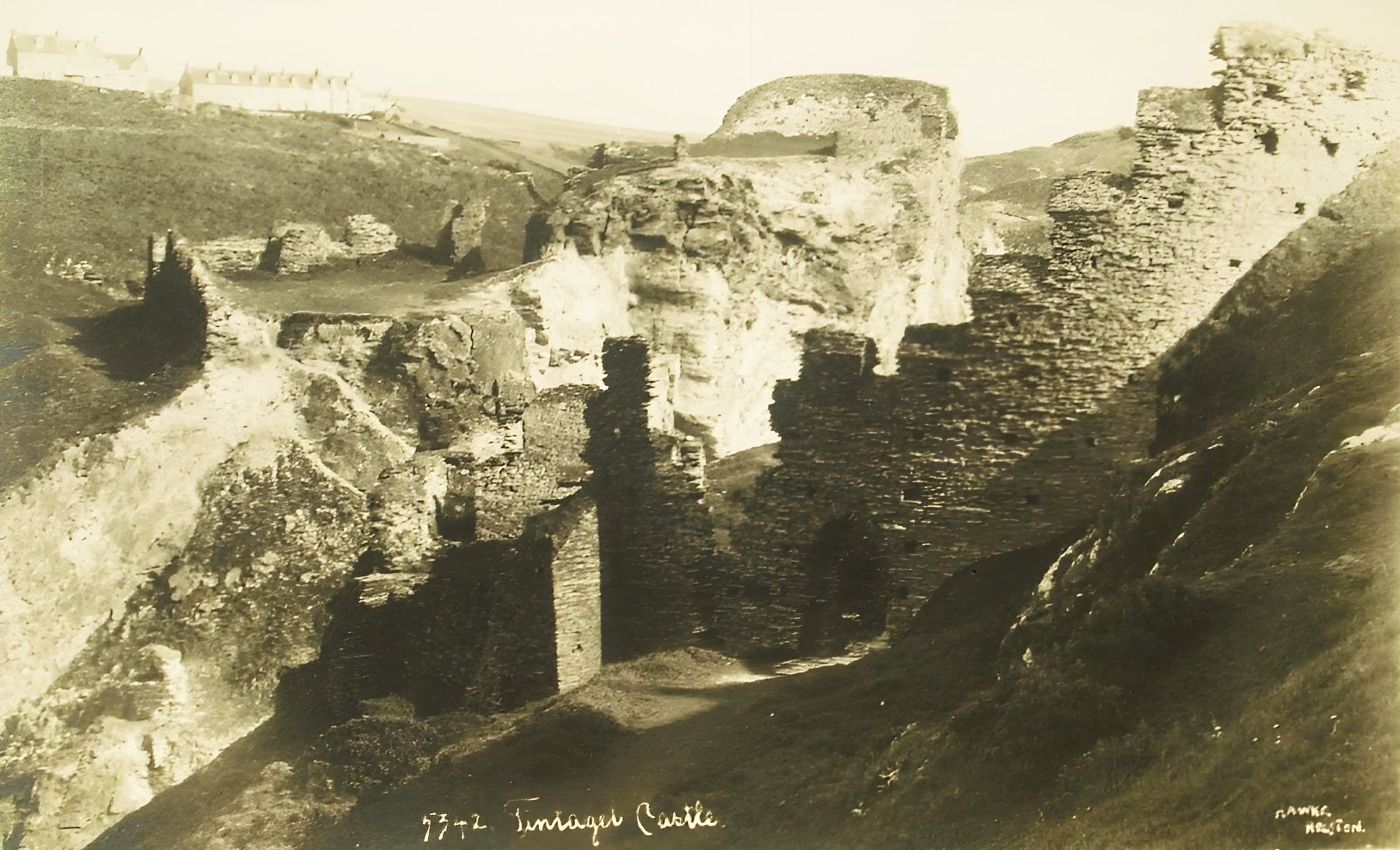
It seems that Lewis Hind was a sceptic regarding the Arthurian connection to Tintagel. He quotes from a recently published book in 1900 by Dr Dickinson ‘So much and so little for the Castle of Tintagel and Its relation to King Arthur, who certainly never saw an arch or a stone of the existing building, and could not have been begotten in a hall which was not made until many centuries after his death. What took place, and where, before the hall was built are other questions.’ Long before construction of the new bridge and visitor centre, all part of the planned extraction of cash from visitors, Lewis provided an insight into how in the early 20th century visitors were able to view the island part of the castle. He wrote; ‘the Island is now reached by a winding stairway cut in the cliff which leads to the castle. The door is always locked. You obtain the key from a cottage in the valley.’ He also comments that ‘the ruins are of no importance, but it is a fine experience to wander over the grass grown mass of rock, to watch the sea roaring against the cliffs, and to reflect on the dignity that the romance of history has given to this region.’
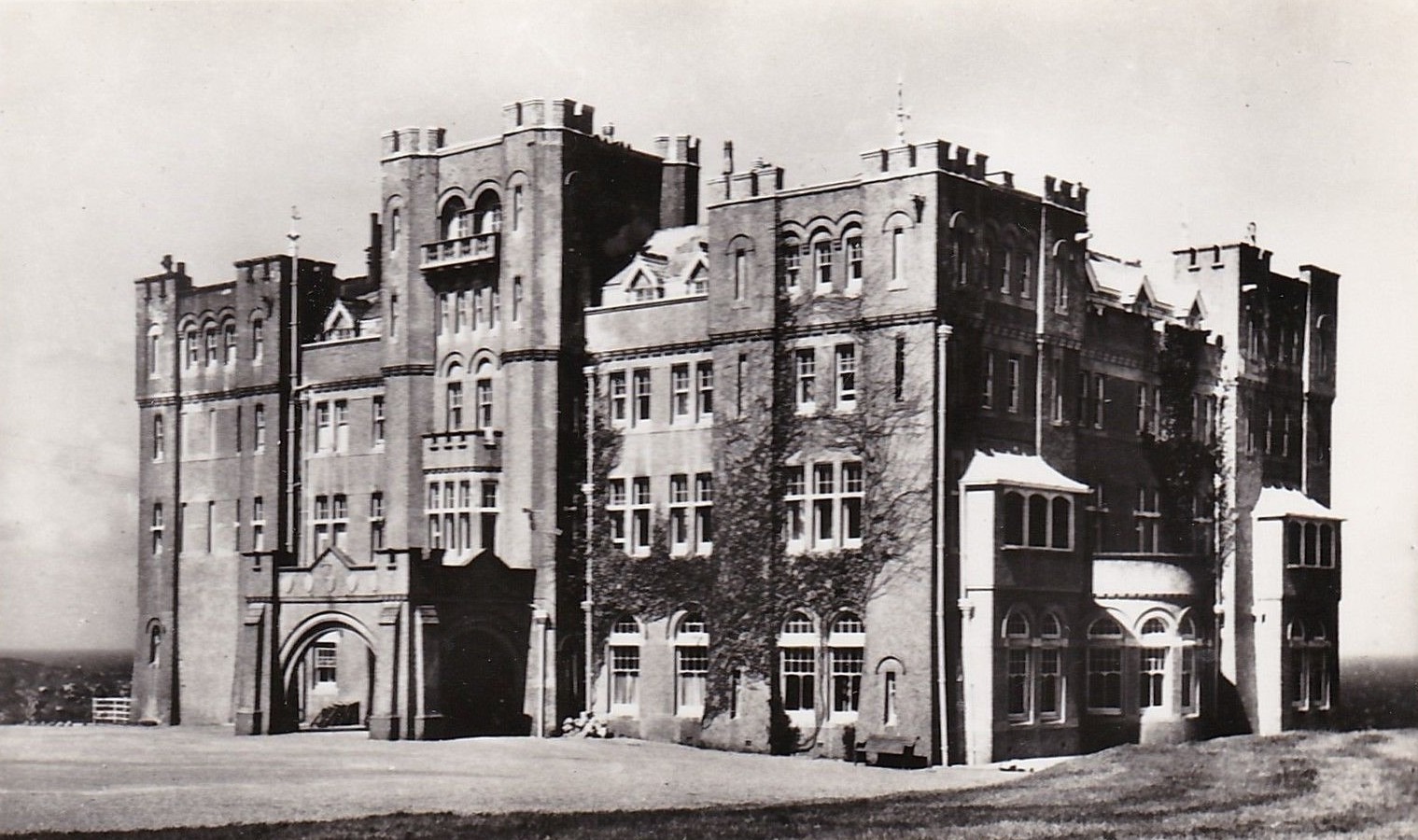
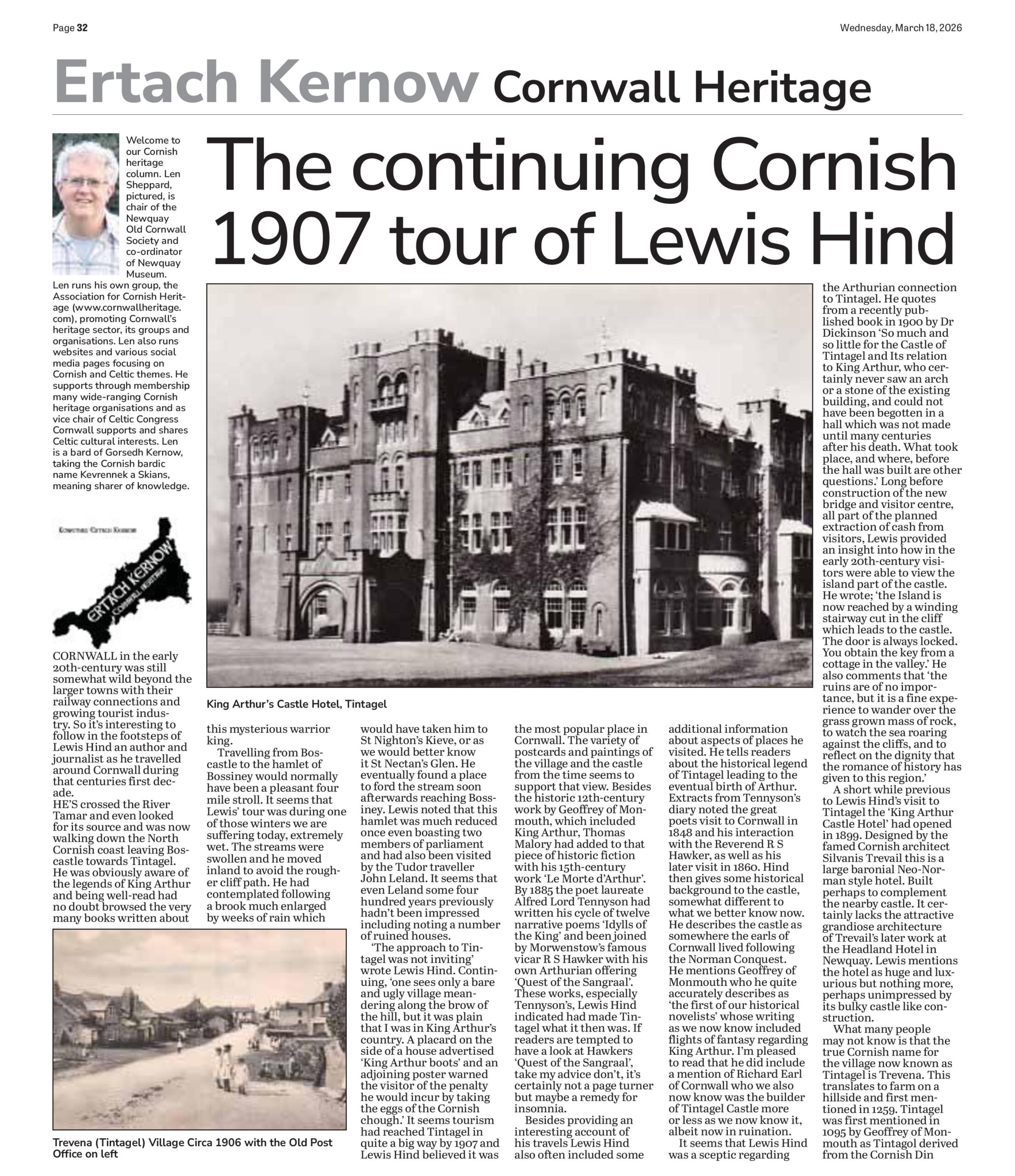
A short while previous to Lewis Hind’s visit to Tintagel the ‘King Arthur Castle Hotel’ had opened in 1899. Designed by the famed Cornish architect Silvanis Trevail this is a large baronial Neo-Norman style hotel. Built perhaps to complement the nearby castle. It certainly lacks the attractive grandiose architecture of Trevail’s later work at the Headland Hotel in Newquay. Lewis mentions the hotel as huge and luxurious but nothing more, perhaps unimpressed by its bulky castle like construction.
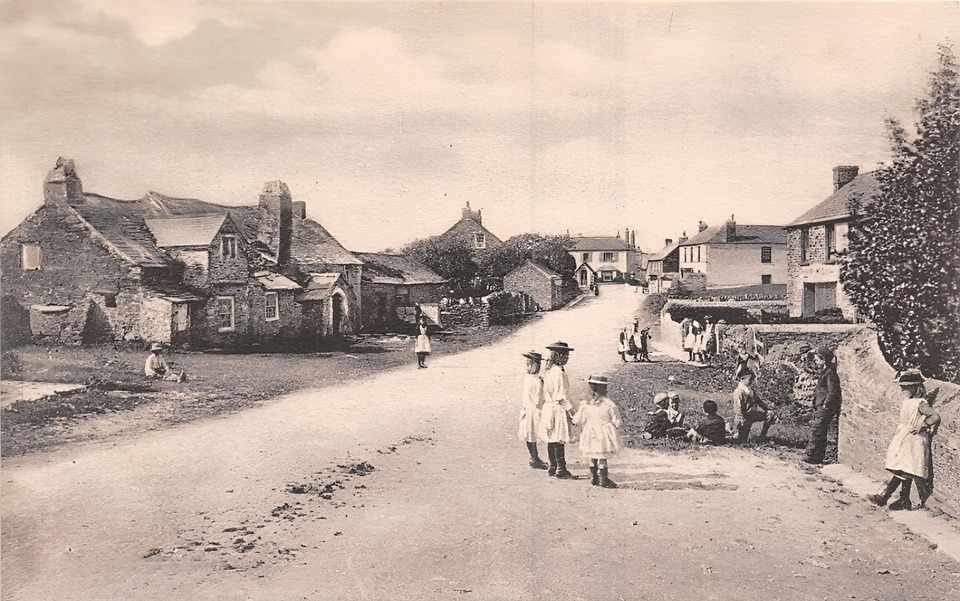
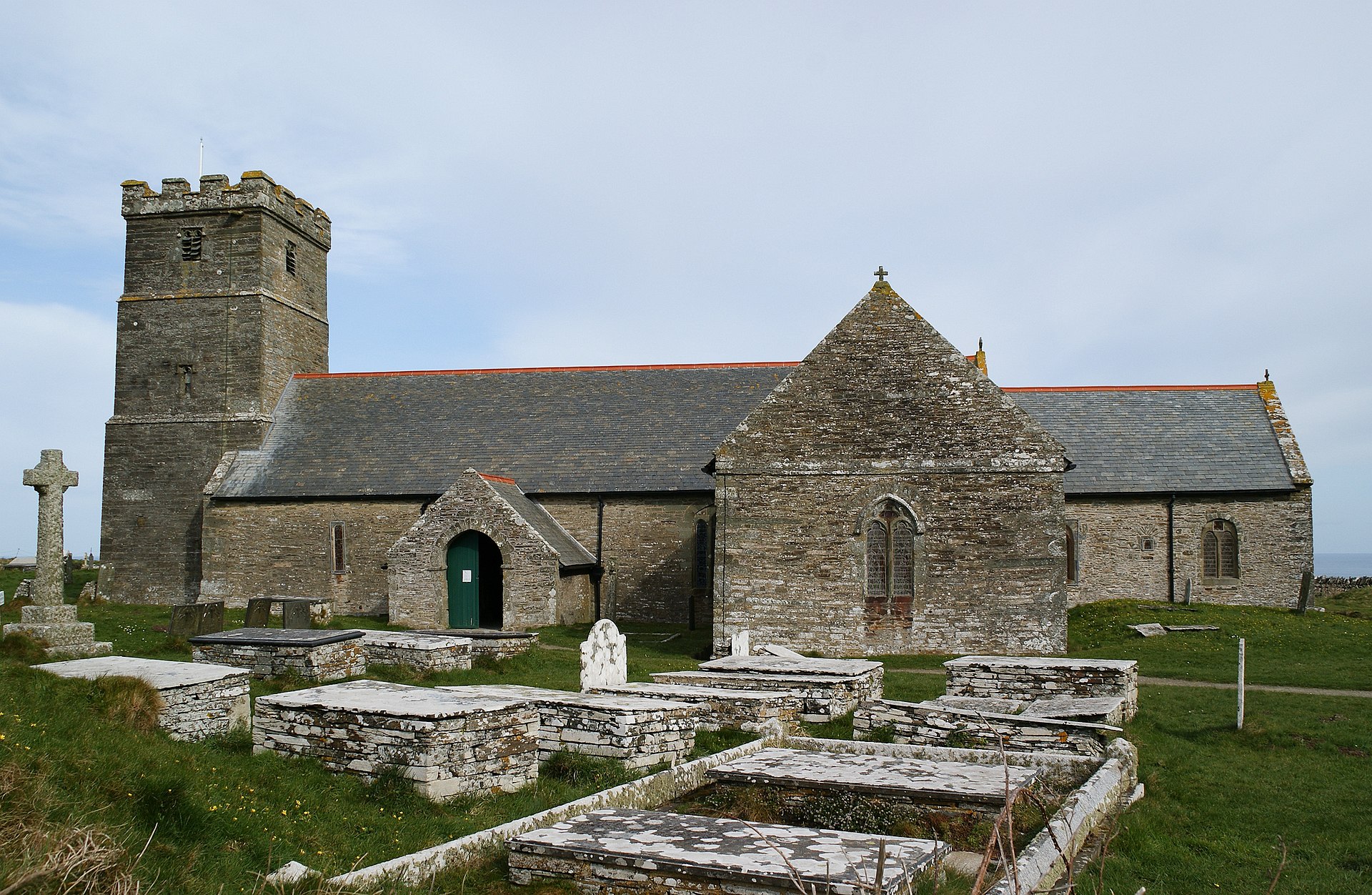
What many people may not know is that the true Cornish name for the village now known as Tintagel is Trevena. This translates to farm on a hillside and first mentioned in 1259. Tintagel was first mentioned in 1095 by Geoffrey of Monmouth as Tintagol derived from the Cornish Din (fort) tagel (choke point) later recorded in 1302 as Dyntagel. It was the local post office that began to call the village Tintagel, a name formerly limited to the castle headland, church and parish. The Ordnance survey maps show the village name as Trevena up until the 1930’s. Lewis Hind was aware of this and mentions it in his writings. It is a strange thing how visitors appreciate different aspects of heritage and historic buildings. Hind thought little of the castle that woos visitors today but was captivated by the small church and its churchyard. ‘The sad beauty of Tintagel Churchyard, with its grey tower and grey gravestones, facing the grey ocean, left an impression on my mind more lasting than the ruins of King Arthur's Castle. There, within sound of the sea, the bones of mariners rest.’ St Materiana's Church is a Grade I listed building originating from the 11th century, with much remaining early Norman work. The churchyard is large with grave monuments dating back to the late 17th century. For those interested in historic churches it is easy to understand Lewis Hind’s fascination.
‘It was a wonderful evening’ he wrote; ‘As I walked back from Tintagel Churchyard, through the long village street, the after-glow lingered in the sky, touching the headlands, rocks and bare fields to romance. Under that mystical light one felt that anything might have happened at Tintagel.’ The following morning it was all change. On leaving Tintagel Lewis was subjected to some of that famous north Cornish coast winter weather. ‘The landscape was blotted out by a hurrying mist and a driving rain, and the spray beat up from the sea. Battling with the wind, I returned to the churchyard and set my face to Trebarwith Strand, the first halting place on the way to Padstow.’
The amount of slate that was used in construction interested Lewis and he noted ‘the aggressive features of this coast are the slate quarries. It is the region of slate. Fences, walls, roofs, gates, are made of slate, and the herbage has assimilated the grey hue that infects everything in a slate country.’ Even today along the coastal path many historic Cornish stone hedges constructed with sedimentary stones can be seen topped with slate and in many older buildings. After traversing Trebarwith Strand Lewis met an old man who with his horse and cart had persuaded him to take a trip to view Delabole.
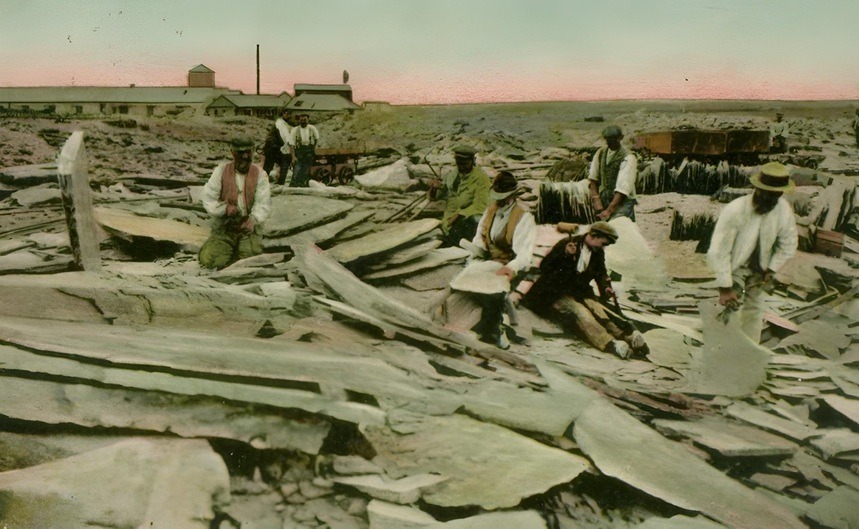
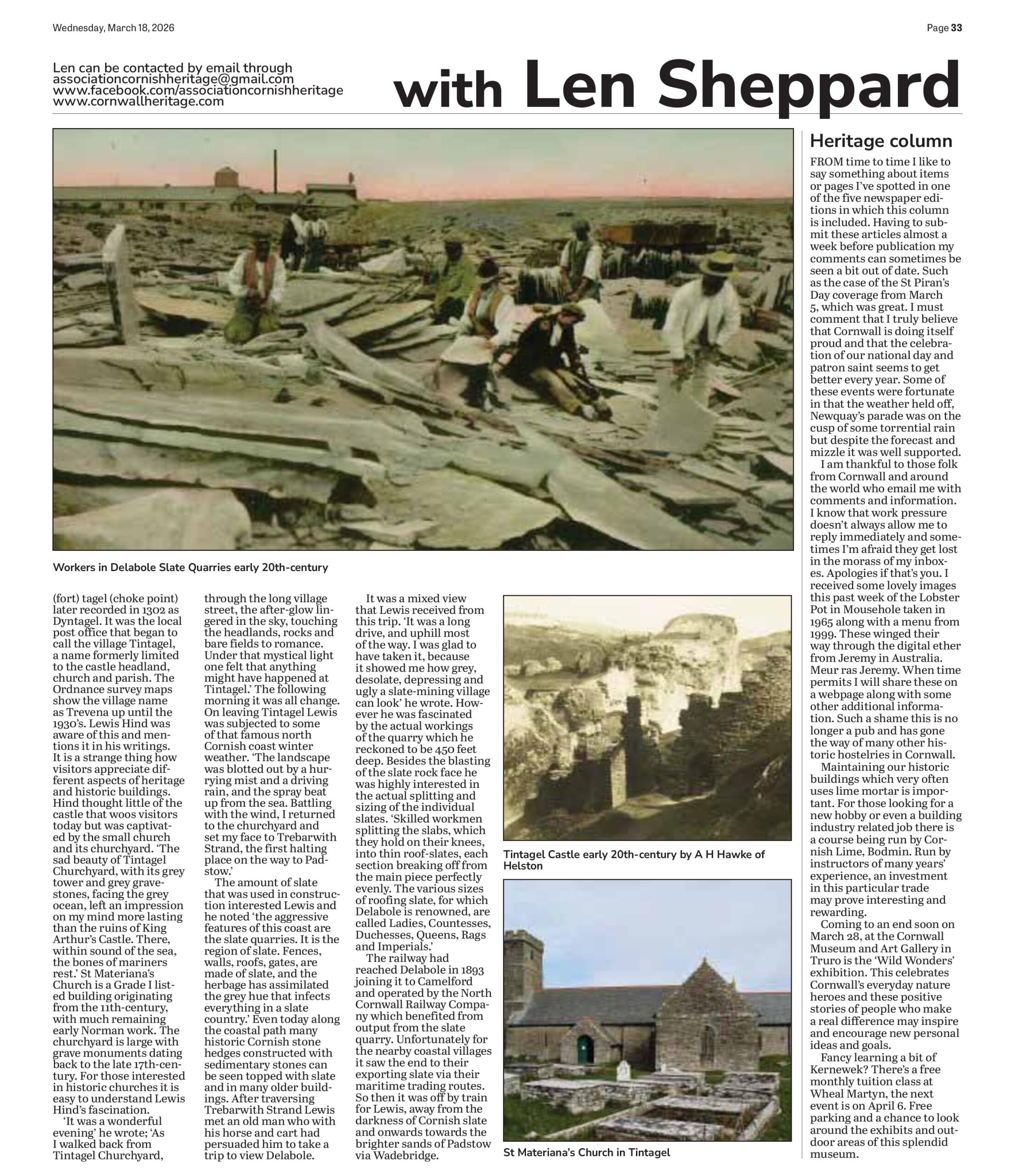
It was a mixed view that Lewis received from this trip. ‘It was a long drive, and uphill most of the way. I was glad to have taken it, because it showed me how grey, desolate, depressing and ugly a slate-mining village can look’ he wrote. However he was fascinated by the actual workings of the quarry which he reckoned to be 450 feet deep. Besides the blasting of the slate rock face he was highly interested in the actual splitting and sizing of the individual slates. ‘Skilled workmen splitting the slabs, which they hold on their knees, into thin roof-slates, each section breaking off from the main piece perfectly evenly. The various sizes of roofing slate, for which Delabole is renowned, are called Ladies, Countesses, Duchesses, Queens, Rags and Imperials.’
The railway had reached Delabole in 1893 joining it to Camelford and operated by the North Cornwall Railway Company which benefited from output from the slate quarry. Unfortunately for the nearby coastal villages it saw the end to their exporting slate via their maritime trading routes. So then it was off by train for Lewis, away from the darkness of Cornish slate and onwards towards the brighter sands of Padstow via Wadebridge.
Heritage Column