Ertach Kernow - Cornish piskies and their place in folklore
Cornish piskies are mythical mischievous creatures in Cornwall’s folklore. Given this is April Fool’s day and one that pranks are often played it seemed appropriate to look at these beings and their other mythical companions. Perhaps besides those visiting Cornwall it was the Harry Potter film ‘Harry Potter and the Chamber of Secrets’ which brought them to greater public attention. However, a huge amount of poetic licence was used in the physical depiction and one which most Cornish folklorists would abhor and reject.
As always click the images for larger view
That Cornish piskies were included within what is now a huge film franchise speaks volumes for the identity of Cornwall and its unique myths and legends. These in turn have helped develop Cornwall’s tourist industry as a place that has a different cultural heritage from across the border in England. There are those visitors who after spending their two weeks in Cornwall leave having learned nothing of Cornish environment or culture. They as part of the mass tourist industry have wallowing in the pleasures of their tourist park rather than exploring Cornwall and our wider traditions. However, there are those who return to Cornwall year after year and immerse themselves in discovering many of our lesser known places and delight in learning about Cornish cultural heritage.
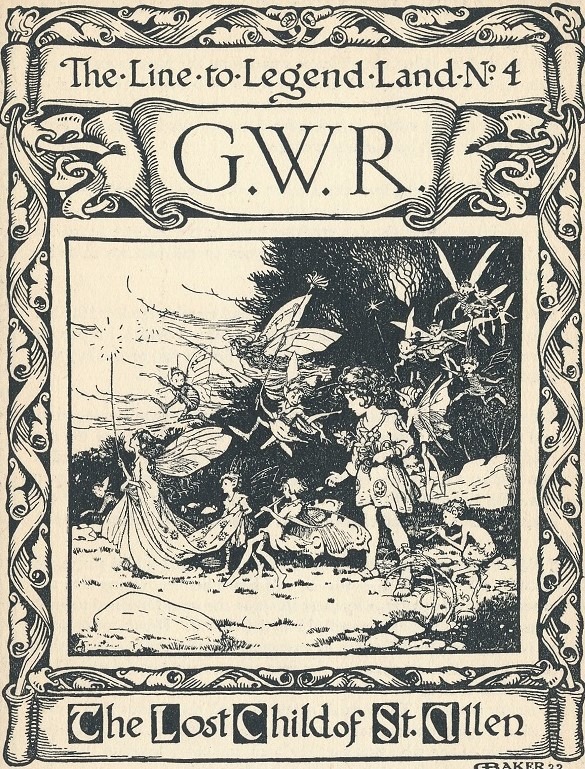
The boom years of holiday rail travel to Cornwall and Wales saw the Great Western Railway use Celtic myths as a sales opportunity. A series of pamphlets entitled ‘The Line to Legend Land’, published in the 1920’s provided a hugely abridged versions of several folktales. There was space to promote places and trips encouraging tourist to take railway journeys to explore by train. These pamphlets included a wide range of those mythical beings so loved by folklorist and storytellers over the centuries through to today.
From the 19th century we have those to thank for saving many of these tales and others who later shared them in their written works. The droll tellers were the travelling storytellers going from place to place entertaining folk with their stories. They may have also doubled up as a balladeer much as the ancient bards of Ireland did in memorising and preserving the country’s history and traditions. Although these stories were passed on in oral form they were not preserved in written form until people such as Robert Hunt and William Bottrell began to collect these stories, myths and legends from around Cornwall.
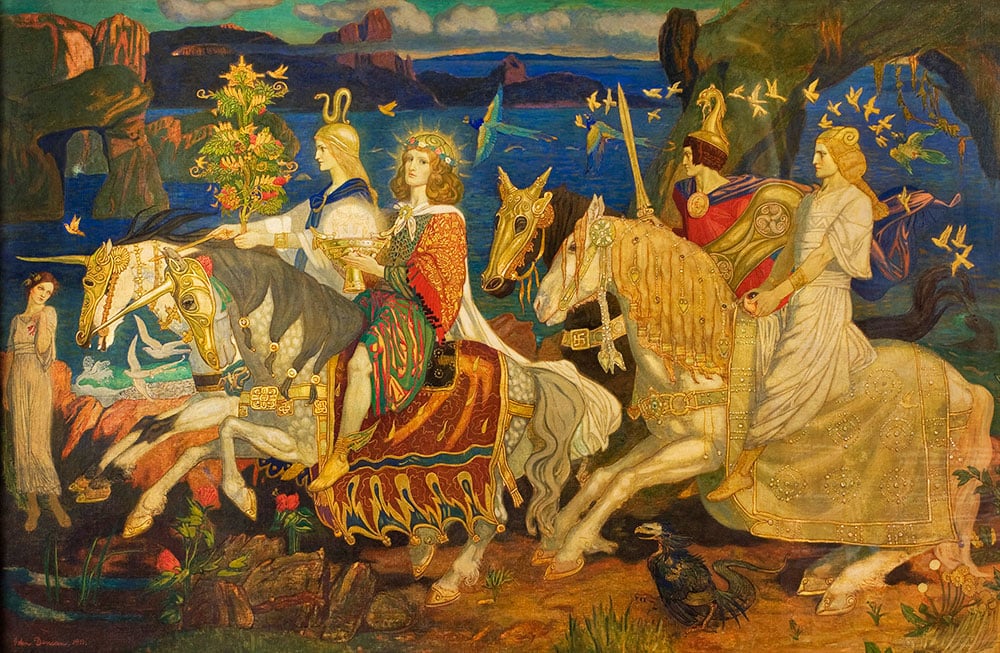
Unlike some of the other Celtic nations, say Ireland, Cornish mythic people and creatures were not recorded during the first millennium of the common era by monks. Today people generally are aware of Leprechaun’s as part of Ireland’s rich cultural heritage. However, these ‘little folk’ do not feature in early Irish mythology. What was recorded were the stories of early peoples, the Fir Bolg, Tuatha Dé Danann and beings such as the Morrigan. Perhaps based on some historical events and later expanded, these people and ancient Irish beings have become similar to Cornwall’s legends of King Arthur.
In Cornwall’s it was stories of giants which are amongst the oldest to have been written but that is because it was for a time considered part of the history of Britain. Guess who was responsible? Yes, that famous spinner of Arthurian tales Geoffery of Monmouth the 11th century Welsh cleric. Geoffrey’s ‘Histories of the King’s of Britain’ should really be made into one of those historic fantasy films which are so popular today. In his historic fantasy Geoffry held that it was Brutus a descendent of Aeneas a hero of the city of Troy who came and named Britain after himself. This is a lengthy but interesting story which involved Cornwall. Brutus had a warrior named Corineus who Geoffrey names as the first king of Cornwall after which he says it is named. Corineus’ men killed all the Cornish giants except their leader Goemagog who was kept alive for a wrestling match with Corineus. This ended with Corineus hurling Goemagog from a cliff onto rocks where he died.
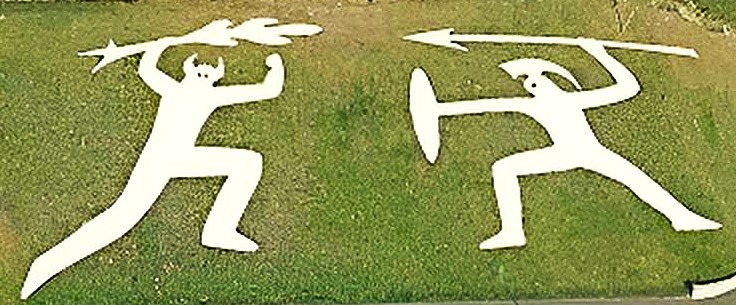
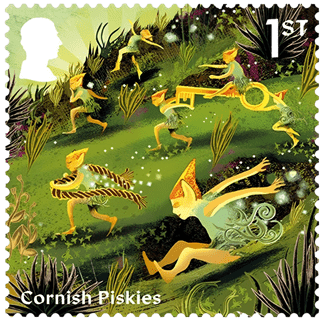
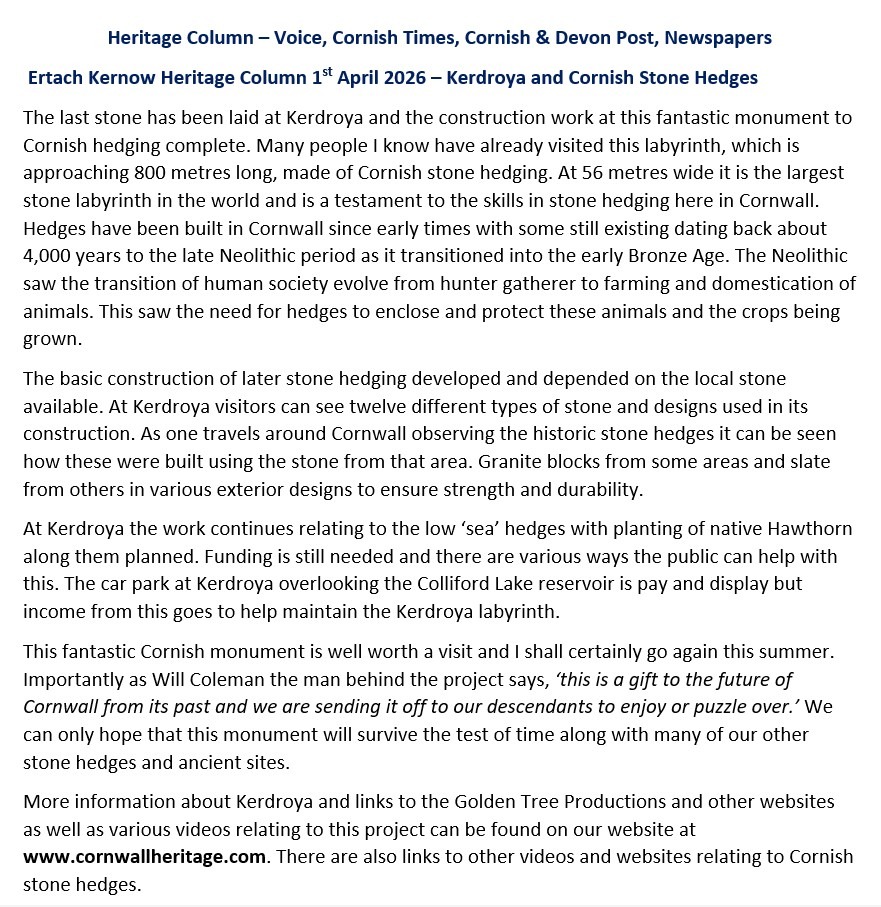
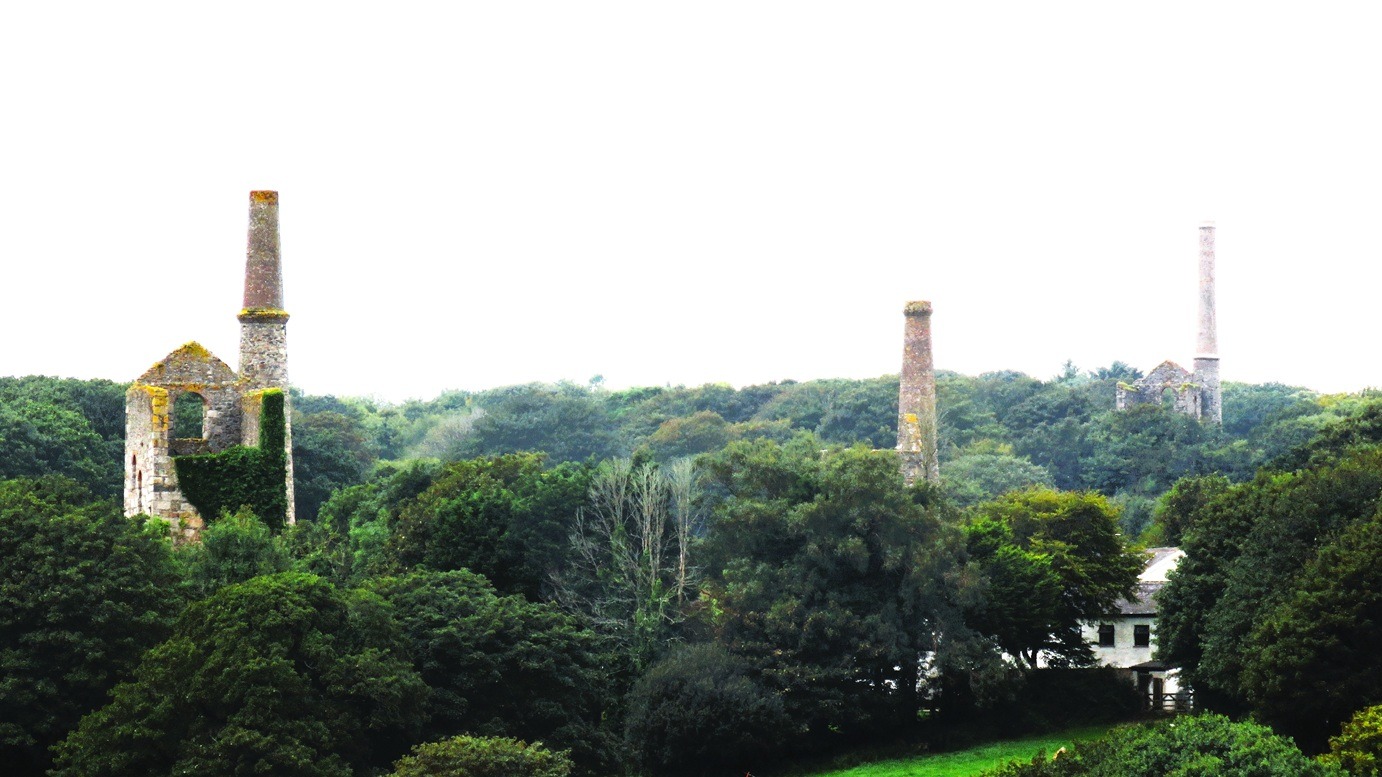
Back to Cornwall’s small folk and to look at in Cornish folklore what are piskies and who are their other mythical cousins. Piskies are relatively better known but there are those other beings who have different natures and attitudes towards humans. There are ‘knockers’ perhaps best known through the Cornish pale ale named after them. Spriggins are another branch of small folk and Bucca associated with the sea. It seems various branches of the Cornish mythical folk associate themselves with different aspects of Cornwall and its people. For example Knockers for their association with tin mining in Cornwall, the Bucca known to those who fish and ply the waters around Cornwall and the Piskies who inhabit Cornwall’s inland places and ancient sites.
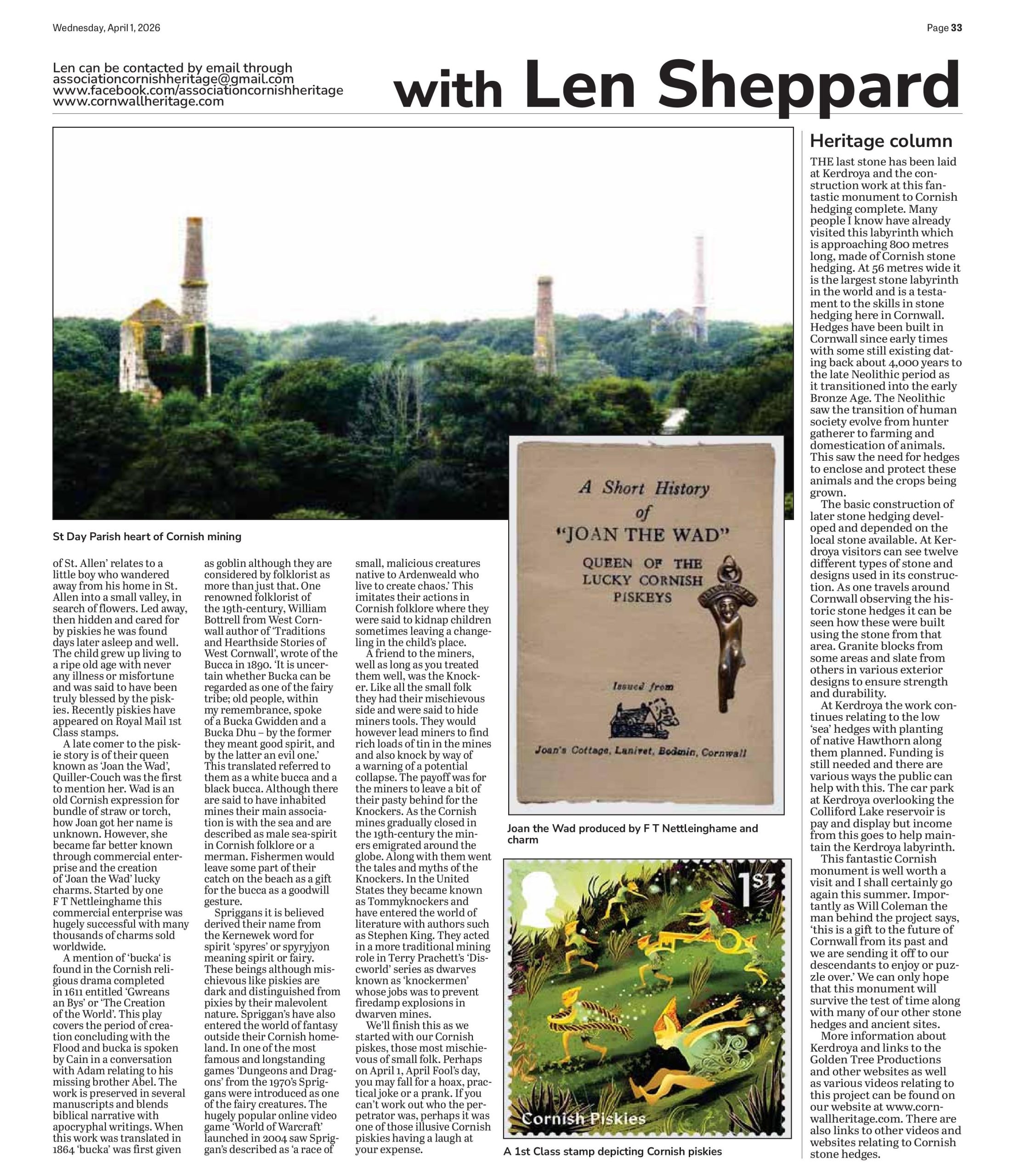
The Cornish piskie although acknowledged as pranksters were not necessarily evil or unkind. Thomas Quiller-Couch in his entry in Notes and Queries in 1855 wrote of them. ‘Our piskies are little beings standing midway between the purely spiritual and the material, suffering a few, at least, of the ills incident to humanity. They have the power of making themselves seen, heard, and felt. They interest themselves in man's affairs; now doing him a good turn, anon taking offence at a trifle, and leading him into all manner of mischief.’ Piskies appear in a number of stories. One charming one ‘the lost child of St. Allen’ relates to a little boy who wandered away from his home in St. Allen into a small valley, in search of flowers. Led away, then hidden and cared for by piskies he was found days later asleep and well. The child grew up living to a ripe old age with never any illness or misfortune and was said to have been truly blessed by the piskies. Recently piskies have appeared on Royal Mail 1st Class stamps.
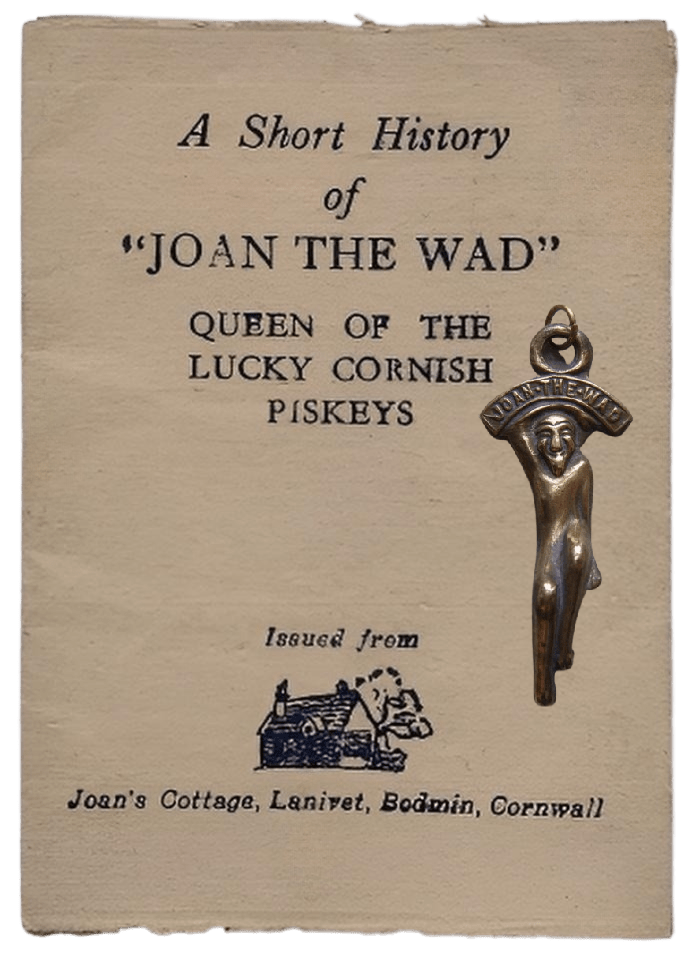
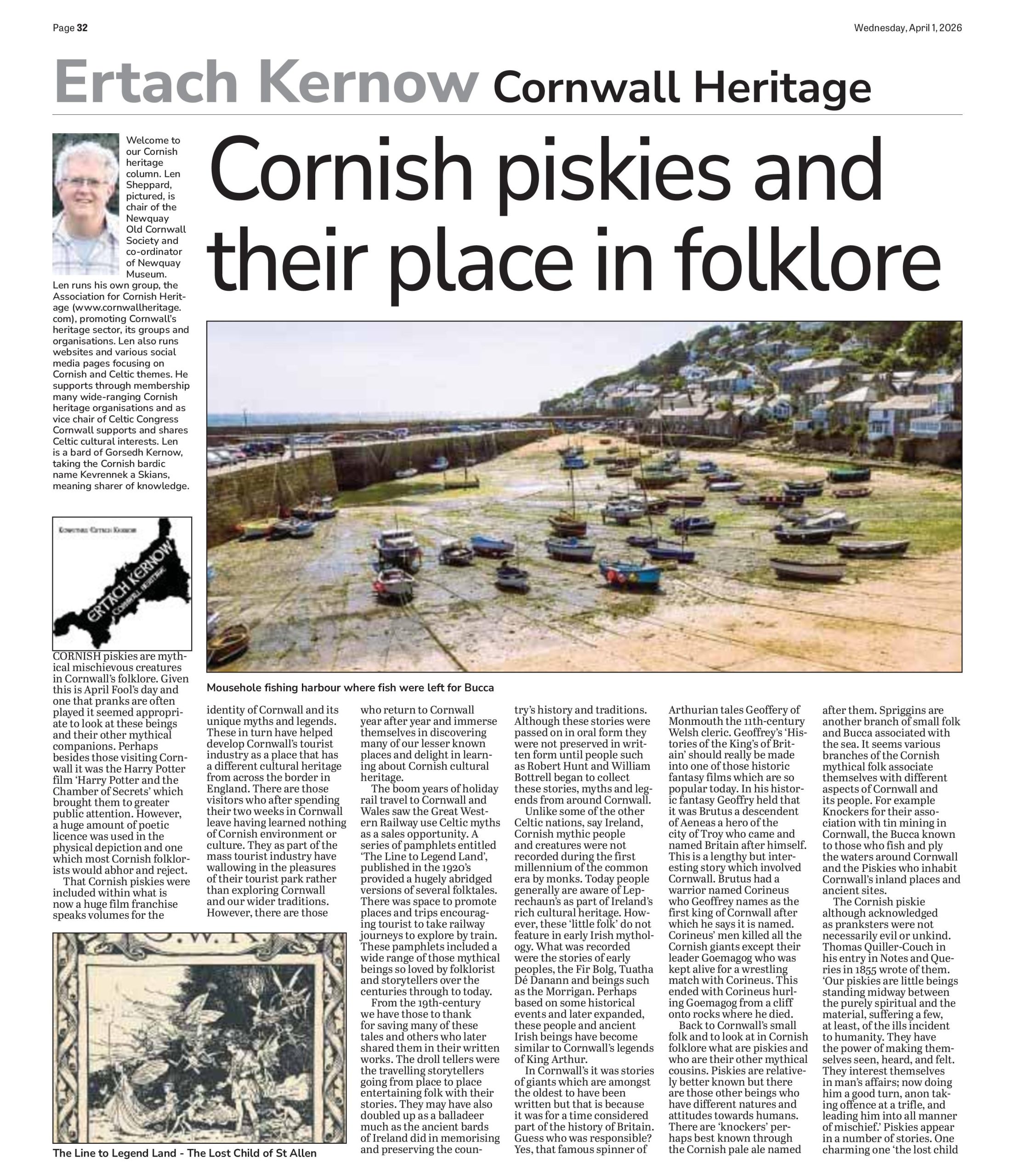
A late comer to the piskie story is of their queen known as ‘Joan the Wad’, Quiller-Couch was the first to mention her. Wad is an old Cornish expression for bundle of straw or torch, how Joan got her name is unknown. However, she became far better known through commercial enterprise and the creation of ‘Joan the Wad’ lucky charms. Started by one F T Nettleinghame this commercial enterprise was hugely successful with many thousands of charms sold worldwide.
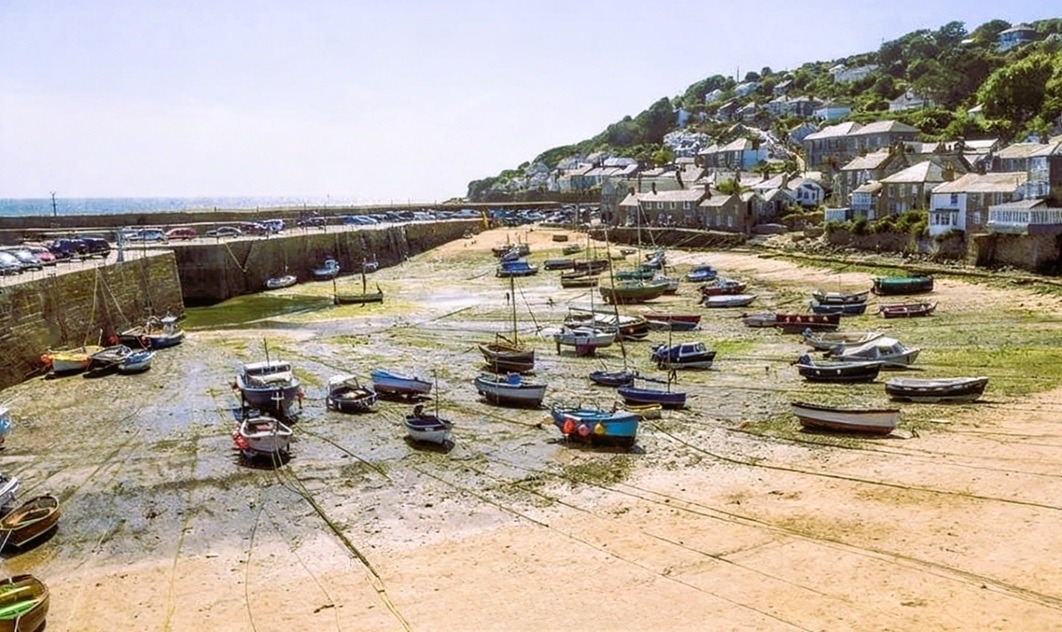
A mention of ‘bucka‘ is found in the Cornish religious drama completed in 1611 entitled ‘Gwreans an Bys’ or ‘The Creation of the World’. This play covers the period of creation concluding with the Flood and bucka is spoken by Cain in a conversation with Adam relating to his missing brother Abel. The work is preserved in several manuscripts and blends biblical narrative with apocryphal writings. When this work was translated in 1864 ‘bucka’ was first given as goblin although they are considered by folklorist as more than just that. One renowned folklorist of the 19th century, William Bottrell from West Cornwall author of ‘Traditions and Hearthside Stories of West Cornwall’, wrote of the Bucca in 1890. ‘It is uncertain whether Bucka can be regarded as one of the fairy tribe; old people, within my remembrance, spoke of a Bucka Gwidden and a Bucka Dhu – by the former they meant good spirit, and by the latter an evil one.’ This translated referred to them as a white bucca and a black bucca. Although there are said to have inhabited mines their main association is with the sea and are described as male sea-spirit in Cornish folklore or a merman. Fishermen would leave some part of their catch on the beach as a gift for the bucca as a goodwill gesture.
Spriggans it is believed derived their name from the Kernewek word for spirit ‘spyres’ or spyryjyon meaning spirit or fairy. These beings although mischievous like piskies are dark and distinguished from pixies by their malevolent nature. Spriggan’s have also entered the world of fantasy outside their Cornish homeland. In one of the most famous and longstanding games ‘Dungeons and Dragons’ from the 1970’s Spriggans were introduced as one of the fairy creatures. The hugely popular online video game ‘World of Warcraft’ launched in 2004 saw Spriggan’s described as ‘a race of small, malicious creatures native to Ardenweald who live to create chaos.’ This imitates their actions in Cornish folklore where they were said to kidnap children sometimes leaving a changeling in the child’s place.
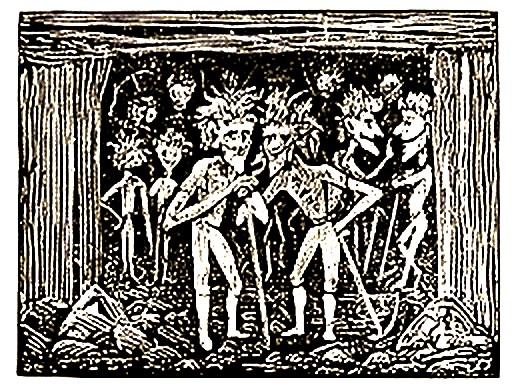
A friend to the miners, well as long as you treated them well, was the Knocker. Like all the small folk they had their mischievous side and were said to hide miners tools. They would however lead miners to find rich loads of tin in the mines and also knock by way of a warning of a potential collapse. The payoff was for the miners to leave a bit of their pasty behind for the Knockers. As the Cornish mines gradually closed in the 19th century the miners emigrated around the globe. Along with them went the tales and myths of the Knockers. In the United States they became known as Tommyknockers and have entered the world of literature with authors such as Stephen King. They acted in a more traditional mining role in Terry Prachett’s ‘Discworld’ series as dwarves known as ‘knockermen’ whose jobs was to prevent firedamp explosions in dwarven mines.
We’ll finish this as we started with our Cornish piskes, those most mischievous of small folk. Perhaps on 1st of April, April Fool’s day, you may fall for a hoax, practical joke or a prank. If you can’t work out who the perpetrator was, perhaps it was one of those illusive Cornish piskies having a laugh at your expense.
Heritage Column