Ertach Kernow - Cornish festivals help share Kernow’s culture
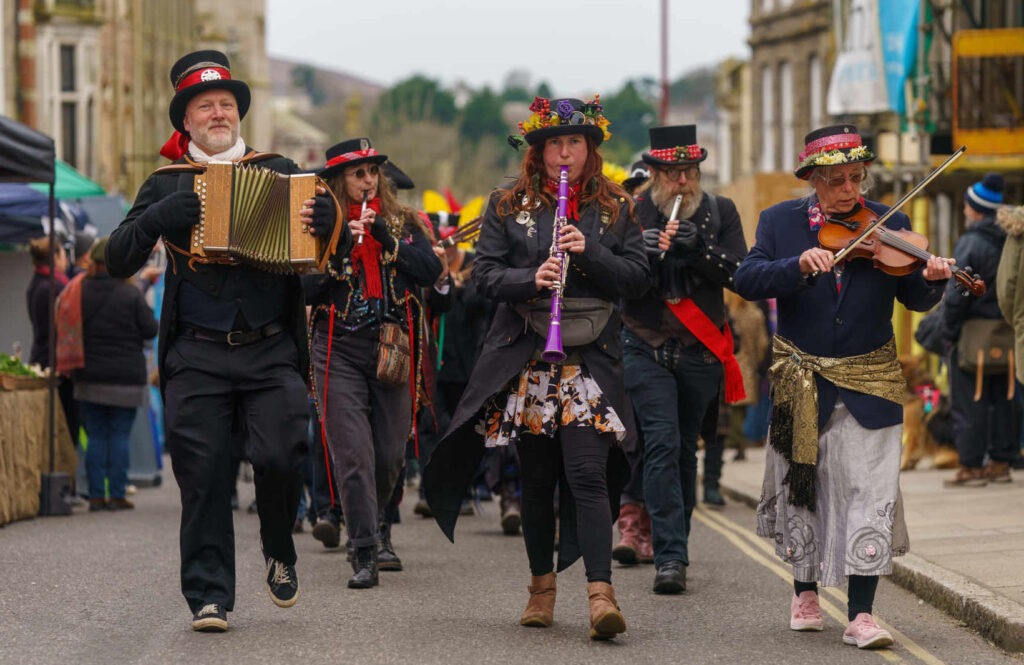
Cornish festivals are becoming an important part of Cornwall’s internal tourism as people travel to take part in them. They range from ones based on older Celtic traditions and historical festivals to those created more recently to celebrate individual community interests. Some more modern festivals are based on ancient Celtic themes also reviving some abandoned during the 18th and 19th centuries as Cornwall became more anglicised.
As always click the images for larger view
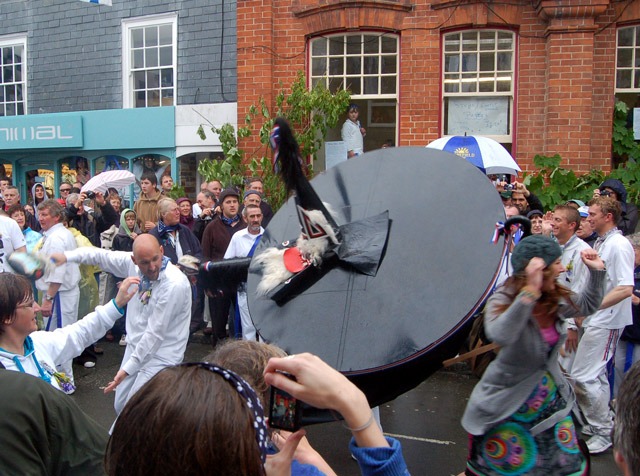
Local village and town feast days are celebrated by smaller communities throughout Cornwall. Some ancient ones celebrate the coming of spring and have become well-known within the United Kingdom and internationally through their longevity and strangeness. The May Day celebration at Padstow with its two gyrating 'Obby Oss’ and teasers followed by processions throughout the town is described as an ancient pagan fertility rite. Bristol University’s Professor Ronald Hutton who specialises in English folklore, pre-Christian religion and contemporary Paganism described it as ‘one of the most famous and most dramatic folk customs of modern Britain’.
A little later, usually on May 8th Helston hold their Flora Day celebrations. This too is a celebration of spring with nature bursting into life after winter. Couples dance through the street and various houses and shops are ‘danced’ through. This isn’t just one dance, there is the adult early morning, midday and evening dances with a children’s dance mid-morning. Today a pageant known as the `Hal-an-Tow` takes place at seven different locations following the early morning dance. This is an performance, accompanied by the singing of the `Hal-an-Tow` song, which includes enacting St Michael & the Devil, the Spaniards invasion of Mousehole and other examples of good defeating evil`, driving out the old winter and welcome in the new spring.
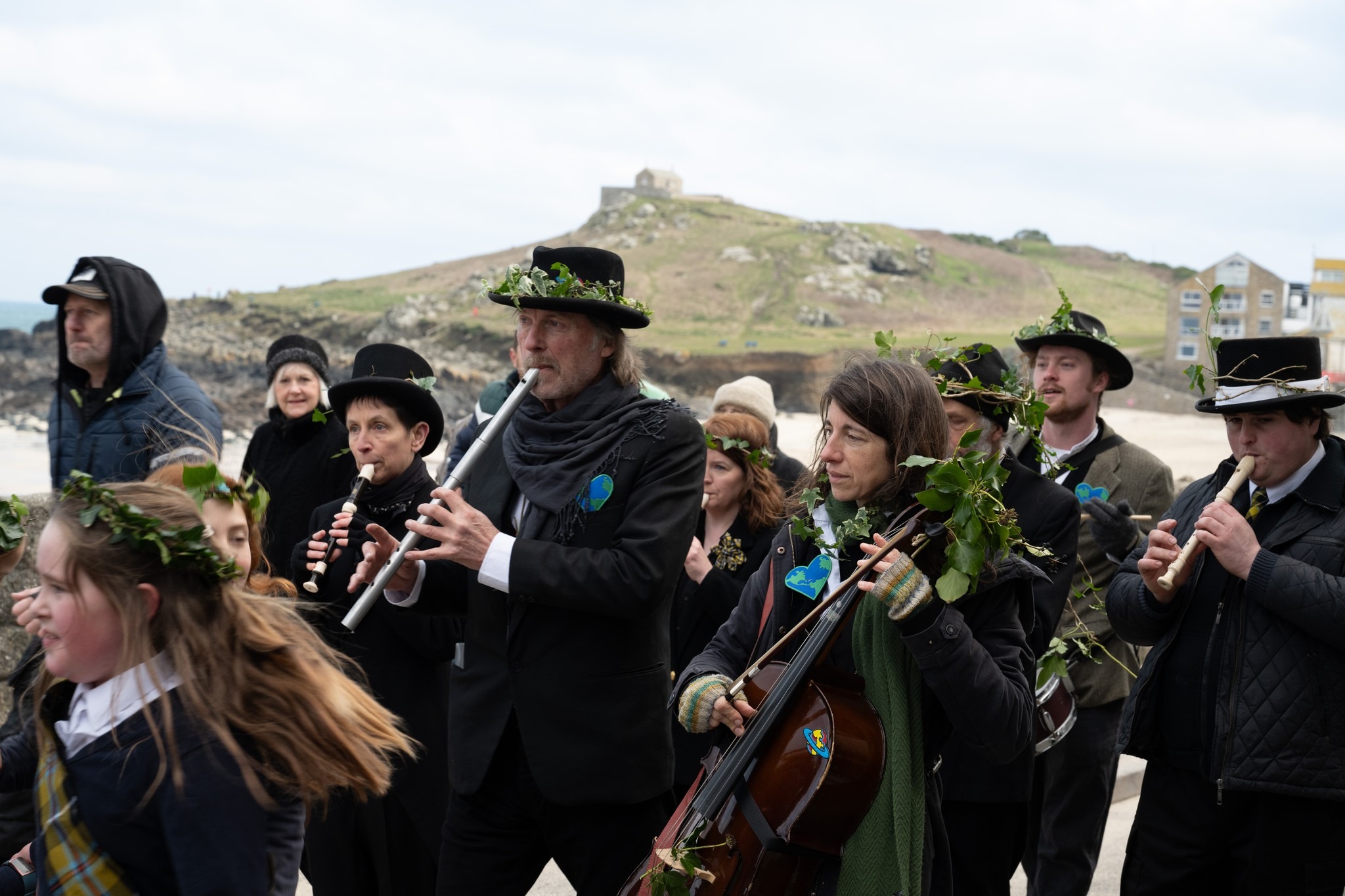
In February the ‘St Ives Feast’ celebrates St Ia, the town’s patron saint, who legend tells us arrived from Ireland floating on a leaf. The traditional ‘Well Procession’ which includes the town mayor, church leaders, musicians and dancing school children travels from the Guildhall to St Ia’s Well at Porthmeor, after which a service of thanksgiving is held. This is followed by something quite different, a hurling contest one of only three now held in Cornwall. Today this is between a large group of children, the winner being the one who holds the silver ball at midday who receives a silver commemorative coin in exchange. Later the mayor throws freshly minted pennies from the balcony of the town hall to the people below. This celebration marks the consecration of St Ives Church in 1434 when this tradition first began. There is also a Guise Dancing event where everyone is encouraged to wear a mask.
These are just three of the many celebrations that have taken place in Cornwall for hundreds of years. Although with these historic festivals and feast days occasionally gap years occurred they have later been reinstated. Their growing popularity has encouraged other communities to investigate their own history and look at reviving past traditions. ‘Allantide’ is a Cornwall wide Cornish festival traditionally celebrated on the night of 31st October. Although now mostly supplanted by Halloween activities many people still remember the historic traditions rather than ones imported from overseas. There are increasingly groups who commemorate this date with a Celtic themed Samhain fire festival marking the coming of winter. This is one of the four major Celtic festivals now being revived and celebrated, not just in Cornwall but throughout all the Celtic nations.
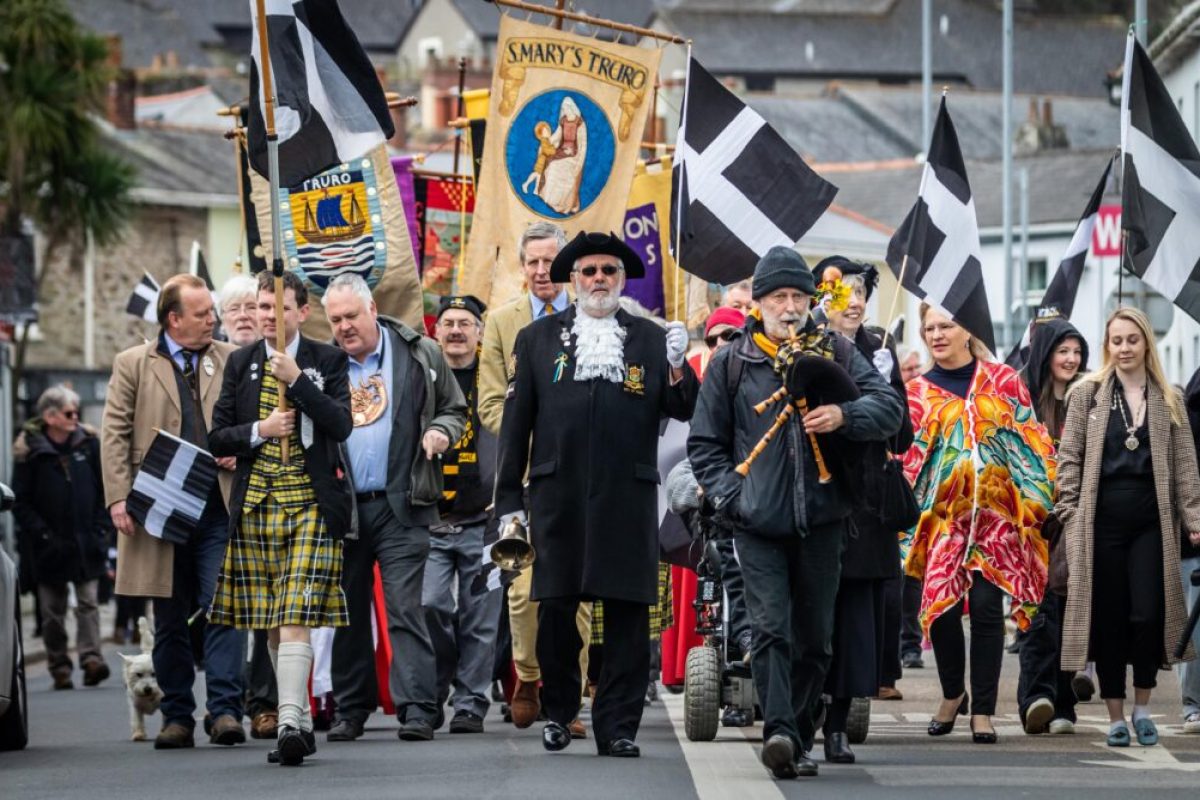
The revival of Kernewek and increase in people identifying themselves as Cornish has helped the establishment of many more modern festivals and encouraging them to quickly grow. An example of this is the number of St Piran festivals being held here in Cornwall with ever larger numbers of people participating. This has carried far beyond the shores of Cornwall where Cornish diasporic communities also engage in St Piran celebrations. Parades in the larger towns throughout Cornwall include thousands of school children celebrating St Piran’s Day and with that they are learning what it is to be Cornish. Students are now learning more about Cornwall’s history, traditions and culture as well as Kernewek.
People are more and more using Cornish idioms such as ‘gool Peran lowen’, happy St Piran’s Day, ‘Kernow bys Vykken’ Cornwall forever and at Christmas ‘Nadelik lowen ha bledhen Nowydh da’, Merry Christmas and a happy New Year. You will hear greetings such as ‘dydh da’, good day or in vernacular hello being used along with other greetings and farewells in Kernewek. Increased regular use of the Cornish language even in just a few words helps move it gradually to a living language used by tens of thousands of people. Businesses are also seeing the economic value of using Kernewek especially in smaller businesses. It was both encouraging and amusing to see the attempt by Tesco’s in Helston to use Kernewek in their signage. Unfortunately their attempts resulted in signs not in Kernewek but in Cymraeg, the Welsh language. Maybe it’s forgivable for an English person to have made this error as each languages is one of the three Brythonic Celtic languages.
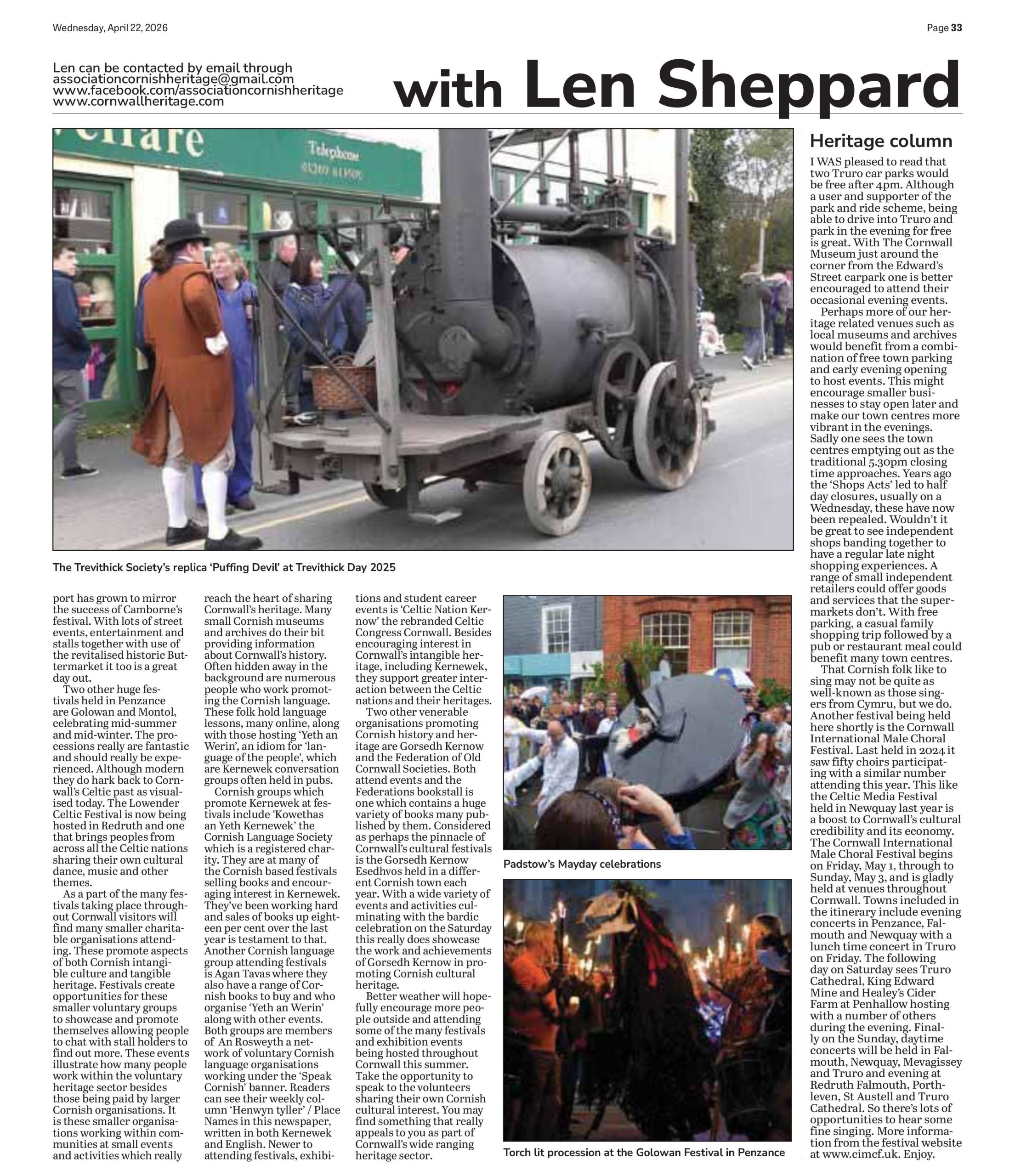
Cornwall has been the birthplace of many famous people, not just here but renowned throughout the United Kingdom and worldwide. Richard Trevithick is one such person and has the honour of having a longstanding festival named after him. On Saturday 25th April Camborne holds its annual Trevithick Day festival. The first Trevithick Day on Saturday the 28th April 1984 turned out to be a huge success with a procession including dancing, music, steam engines and lots of other activities taking place. Over forty years later it continues to attract huge numbers of people and organisations from throughout Cornwall. Look out for the replica Trevithick steam engine ‘Puffing Devil’ owned by the Trevithick Society.
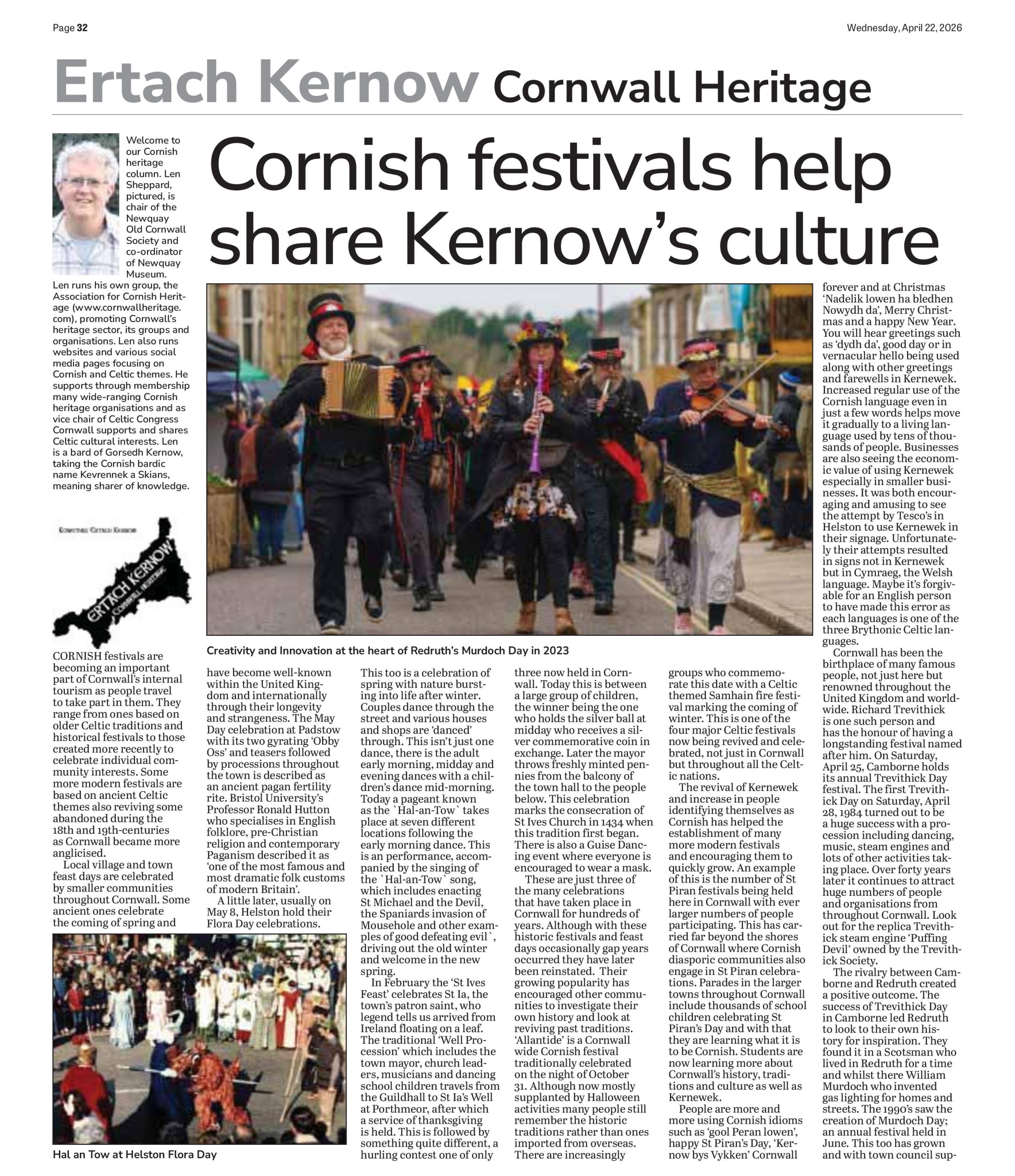
The rivalry between Camborne and Redruth created a positive outcome. The success of Trevithick Day in Camborne led Redruth to look to their own history for inspiration. They found it in a Scotsman who lived in Redruth for a time and whilst there William Murdoch who invented gas lighting for homes and streets. The 1990’s saw the creation of Murdoch Day; an annual festival held in June. This too has grown and with town council support has grown to mirror the success of Camborne’s festival. With lots of street events, entertainment and stalls together with use of the revitalised historic Buttermarket it too is a great day out.
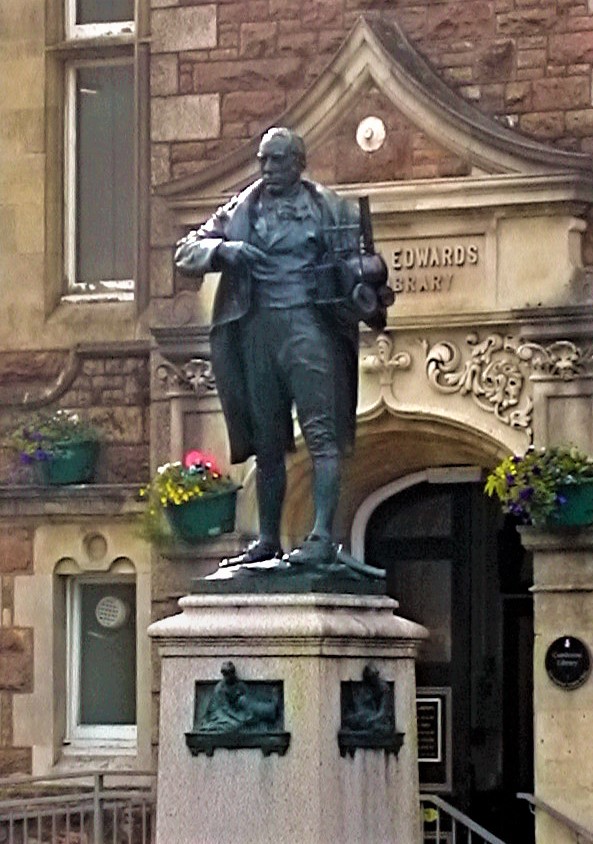
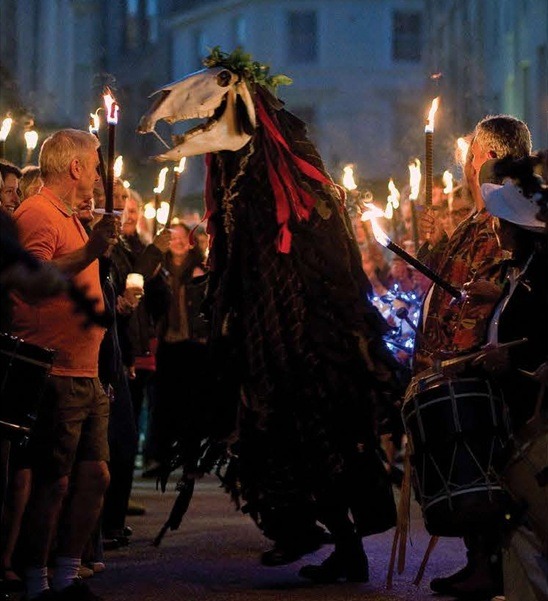
Two other huge festivals held in Penzance are Golowan and Montol, celebrating mid-summer and mid-winter. The processions really are fantastic and should really be experienced. Although modern they do hark back to Cornwall’s Celtic past as visualised today. The Lowender Celtic Festival is now being hosted in Redruth and one that brings peoples from across all the Celtic nations sharing their own cultural dance, music and other themes.
As a part of the many festivals taking place throughout Cornwall visitors will find many smaller charitable organisations attending. These promote aspects of both Cornish intangible culture and tangible heritage. Festivals create opportunities for these smaller voluntary groups to showcase and promote themselves allowing people to chat with stall holders to find out more. These events illustrate how many people work within the voluntary heritage sector besides those being paid by larger Cornish organisations. It is these smaller organisations working within communities at small events and activities which really reach the heart of sharing Cornwall’s heritage. Many small Cornish museums and archives do their bit providing information about Cornwall’s history. Often hidden away in the background are numerous people who work promoting the Cornish language. These folk hold language lessons, many online, along with those hosting ‘Yeth an Werin’, an idiom for ‘language of the people’, which are Kernewek conversation groups often held in pubs.
Cornish groups which promote Kernewek at festivals include ‘Kowethas an Yeth Kernewek’ the Cornish Language Society which is a registered charity. They are at many of the Cornish based festivals selling books and encouraging interest in Kernewek. They’ve been working hard and sales of books up eighteen percent over the last year is testament to that. Another Cornish language group attending festivals is Agan Tavas where they also have a range of Cornish books to buy and who organise ‘Yeth an Werin’ along with other events. Both groups are members of An Rosweyth a network of voluntary Cornish language organisations working under the ‘Speak Cornish’ banner. Readers can see their weekly column ‘Henwyn tyller’ / Place Names in this newspaper, written in both Kernewek and English. Newer to attending festivals, exhibitions and student career events is ‘Celtic Nation Kernow’ the rebranded Celtic Congress Cornwall. Besides encouraging interest in Cornwall’s intangible heritage, including Kernewek, they support greater interaction between the Celtic nations and their heritages.
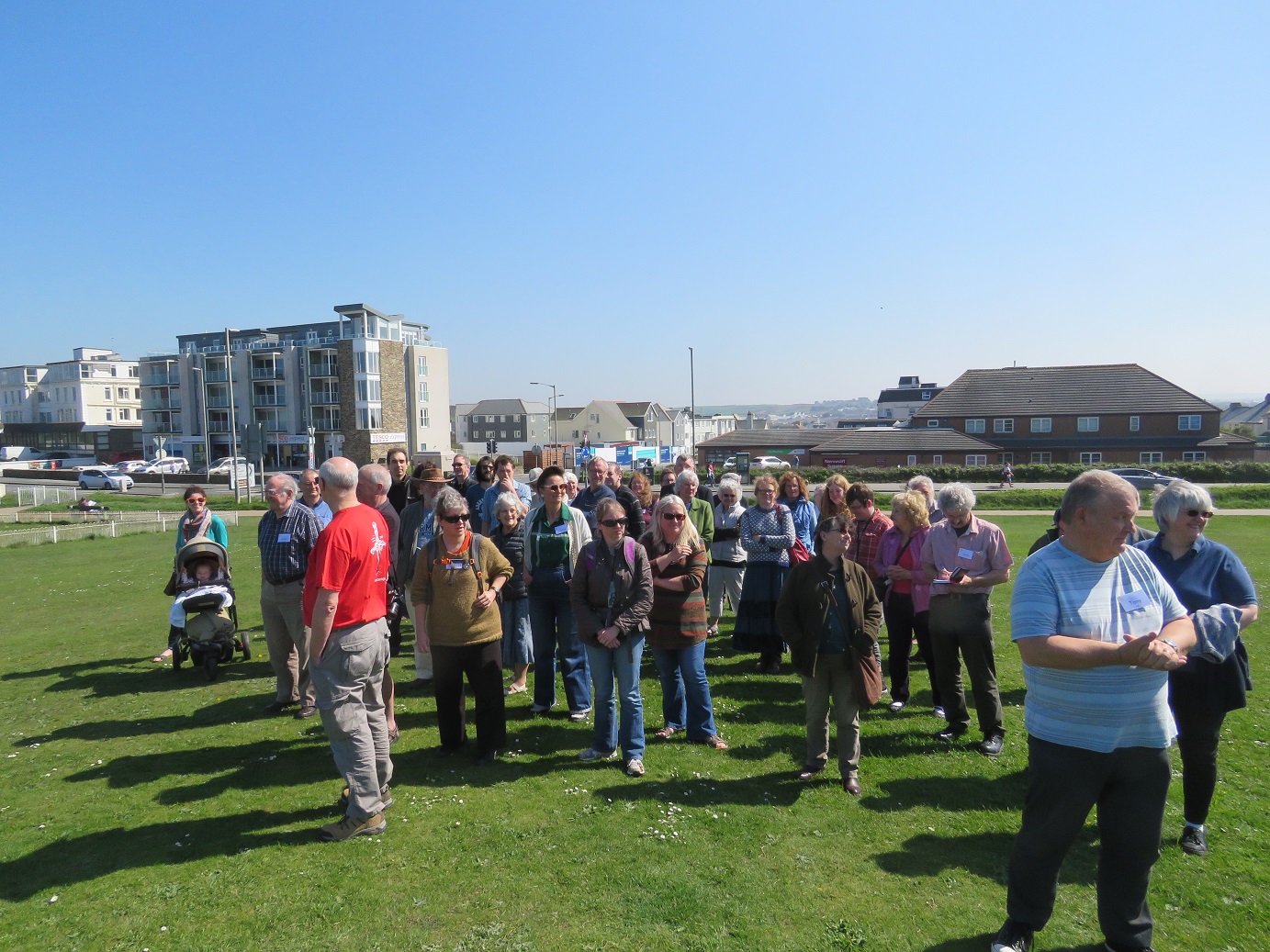

Two other venerable organisations promoting Cornish history and heritage are Gorsedh Kernow and the Federation of Old Cornwall Societies. Both attend events and the Federations bookstall is one which contains a huge variety of books many published by them. Considered as perhaps the pinnacle of Cornwall’s cultural festivals is the Gorsedh Kernow Esedhvos held in a different Cornish town each year. With a wide variety of events and activities culminating with the bardic celebration on the Saturday this really does showcase the work and achievements of Gorsedh Kernow in promoting Cornish cultural heritage.
Better weather will hopefully encourage more people outside and attending some of the many festivals and exhibition events being hosted throughout Cornwall this summer. Take the opportunity to speak to the volunteers sharing their own Cornish cultural interest. You may find something that really appeals to you as part of Cornwall’s wide ranging heritage sector.
Heritage Column