Ertach Kernow - Aspects and history of St Columb Major

St Columb Major although not far from Newquay is very different and a typical historic market town with its narrow winding streets. It is centre of an area with many ancient sites and buildings. It has close connections with wealthy and influential families stretching back to medieval times. With an extensive history it’s far too much to include more than just some aspects here.
As always click the images for larger view
The earliest evidence for occupation in the area is the Nine Maidens stone row dating from the Neolithic period. This row of nine stone megaliths is also known as ‘the Nine Sisters’ lie a couple of miles from St Columb Major in a field off the A39. There doesn’t seem to be any pattern and the distance between them is irregular with stones of varying sizes and a row length of 118 yards. In the distance, some 875 yards away is a stone known as the Fiddler towards which the Nine Maidens are aligned. These are scheduled monuments along with two Bronze Age barrows.
The nearby ancient hillfort at Castle an Dinas testifies to tribal occupation in the area from the Iron Age. Over two-thousand years old this is one of the largest and best-preserved hillforts in Cornwall and southwest England. Termed a multivallate hillfort it consists of three ditches with accompanying ramparts and was first listed as a scheduled monument in 1928. There is some evidence of a fourth circle and at its summit there are two bowl barrows which were investigated by the Cornish antiquarian William Copeland-Borlase in 1871. From 1916 until 1957 there was a wolframite mine, from which tungsten was derived, the largest in Cornwall. There are many legends relating to the site at Castle an Dinas including, not surprisingly, Arthurian. For those who haven’t visited on a sunny day, the panoramic 360-degree view is wonderful.




Moving on several hundred years to the post-Normal Conquest and the Domesday Book two manors are mentioned which lie close by the current town. Both of these fell within what was the hundred of Rialton, which would later be redesignated as an area of the Pydar hundred. Carworgie was named and recorded as one of the smallest manors with just three households. Trevornick was an even smaller settlement with no households recorded in Domesday. The tenants in chief were the Canons of St Petroc’s at Bodmin. With no village mentioned it is likely much of the population was scattered across a number of farmsteads and not fully recorded. Cornish people were known to move their animals away from where they were being recorded to avoid potential taxes being levied.
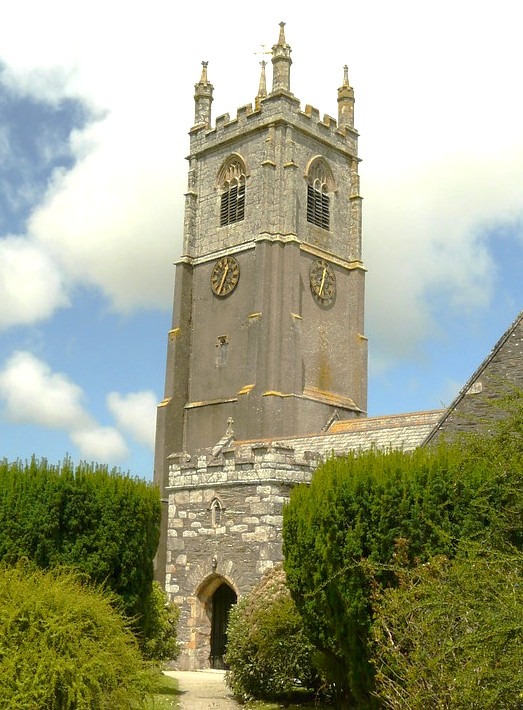
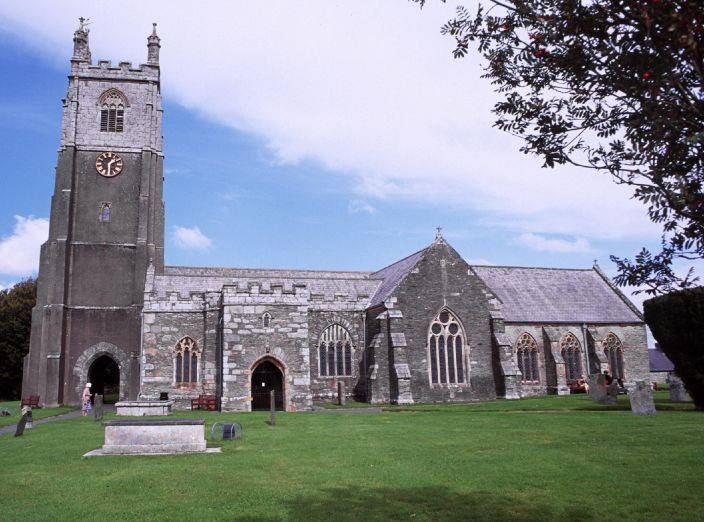
The parish church of St Columba at the centre of the town originates from the 13th century. This was a period when the Arundell family had control of much of the area including the church. The tower was constructed in 1433 with a contribution from the Arundell’s which also included bells. The tower is eighty feet high with eight bells and an oddity of having an arch running through it. This was to allow access to a college established there in 1427 by Sir John Arundell.
By the early 14th century Edward III had granted Sir John Arundell the right to hold a market in St Columb Major. The right to hold a market or fair was valuable and created opportunities to expand a settlement as well as make some money from it. The Arundell family were one of those Cornish families with wealth and influence for many centuries. As staunch Catholics this would eventually lead to failure of the family’s fortunes following the Reformation during the 16th century. The story of the Arundell and their main property at Lanherne is most interesting, but too long for this article. One for the future.

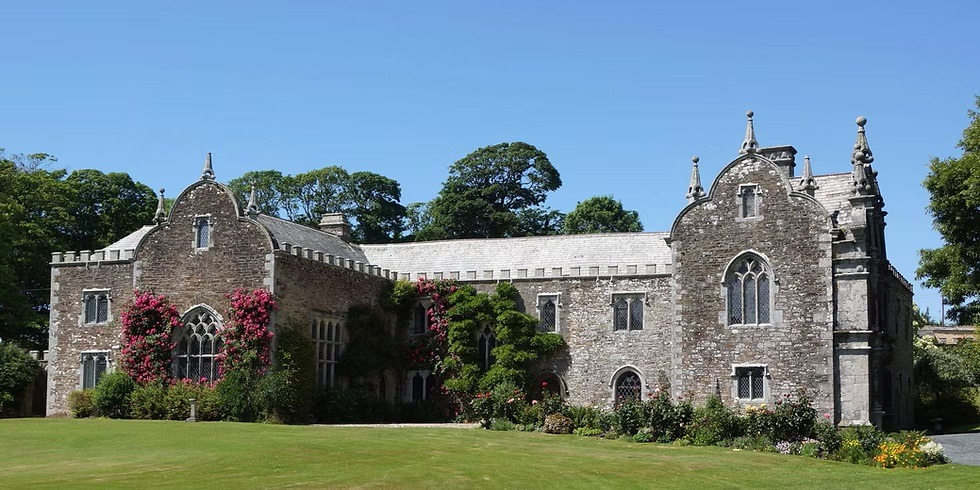
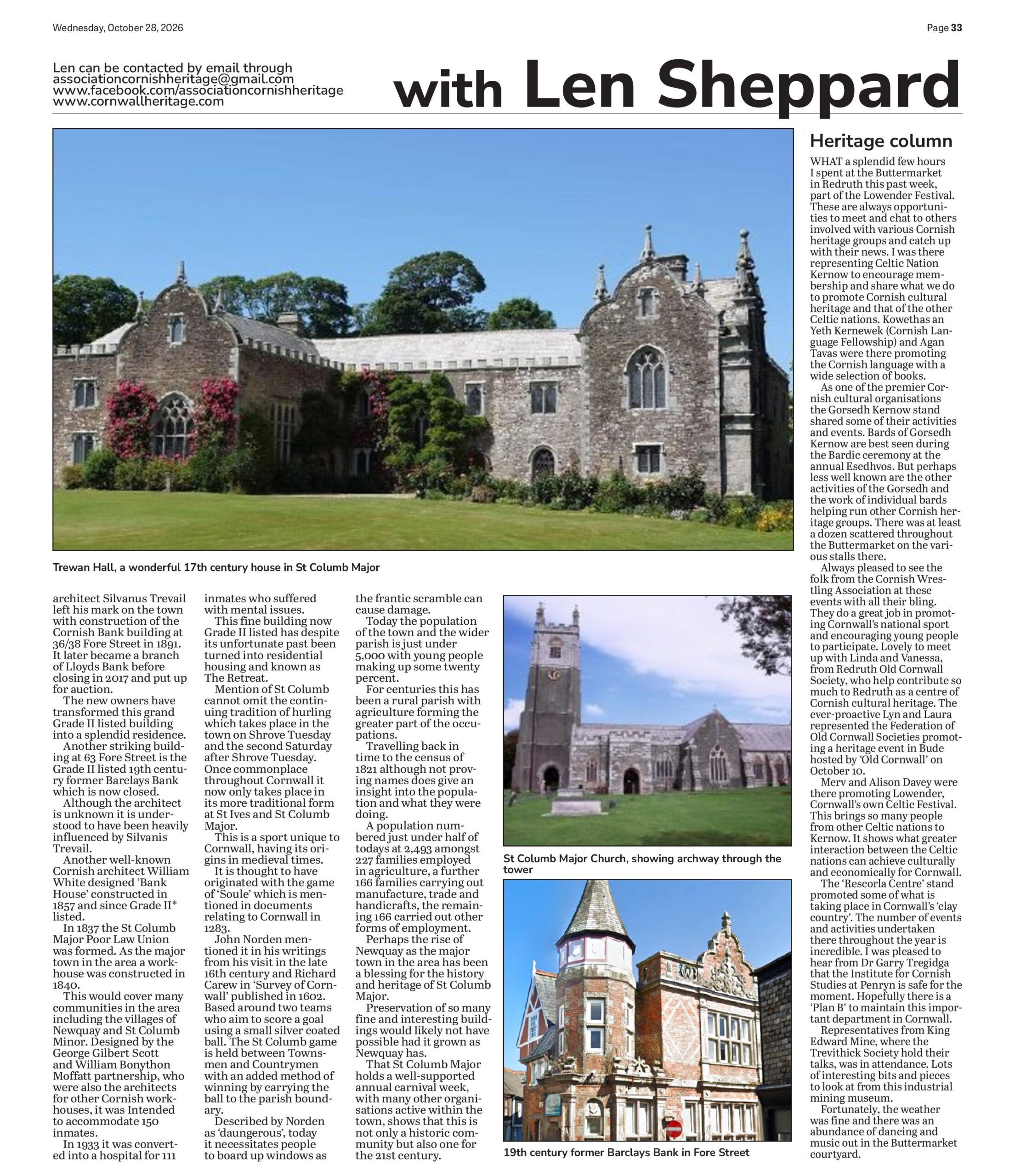
One of Cornwall’s lesser-known historic houses is Trewan Hall. This house largely dates from the early 17th century although its origins are in the 15th century. There is an inscription on a fireplace showing a date of 1635. The Vivian family had lived at Trenoweth before the now Grade II* listed house was constructed. It then became the home of this historic Cornish family for some three hundred years until 1920. Members of the family had served as Sheriff of Cornwall and Members of Parliament for Cornish constituencies. There are memorials to various members of the family in St Columb Major church from the first half of the 17th century. Through a marriage in 1697 two historic branches of the family were joined, the family name then becoming Vyvyan.
For some reason there seems to have been a barrel of gunpowder in the church in 1676. Three youths managed to set fire to it and blow themselves up and part of the church. Sadly, for future historians the explosion destroyed a number of family monuments. Through public donations and a small parish rate the church was repaired within nine-months. The British Gothic Revival architect William Butterfield drew up plans in 1860 with a view to extend the church as a cathedral for the future diocese Cornwall. As we now know Truro was chosen and why anyone would consider St Columb Major is interesting.

Within St Columb Major there are 76 listed buildings with some 134 listed structures within the wider vicinity, including many of architectural interest. At the centre of the town, besides the church, there is a close grouping of well over three dozen buildings around Market Place, Union Square, Fore Street and Bank Street. Taking just a few as examples one of the oldest is the Grade II* listed Glebe House dating from the 16th century. Retaining many early features there have been alterations over the centuries and what remains is part of once was a larger property. From its name can be seen it had church connection and once formed part of a row of poorhouses, tradesmen’s workshops, and the parish gaol, now long replaced.
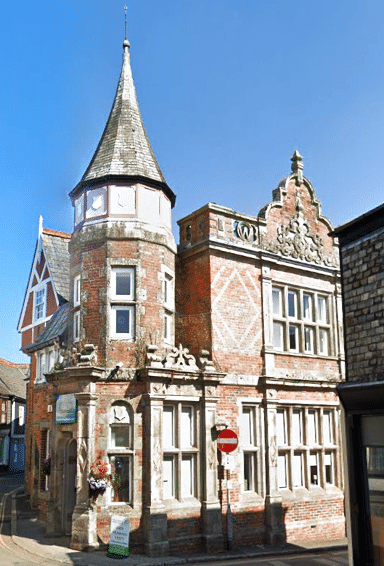
The importance of St Columb Major before Newquay overshadowed it can be seen in the construction of bank buildings in the town centre. The celebrated Cornish architect Silvanus Trevail left his mark on the town with construction of the Cornish Bank building at 36/38 Fore Street in 1891. It later became a branch of Lloyds Bank before closing in 2017 and put up for auction. The new owners have transformed this grand Grade II listed building into a splendid residence. Another striking building at 63 Fore Street is the Grade II listed 19th century former Barclays Bank which is now closed. Although the architect is unknown it is understood to have been heavily influenced by Silvanis Trevail. Another well-known Cornish architect William White designed ‘Bank House’ constructed in 1857 and since Grade II* listed.
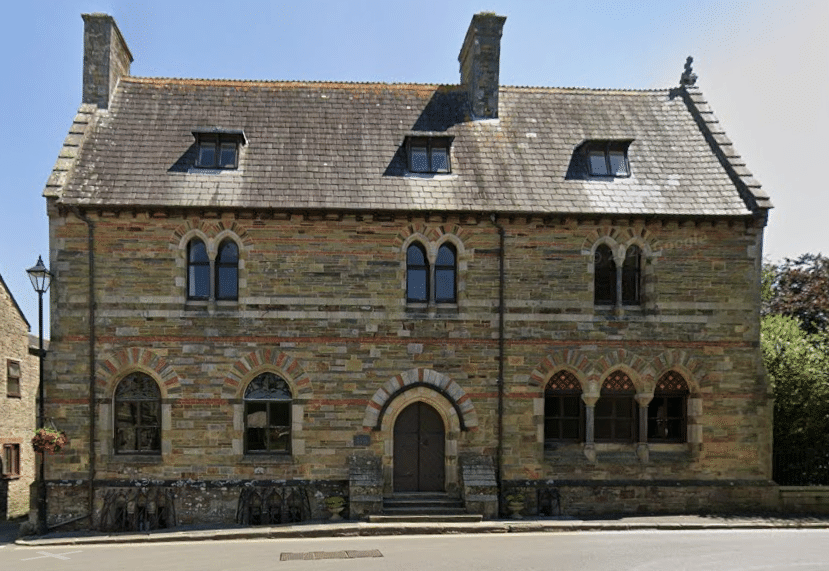
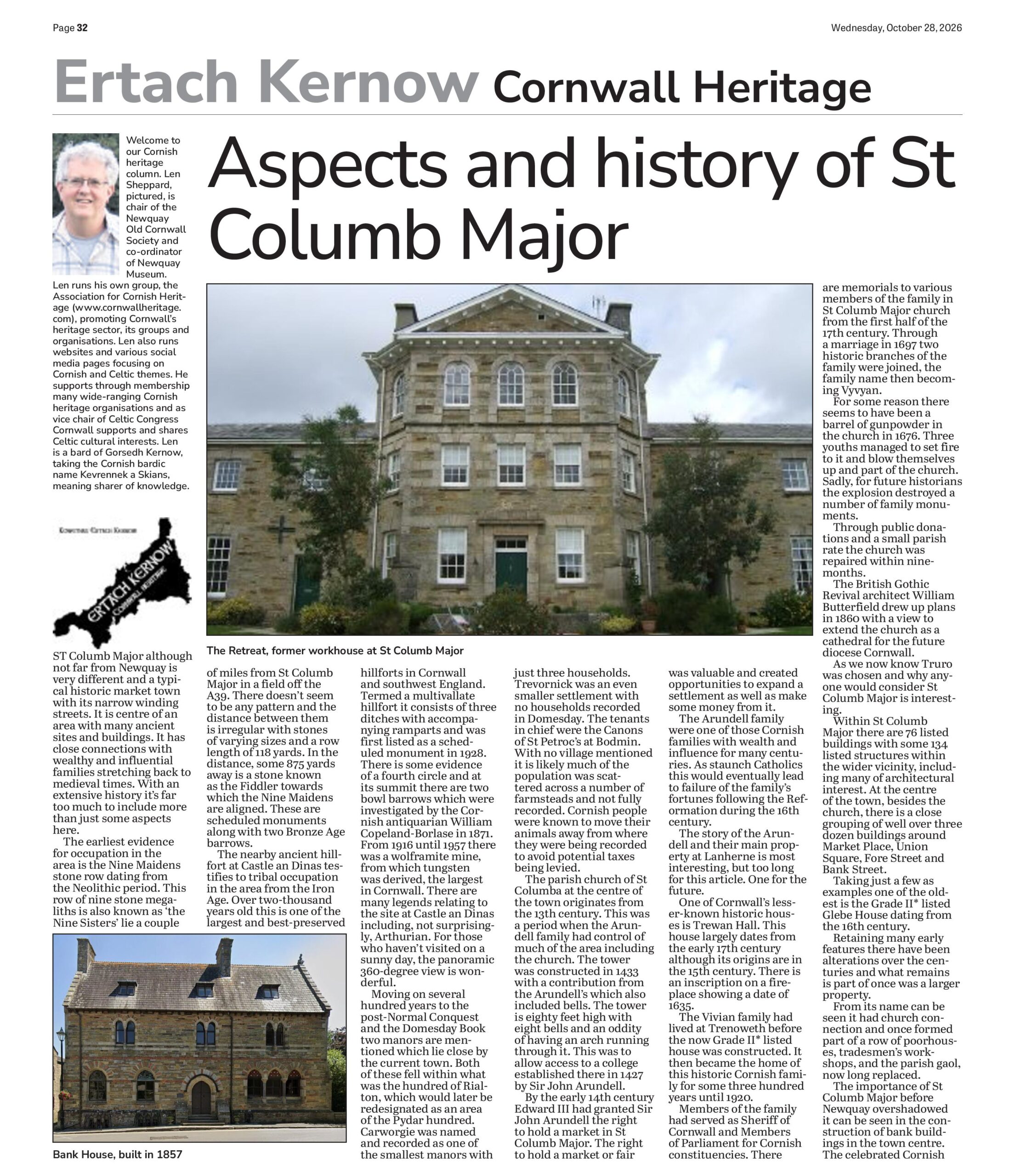
In 1837 the St Columb Major Poor Law Union was formed. As the major town in the area a workhouse was constructed in 1840. This would cover many communities in the area including the villages of Newquay and St Columb Minor. Designed by the George Gilbert Scott and William Bonython Moffatt partnership, who were also the architects for other Cornish workhouses, it was Intended to accommodate 150 inmates. In 1933 it was converted into a hospital for 111 inmates who suffered with mental issues. This fine building now Grade II listed has despite its unfortunate past been turned into residential housing and known as The Retreat.
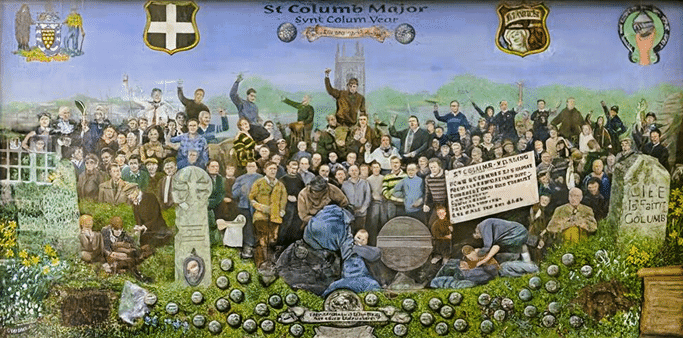
Mention of St Columb cannot omit the continuing tradition of hurling which takes place in the town on Shrove Tuesday and the second Saturday after Shrove Tuesday. Once commonplace throughout Cornwall it now only takes place in its more traditional form at St Ives and St Columb Major. This is a sport unique to Cornwall, having its origins in medieval times. It is thought to have originated with the game of ‘Soule’ which is mentioned in documents relating to Cornwall in 1283. John Norden mentioned it in his writings from his visit in the late 16th century and Richard Carew in ‘Survey of Cornwall’ published in 1602. Based around two teams who aim to score a goal using a small silver coated ball. The St Columb game is held between Townsmen and Countrymen with an added method of winning by carrying the ball to the parish boundary. Described by Norden as ‘daungerous’, today it necessitates people to board up windows as the frantic scramble can cause damage.
Today the population of the town and the wider parish is just under 5,000 with young people making up some twenty percent. For centuries this has been a rural parish with agriculture forming the greater part of the occupations. Travelling back in time to the census of 1821 although not proving names does give an insight into the population and what they were doing. A population numbered just under half of todays at 2,493 amongst 227 families employed in agriculture, a further 166 families carrying out manufacture, trade and handicrafts, the remaining 166 carried out other forms of employment.
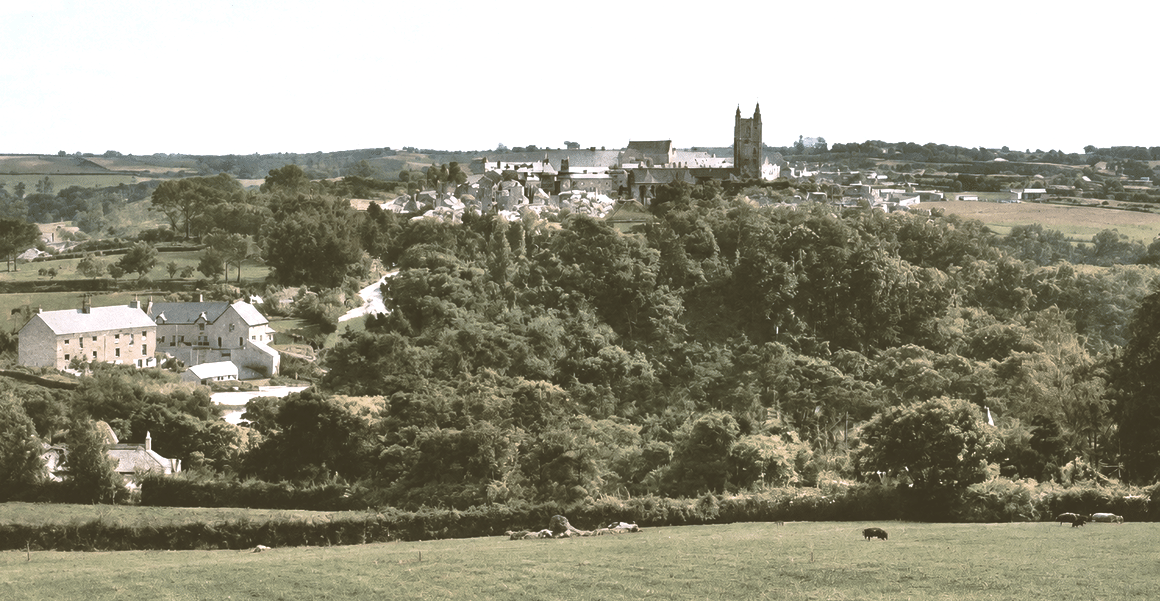
Perhaps the rise of Newquay as the major town in the area has been a blessing for the history and heritage of St Columb Major. Preservation of so many fine and interesting buildings would likely not have possible had it grown as Newquay has. That St Columb Major holds a well-supported annual carnival week, with many other organisations active within the town, shows that this is not only a historic community but also one for the 21st century.
Heritage Column
Heritage in the News online links: