Ertach Kernow - Richard Larn OBE 'Servant of the Sea'
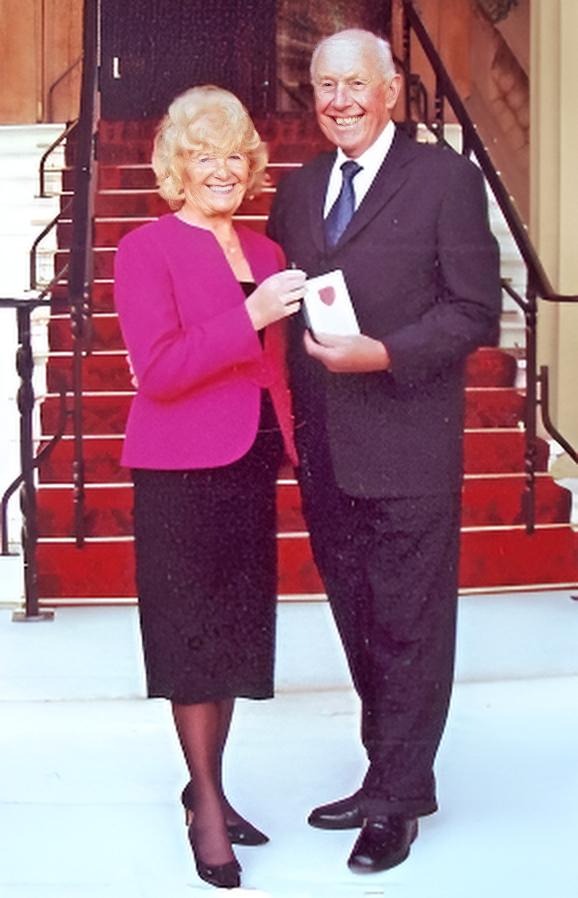
Cornish shipwrecks and Richard Larn the man who brought them together in one volume is the theme of this week’s article. For many years the Cornwall edition, one of six covering the British Isles, has been for me a go to book for shipwreck research. This article is dedicated to Richard Larn who died at the age of 94 on 14th January. Richard is widely regarded as the father of modern shipwreck research and one of the most influential people in maritime archaeology in the UK. The sub-title of this article ‘Servant of the Sea’ is from the English translation of his Kernewek bardic name ‘Gonysyas an Mor’ taken by him when made a bard of Gorsedh Kernow in 2006. Other honours included an OBE in 2009.
This article is not intended to be a biographical obituary but to just share some of Richard’s achievements as they related to Cornwall and the Isles of Scilly. Frankly there is insufficient space here and much more can be found online about Richard and his most interesting life. Links will be available on the website edition.
As always click the images for larger view
Richard was a meticulous worker when operating on wrecks, maintaining high standards. He was influential in wreck protection, preservation and the recording of findings, encouraging divers to take responsibility rather than exploitation. Larn liaised with John Nott the MP for St Ives in 1969 about the possibility of wreck protection, leading to Nott introducing a parliamentary Private Members Bill and the passing of the Protection of Wrecks Act 1973.
Richard’s interest and work on the wreck of HMS Association off the Isles of Scilly really brought him to public prominence. Funded by the Admiralty and using a minesweeper an annual diving event to the wreck was established in 1964. The discovery of bronze cannon and gold coins in 1967 caused international interest with this being only the second historic shipwreck finding off the British Isles in modern times.
With the discovery of so many artefacts from HMS Association and other vessels Richard tried to get the National Maritime Museum to display the Association artefacts but they ‘didn’t want to know about shipwrecks’. Fortunately museums have evolved and now far more open to a variety of displays and exhibitions. Some create mobile exhibitions which are a wonderful way to share, such as Newquay Museum had the opportunity to host a few years ago on shipwrecks.
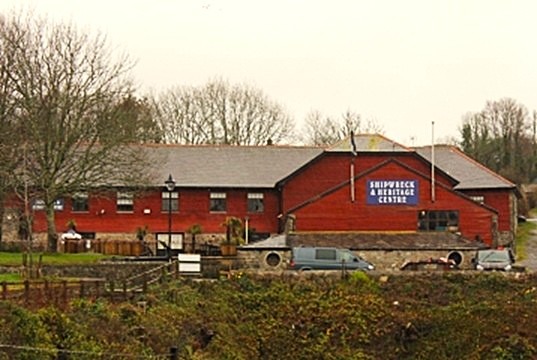
Aghast at over seventy divers dying each year Richard jointly set up a dive training centre at Charlestown. It became a government accredited organisation and Prodive as it was known became a central part of Charlestown. Downturn in china clay exports from the small harbour led to the agent for the Crowther family, who owned Charlestown, approaching Richard for ideas on how to generate income for the village. Richard suggested tourism, but what asked the agent. So in Richards words; ‘I went away and thought about it and came back and said, ‘Why don’t you start a tourist attraction?’ He said, ‘Like what?’ I said ‘Well, a building where you had a shop and a café above it or whatever, and you offered them something to look at, which could be either the history of Charlestown, which might not interest everybody. Or, I’ve got a garage full of stuff I’ve dredged up from shipwrecks, we could start a shipwreck museum?’ In 1976 the ‘Charlestown Shipwreck & Heritage Centre’ was established with 75,000 visitors in its first year. With Richard as a founding member the museum grew and ultimately had some 8,000 artefacts with items from over 150 shipwrecks. Later sold to Tim Smit’s company in 2016 it was rebranded as the ‘Shipwreck Treasure Museum’ and was expanded.
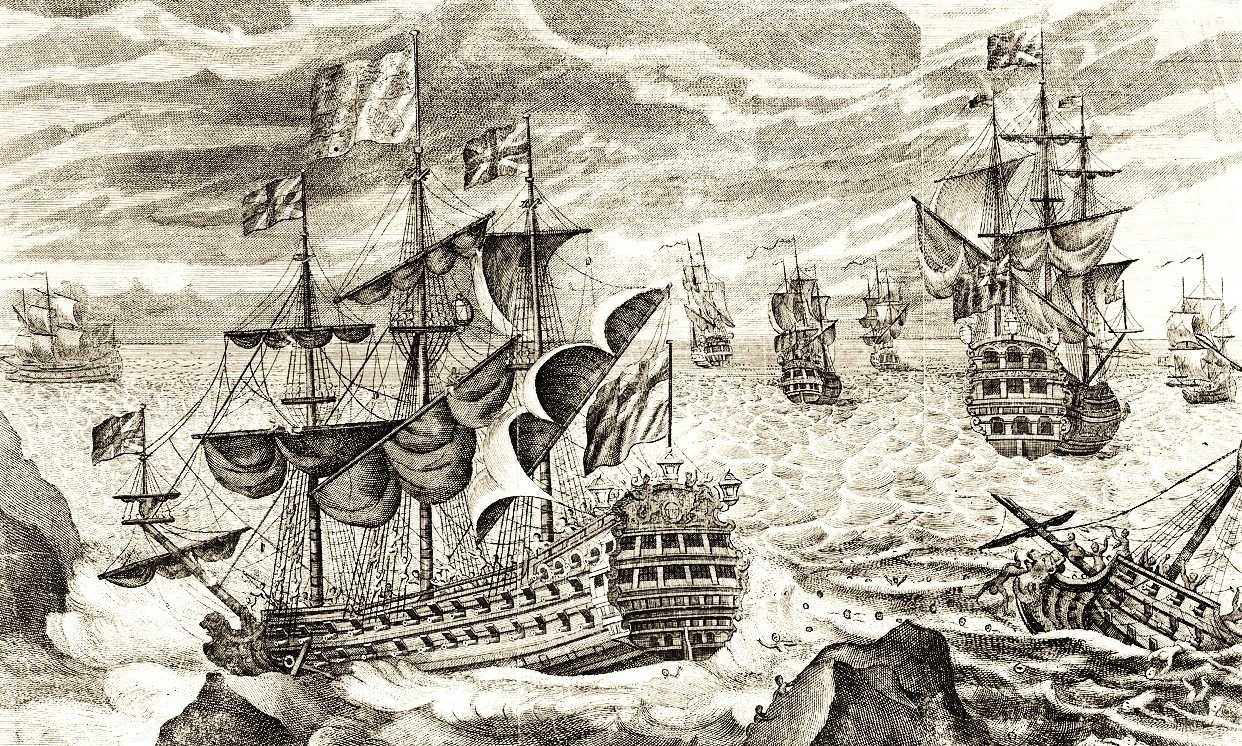
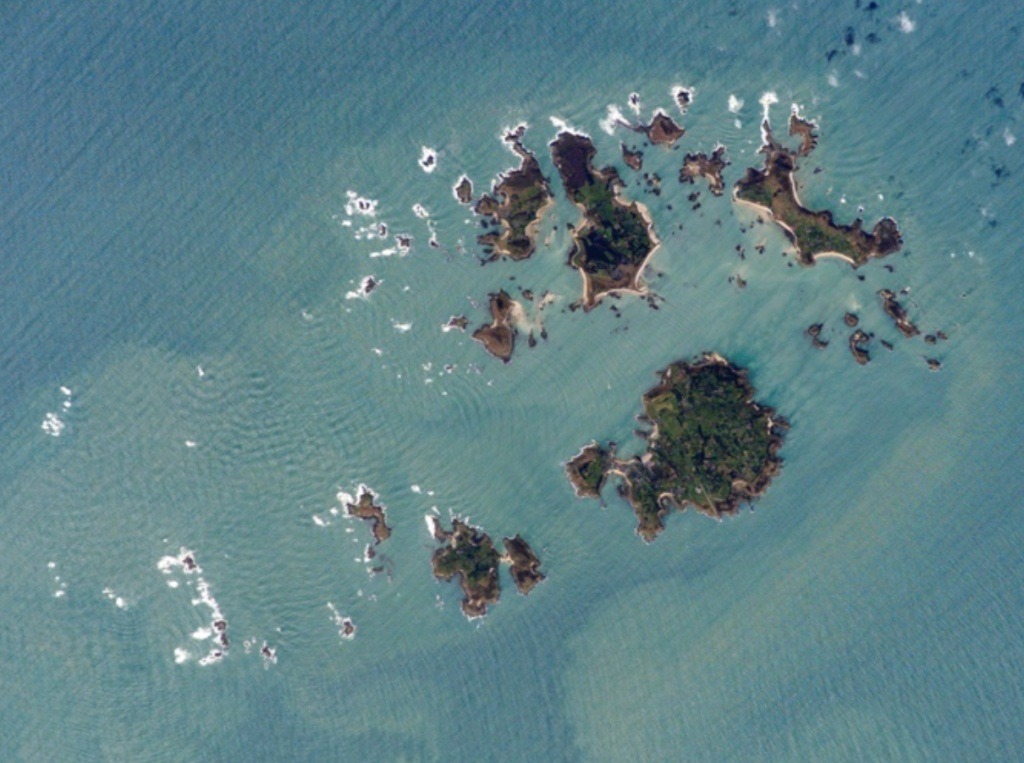
For those unaware of the story of the sinking of HMS Association in 1707, this was one of the greatest naval disasters of the 18th century. Along with the loss of HMS Association, flagship of Admiral of the Fleet Sir Cloudesley Shovell, three further vessels HMS Eagle, HMS Romney and HMS Firebrand were also sunk. The loss of life totalled nearly 2,000 men. The Isles of Scilly are renowned for their shipwrecks and Richard is quoted as saying ‘The Isles of Scilly probably have more shipwrecks per square mile than any other place on Earth’.
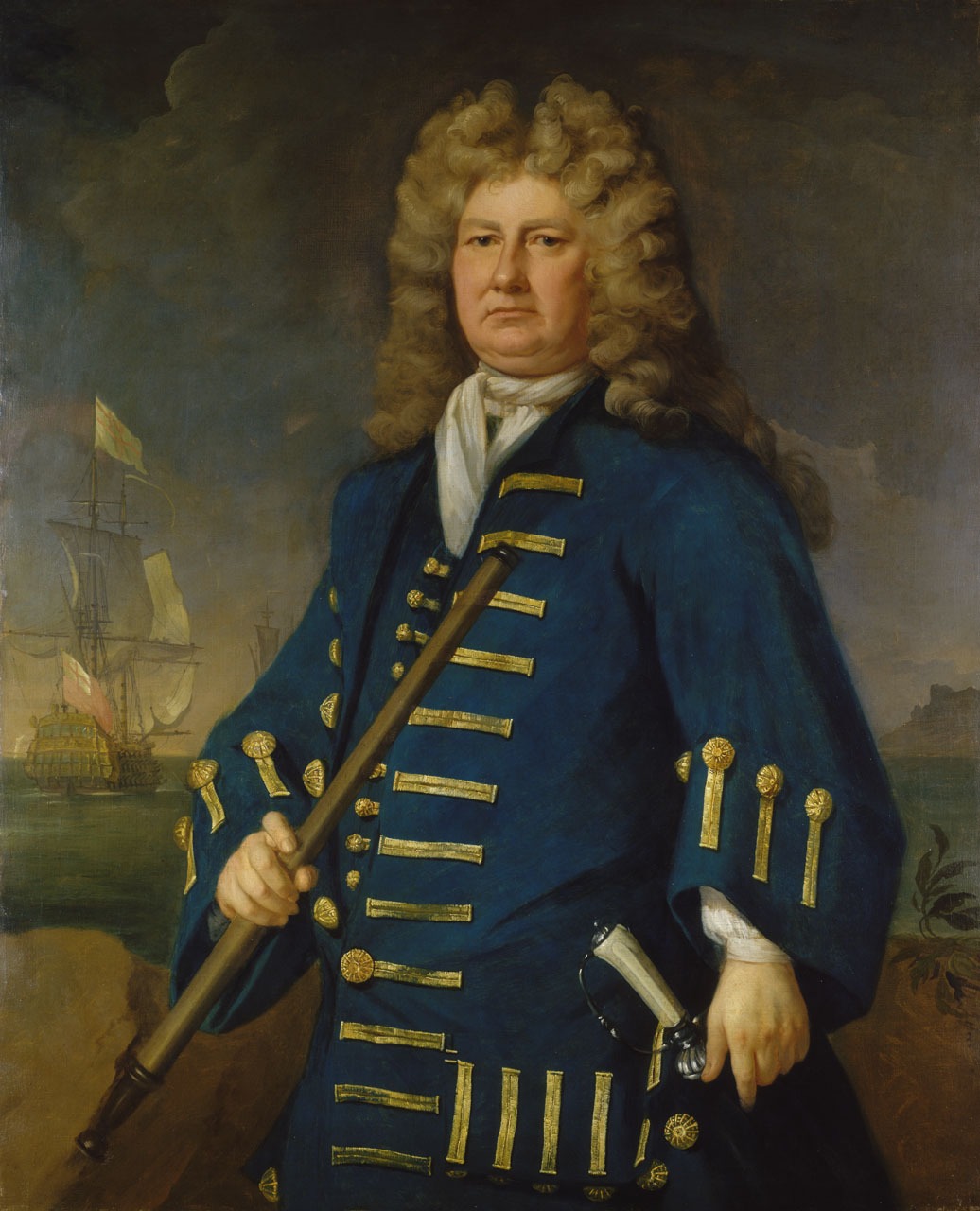
Sir Cloudesley Shovell is said, according to legend to have been warned by a sailor local to the islands of the danger. Typical of the times the man was admonished and hanged, he was said to have cursed Shovell to suffer a watery grave before his execution. Doubtful but if true but the fleet did suffer a tragedy and Shovell was drowned, although later buried in Westminster Abbey. The fleet of twenty-one vessels had left Gibraltar heading for Portsmouth with increasingly bad weather conditions. On a number of occasions lack of visibility had not allowed for observations to determine the fleets latitude. Depth soundings were taken at last determining that the fleet was now over the continental shelf. At noon on 21st October with weather clearing good readings of latitude were obtained, at 48° 50–57' N. This suggested the fleets location at about 200 miles west-southwest of the Isles of Scilly. With favourable winds but poor visibility the fleet headed east-by-north then at 8:00 in the evening found themselves amongst rocks to the southwest of St Agnes Island.
The flagship a second-rate ship of the line, struck the Outer Gilstone Rock off Scilly's Western Rocks and sank within minutes taking her whole crew of 800 men and boys. HMS Eagle, a 70-gun third-rate ship of the line struck the Crim Rocks and was lost with all hands a similar number to the flagship. HMS Romney a 50-gun fourth-rate ship of the line with 290 crew struck Bishop Rock and sinking with just one survivor. The smallest vessel lost was the fireship HMS Firebrand with a crew of forty-eight. It is said that there were up to eighteen survivors. Although Firebrand had struck the same rocks as the Association, being smaller a wave had lifted her off the rock and she made her way badly damaged between St Agnes and Annet but foundered in Smith Sound, close to Menglow Rock. Other ships also struck rocks but survived. HMS St George also hit the Outer Gilstone Rock, but the crew managed to extract her. The fireship HMS Phoenix struck rocks off Samson and went ashore between Tresco and St Martin's. Beached and made seaworthy she eventually managed to reach Portsmouth. The crew of HMS Royal Anne, flagship of Vice-Admiral Sir George Byng, saved her from foundering by quickly setting her topsails. Just over 150 years later In 1858 a lighthouse was completed on Bishop Rock. There was already a lighthouse on St Agnes, which is where Captain Percy of HMS Firebrand was heading until his vessel foundered.
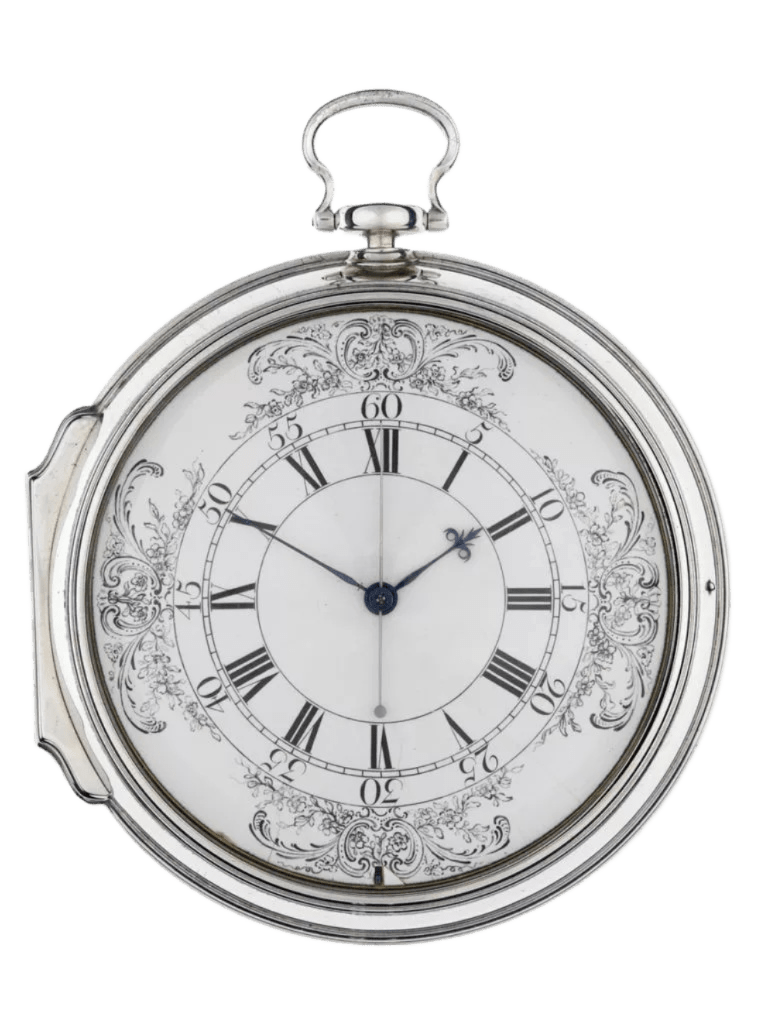
In 1960 retired naval officer and navigation expert Commander William Edward May wrote a detailed analysis of the forty-four surviving logbooks from the fleet. These written by captains, lieutenants and most importantly sailing masters, who are charged with the vessels navigation. Commander May’s conclusion was that navigational errors were due to a number of different causes, including currents, compasses, and errors in the published navigation tables and importantly inability to accurately determine longitude. Many readers may have seen the film and perhaps television mini-series ‘Longitude’ relating to the invention of an accurate marine chronometer. This the story of John Harrison's efforts to develop the device and thereby win a prize offered by the government in the 18th century. The measurement of longitude was a problem whilst latitude could be calculated by altitude of the sun at noon with the aid of tables. Sailing Masters used a process known as ‘dead reckoning’, measuring speed, direction and distance in estimating their location, basically an educated guess. The Longitude Act of 1714 offered a prize of £20,000 and ultimately led to John Harrison taking 25 years and four attempts to create the chronometer known as H4 in 1759. It created stability in timekeeping overcoming the issues of ship born motion and temperature variation. This was one of the legacies of this tragic naval disaster, one which would over time save many lives from potential disasters. The other outcome came centuries later with the Protection of Wrecks Act 1973 promoted by Richard Larn.
It must have been heart breaking for Richard and Bridget when the Charlestown Treasure Museum was closed and the collection there broken up and sold off by Tim Smit the museum’s owner. Historic England had already identified the collection as the largest and most important shipwreck artefacts the UK. So sad the National Maritime Museum were so short-sighted decades earlier. This was also a great loss for Cornwall and Cornish heritage as well. Fortunately a great number of artefacts were purchased by the Maritime Archaeology Sea Trust (MAST), totalling some fifty percent of the museums items relating to Protected or Scheduled wrecks and other important sites. Other Charlestown related artefacts were saved by the Charlestown History Group working with the parish council.
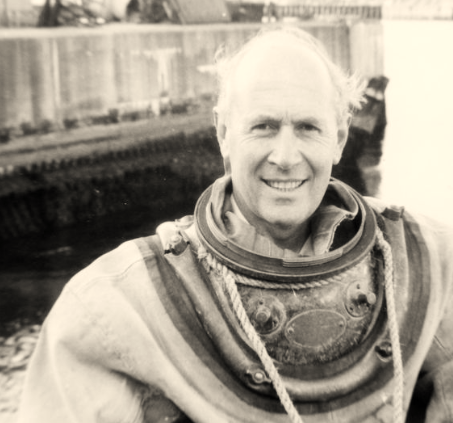
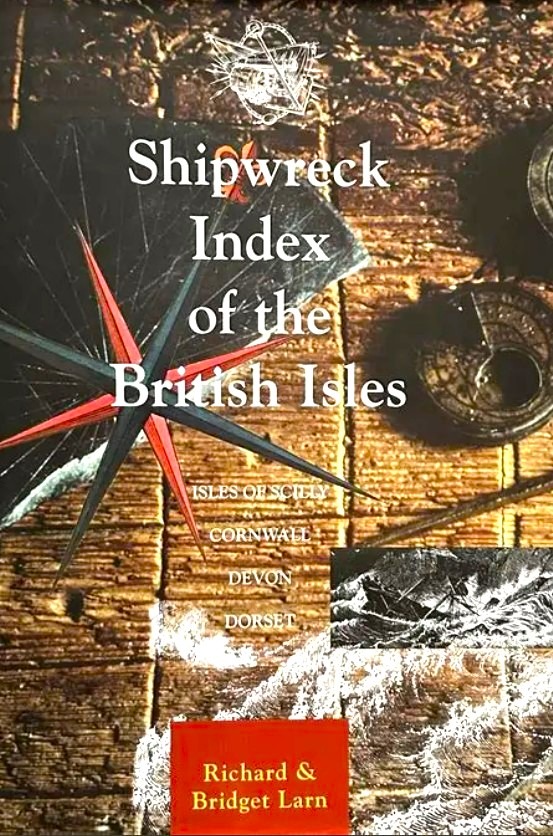
Richard Larn leaves a fantastic legacy of research contained in his many books undertaken with his wife Bridget. Vast improvements to diver safety and his contribution to the protection of wrecks also high on those achievements. Richard and Bridget had made St Mary’s their home and were supporters and contributors to the Isle of Scilly Museum there. Perhaps less realised is Richard’s contribution to Cornish heritage in helping establish Charlestown and its historic harbour as a go to tourist destination.
Heritage Column
Heritage in the News online links: