Ertach Kernow - Remembering Cornwall’s military war deaths
Remembering Cornwall’s military war deaths with war memorials. These can be found in virtually every Cornish community large and small. On 11th November Cornwall remembered its wartime dead along with the rest of the United Kingdom. At 11:00am a two-minute silence allows people to reflect on those who passed away in the defence of our freedom. Although this date and time relates to the ending of the Great War of 1914-1918 on 11th November 1918 we must remember all those who gave the ultimate sacrifice in later wars. As earlier wars drift into the past and memories fade, young people must be reminded that they too may be called upon as the dangers within Europe and beyond escalate.
As always click the images for larger view
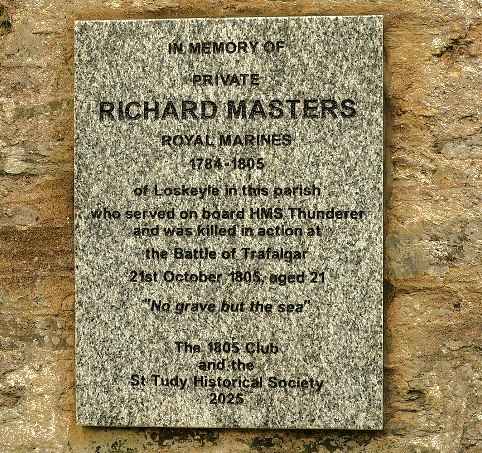
It was pleasing to see that St Tudy held an event last year to remember a sailor from their village who died at Trafalgar in 1805. The Napoleonic Wars lasted some twelve years between 1803 and 1815. Sadly few memorials were created to remember the many thousands who died during that war. Besides the 2025 memorial at St Tudy the only other memorial relating to that period of history is The Trafalgar Way plaque in Bodmin. This was erected by Bodmin Town Council on 19th August 2005 marking the third horse exchange as the news of Nelson’s death and the victory at Trafalgar was carried from Falmouth to London. It honours the men of Cornwall who fought for their country at Trafalgar. Later wars including the Crimea during 1858/1859, especially well-known for the ‘Charge of the Light Brigade’, saw little in the way or memorialising those who had died. One of the exceptions is a memorial in the Royal British Legion in Mousehole.

The Anglo‑Boer War, also called the Second Boer War was fought from 1899 to 1902 between the British Empire and the Boer republics of South Africa. The cause, Britain's desire in consolidating control over southern Africa including gold and diamond discoveries in Boer land. The war saw the deaths of over 50,000 people from South Africa and nearly 21,000 British Empire military personal and British use of concentration camps. It saw Cornish woman Emily Hobhouse rise to prominence through her humanitarian work, for which she is revered in South Africa. The opening of ‘The Story of Emily’ museum at St Ive has made her name far better known in her own homeland. See also the Ertach Kernow article ‘Emily Hobhouse a Cornish humanitarian remembered & honoured’, number 220 for 11th September 2024, on this website.
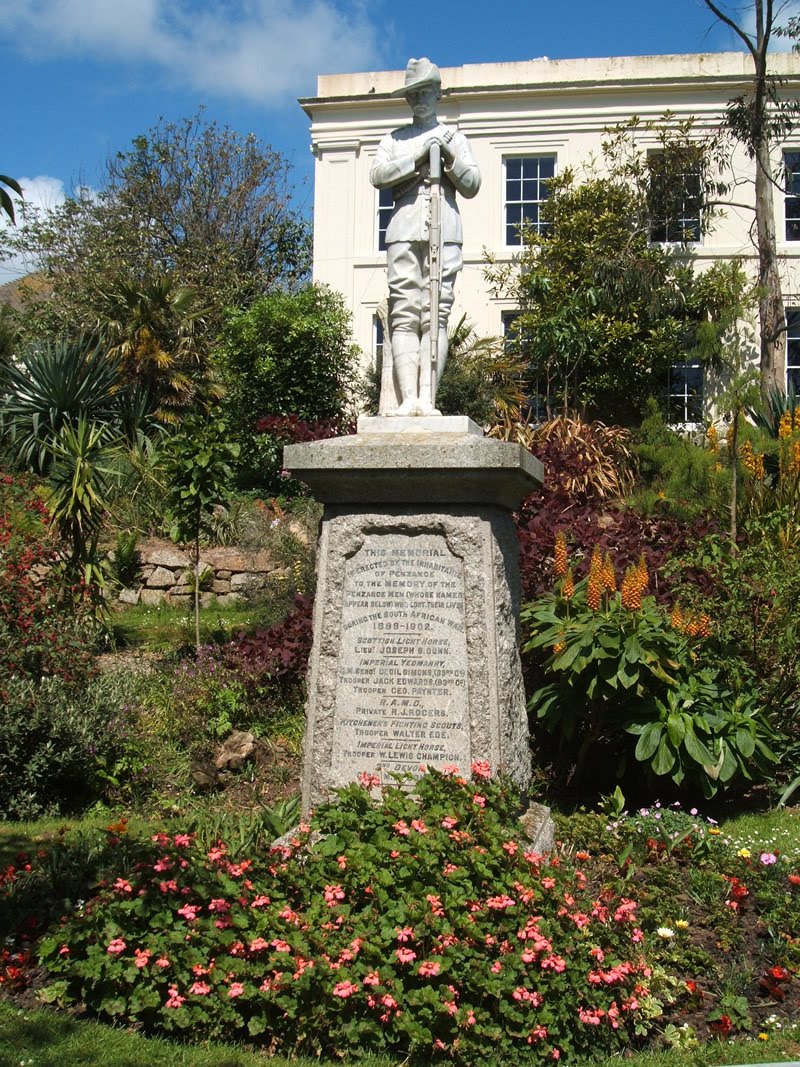
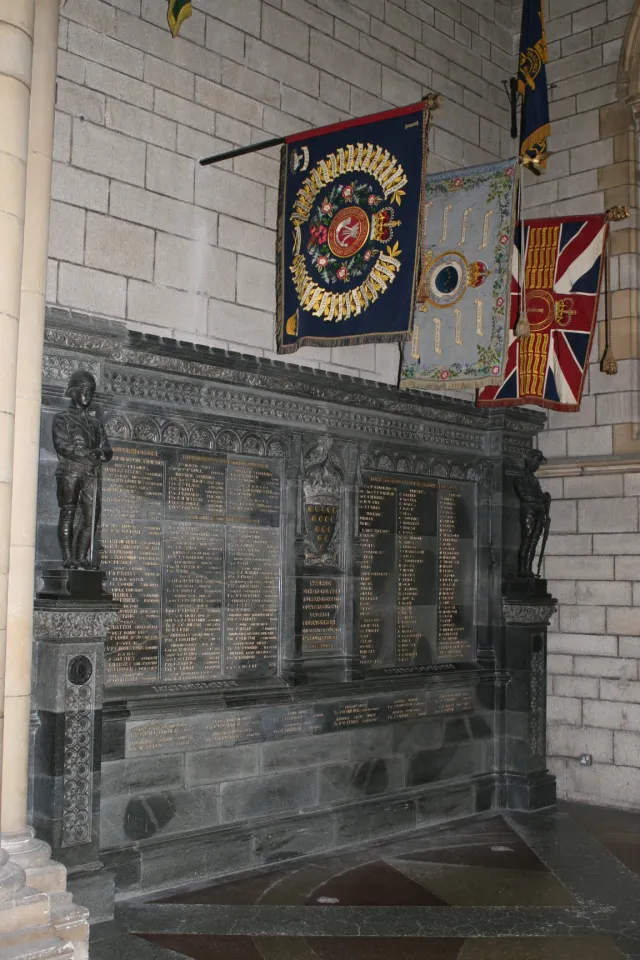
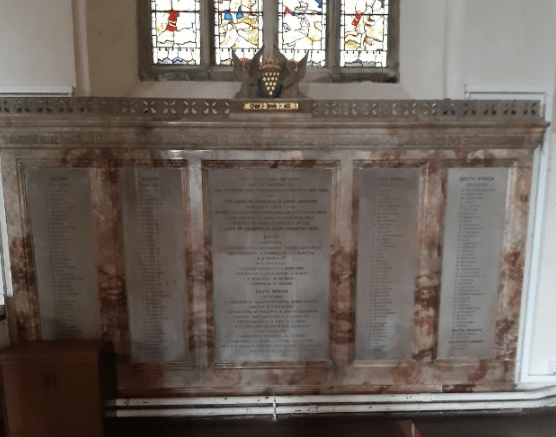
Cornwall has few memorials to this often considered inglorious war for Britain. At St Mawgan in Menage there is a stone set into a bank outside the church naming four men who fought from that parish who may have died. The Morrab Gardens in Penzance has a fine Grade II listed marble statue of a full-sized soldier on a granite plinth. Unveiled in 1904 it includes the names of eight men from Penzance who died during that conflict. Less well-known is Lostwithiel’s Peace Memorial erected in 1903, giving thanks for the safe return of four men from St Winnow Parish. Bodmin’s St Petroc’s Church has a marble memorial to the soldiers of the Duke of Cornwall’s Light Infantry. This names 97 men who died in Egypt and the Sudan (1882-1899) and 212 men in the 2nd Boer War (1899-1902). The largest monument can be found in Truro Cathedral where the large grey memorial can be found near the entrance. This commemorates 192 Cornishmen who fell during the South African conflict. The cathedral has other memorials to those who died during the Great War and World War II, including personal memorials, such as Captain Agar-Robartes of Lanhydrock who fell in France in 1915.
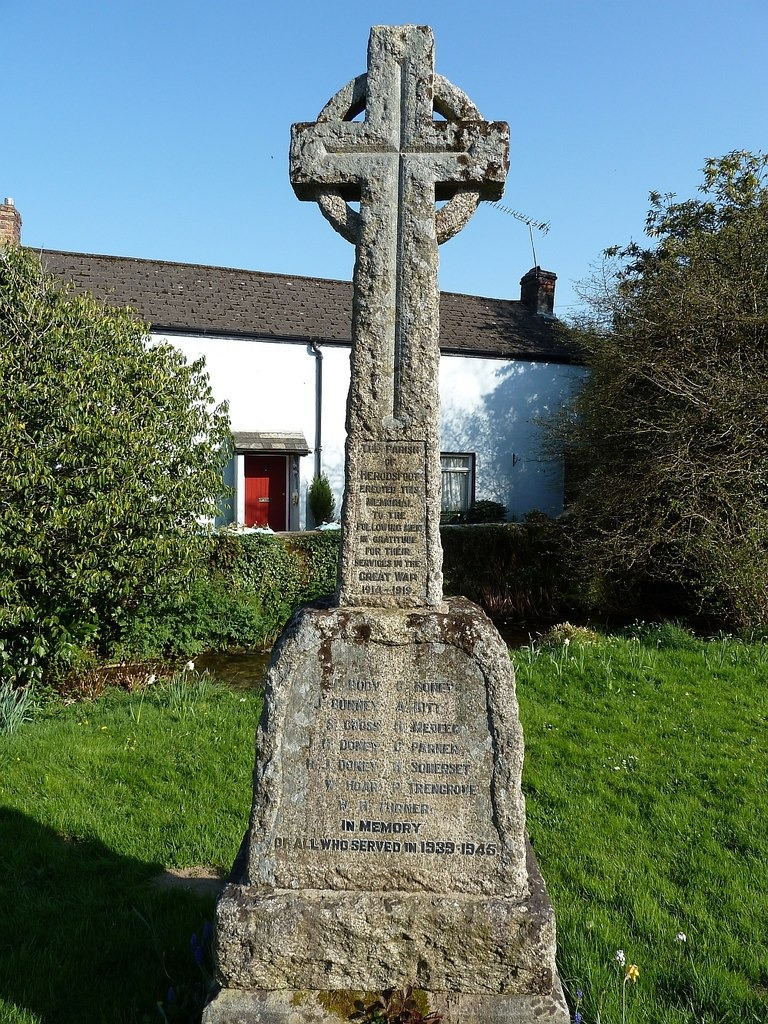
Virtually every community lost someone during the two World Wars, very few were fortunate with no deaths to record on their war memorial. Communities such as this were known as ‘Thankful Villages’ also known as ‘Blessed Villages, this term was coined in the 1930’s. By the end of World War II there were just nineteen throughout the United Kingdom known as Double Thankful Villages. Herodsfoot in Cornwall is one such village which lost nobody during both World Wars and acknowledge their good fortune, remembering those who died from elsewhere. A war memorial stands on the green in the centre of the village listing the names of those from their community who were willing to fight for their country.
Some town and village communities decided to build useful buildings as memorials or included memorials within their community buildings. Royal British Legion clubs also have memorials, sadly a number of these have closed in recent times through lack of support. Cornish memorial halls and halls with memorials exist at Antony, Budock Water, Carbis Bay, Crantock, Mabe, St Dennis and Wadebridge. There may be others as well.
There are those who are membered through their exceptional services and received the highest military award, the Victoria Cross. There are just a few who were Cornish by birth and others who have strong association with Cornwall with a number of non-Cornish men buried here.
The earliest Victoria Cross recipient from Cornwall was Joseph Trewavas born in Mousehole in 1835 one of seven children to Joseph and Ann Trewavas. Joining the Royal Navy at Devonport in 1853 he soon found himself involved in the Crimean War. Onboard the gunboat HMS Beagle in the sea of Azov they were charged with destroying a floating pontoon bridge. The bridge was the main supply route for Russian supplies and reinforcements to Sebastopol, their main base on the Crimea. Destruction of the bridge would increase the route for Russia by an extra 120 miles. Earlier efforts to destroy the bridge had proved unsuccessful. Six men in a four oared gig approached the bridge and it was Trewavas who leapt onto the bridge and cut the hawsers. Under heavy fire their boat nearly sinking they managed to make an escape. Trewavas received the Victoria Cross and Conspicuous Gallantry Medal from Queen Victoria at the first investiture at Hyde Park on 26th June 1857. Following a further seven years’ service he was discharged and returned to Mousehole running a fishing vessel. He also became a Cornwall County Councillor and a member of the County Fisheries Committee. In 1905 suffering a stroke followed by depression he committed suicide. Joseph Trewavis was buried in an unmarked grave in Paul Village Cemetery, the site unknown. His medals are held at Penlee House Gallery, Penzance and can be viewed by appointment.
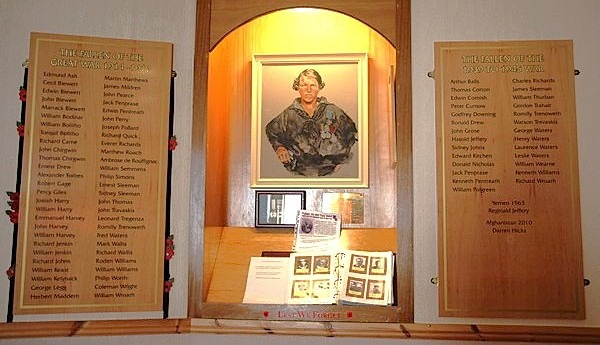
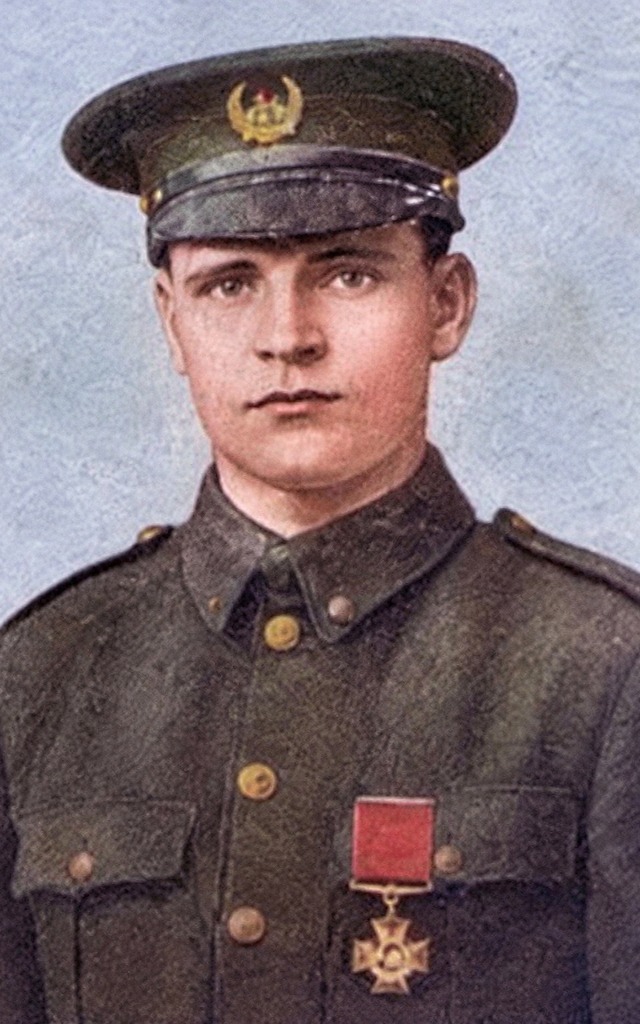
James Henry Finn is best known in Bodmin for the estate named after him. He was born in St Clement near Truro in 1893 to Frederick and Mary along with five brothers and five sisters. Later the family moved to Downing Street, Bodmin. Seeking work James went to South Wales and found employment at Cwmtillery Colliery near Abertillery. Enlisting with the 4th Battalion, South Wales Borderers at the outbreak of war, his name was erroneously recorded as Fynn. The battalion spent a short period in France before being reposted to Mesopotamia against Turkey, who had allied with Germany and Austro-Hungary. Following a nighttime action in an advanced dugout Finn spotted a number of wounded men between them and the enemy trench. Whilst under heavy fire he attended several men and brought them back to their own trenches. Sadly, badly wounded himself Finn later died and was buried in an unmarked grave nearby. In due course his father received James’ VC medal from King George and his medals are now held by Bodmin Town Council.
Horace Augustus Curtis was born in 1891 in St Anthony-in-Roseland, although his home was St Newlyn East. Although he joined the Cornish DCLI regiment he was transferred like many others to an Irish regiment, the Royal Dublin Fusiliers. He rose to the rank of sergeant and fought in Egypt, Gallipoli and the Western Front. He was mentioned in dispatches but it was almost at the end of the war in October 1918 when he took part in action near Le Cateau that earned him the Victoria Cross. His citation read: ‘Realising that the attack would fail unless the enemy guns were silenced, Sergeant Curtis, without hesitation, rushed forward through our own barrage and the enemy fire and killed and wounded the teams of two of the guns, whereupon the remaining four guns surrendered. Then turning his attention to a train-load of reinforcements, he succeeded in capturing over 100 enemy before his comrades joined him. His valour and disregard of danger inspired all.’ He died aged 77 in 1968.
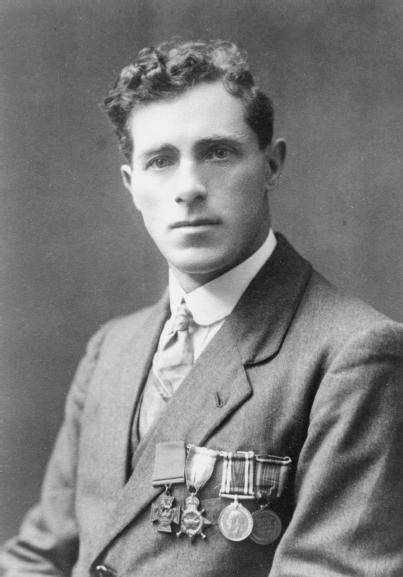
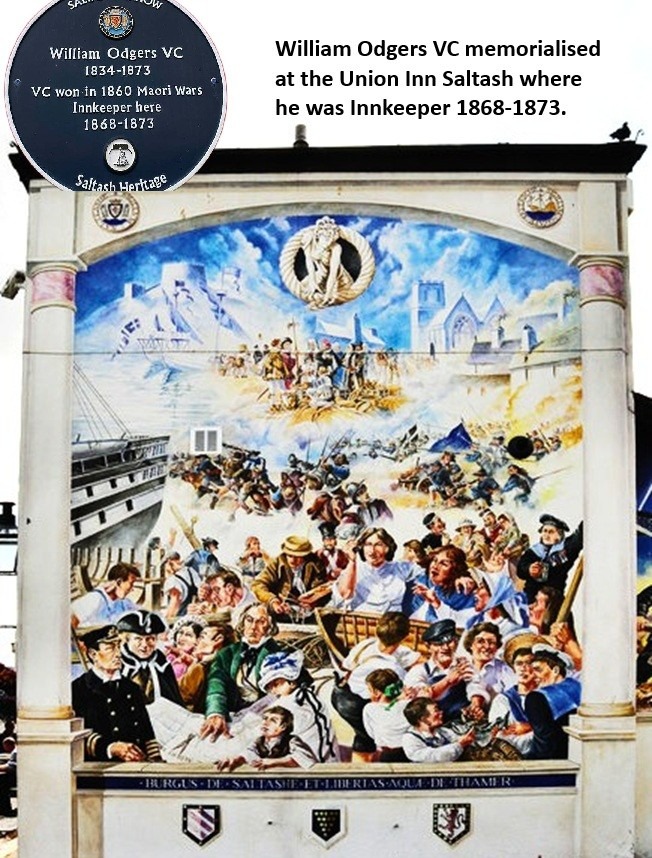
Another lesser-known Cornish VC is William Odgers VC who was born in Falmouth in 1834, later joining the Royal Navy. His citation in the London Gazette read; ‘On the 28th of March, 1860, William Odgers displayed conspicuous gallantry at the Storming of a Pah during operations against Rebel Natives in New Zealand; having been the first to enter it under a heavy fire, and having assisted in hauling down the enemy's colours’ William died in Saltash on 20 December 1873 at the Union Inn where he was the Innkeeper.
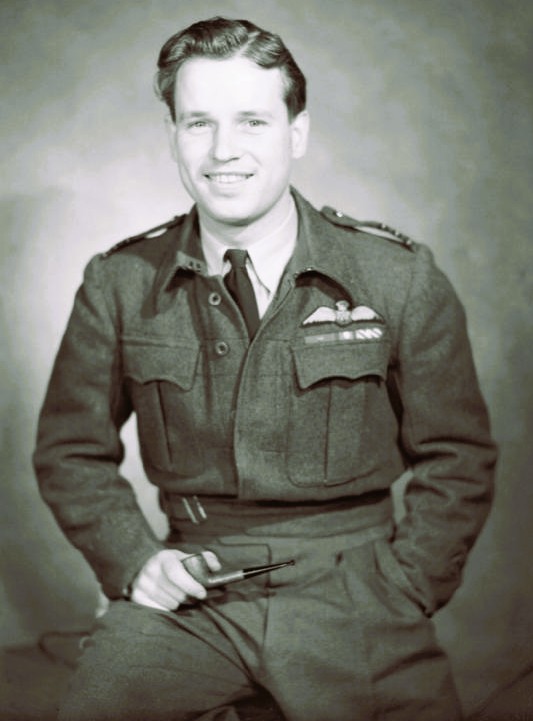
These are the only VC recipients born in Cornwall although one other with strong Cornish connections is Guy Gibson. He was born in India but has strong Cornish family connections and is best remembered in Porthleven where he was raised. Guy Gibson needs no introduction, being one of the heroes of the Dambuster Raid in World War II, the story is well told in film. Sadly, his aircraft was shot down in 1944 and he is buried in the Dambusters Memorial Park in Steenbergen, Netherlands.
Heritage Column