Ertach Kernow - Famous Cornish mariners remembered in history
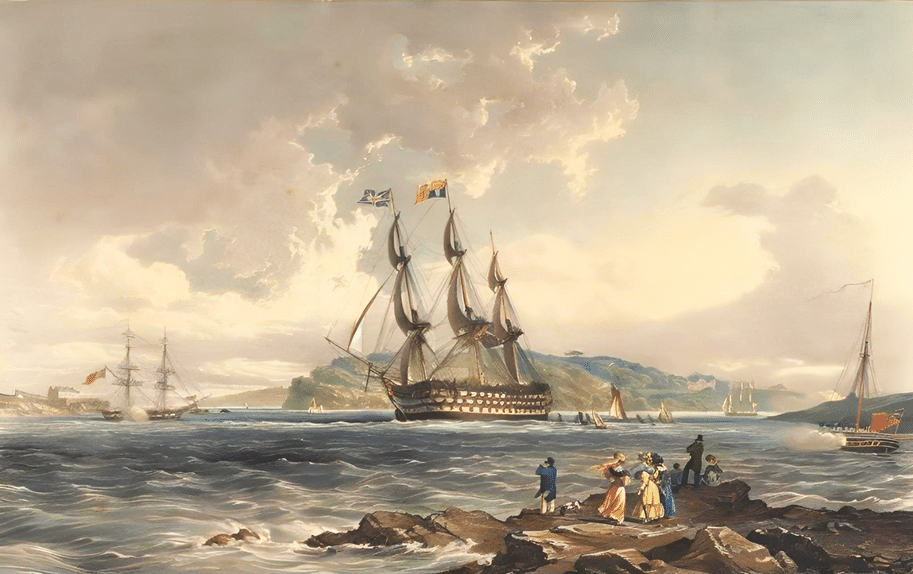
Famous Cornish people come in all occupations. There are scientists, inventors, performers, humanitarians, antiquarians and many more. Ertach Kernow has covered many of these such as Sir Goldsworth Gurney, Dr William Borlase, John Opie, Emily Hobhouse, John Couch Adams and others. Also families such as the Trevelyan’s with their dark history, one of the most popular ones accessed on the website. This article looks at just some Cornish people made famous through their actions on the sea.
As always click the images for larger view
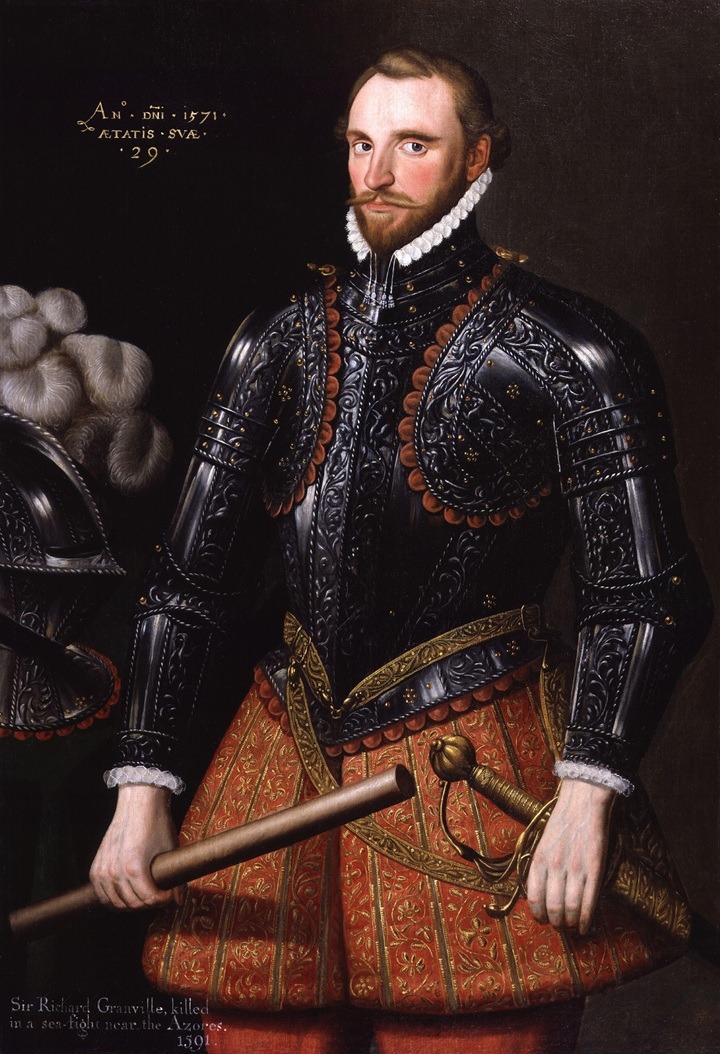
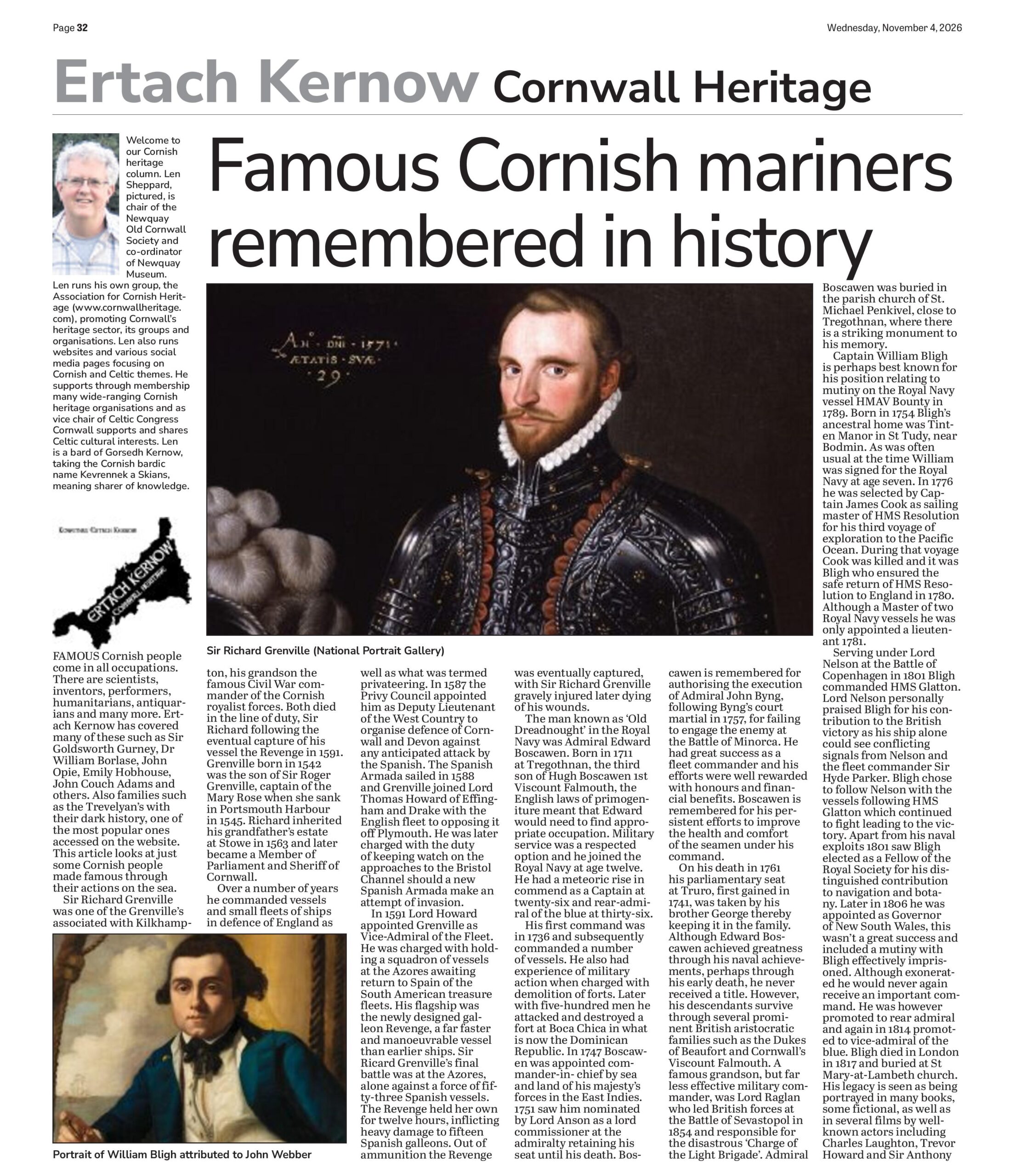
Sir Richard Grenville was one of the Grenville’s associated with Kilkhampton, his grandson the famous Civil War commander of the Cornish royalist forces. Both died in the line of duty, Sir Richard following the eventual capture of his vessel the Revenge in 1591. Grenville born in 1542 was the son of Sir Roger Grenville, captain of the Mary Rose when she sank in Portsmouth Harbour in 1545. Richard inherited his grandfather’s estate at Stowe in 1563 and later became a Member of Parliament and Sheriff of Cornwall.
Over a number of years he commanded vessels and small fleets of ships in defence of England as well as what was termed privateering. In 1587 the Privy Council appointed him as Deputy Lieutenant of the West Country to organise defence of Cornwall and Devon against any anticipated attack by the Spanish. The Spanish Armada sailed in 1588 and Grenville joined Lord Thomas Howard of Effingham and Drake with the English fleet to opposing it off Plymouth. He was later charged with the duty of keeping watch on the approaches to the Bristol Channel should a new Spanish Armada make an attempt of invasion.
In 1591 Lord Howard appointed Grenville as Vice-Admiral of the Fleet. He was charged with holding a squadron of vessels at the Azores awaiting return to Spain of the South American treasure fleets. His flagship was the newly designed galleon Revenge, a far faster and manoeuvrable vessel than earlier ships. Sir Ricard Grenville’s final battle was at the Azores, alone against a force of fifty-three Spanish vessels. The Revenge held her own for twelve hours, inflicting heavy damage to fifteen Spanish galleons. Out of ammunition the Revenge was eventually captured, with Sir Richard Grenville gravely injured later dying of his wounds.
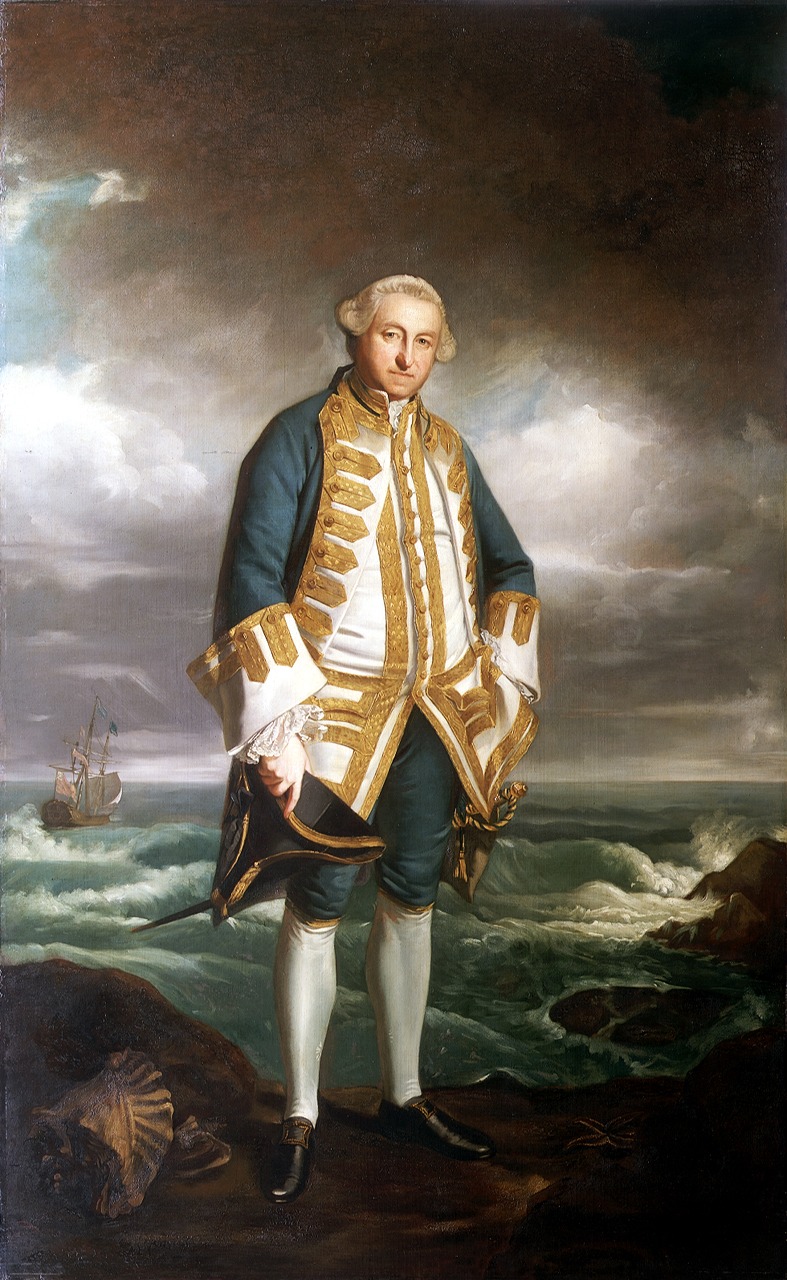
The man known as ‘Old Dreadnought’ in the Royal Navy was Admiral Edward Boscawen. Born in 1711 at Tregothnan, the third son of Hugh Boscawen 1st Viscount Falmouth, the English laws of primogeniture meant that Edward would need to find appropriate occupation. Military service was a respected option and he joined the Royal Navy at age twelve. He had a meteoric rise in commend as a Captain at twenty-six and rear-admiral of the blue at thirty-six.
His first command was in 1736 and subsequently commanded a number of vessels. He also had experience of military action when charged with demolition of forts. Later with five-hundred men he attacked and destroyed a fort at Boca Chica in what is now the Dominican Republic. In 1747 Boscawen was appointed commander-in- chief by sea and land of his majesty's forces in the East Indies. 1751 saw him nominated by Lord Anson as a lord commissioner at the admiralty retaining his seat until his death. Boscawen is remembered for authorising the execution of Admiral John Byng, following Byng's court martial in 1757, for failing to engage the enemy at the Battle of Minorca. He had great success as a fleet commander and his efforts were well rewarded with honours and financial benefits. Boscawen is remembered for his persistent efforts to improve the health and comfort of the seamen under his command.
On his death in 1761 his parliamentary seat at Truro, first gained in 1741, was taken by his brother George thereby keeping it in the family. Although Edward Boscawen achieved greatness through his naval achievements, perhaps through his early death, he never received a title. However, his descendants survive through several prominent British aristocratic families such as the Dukes of Beaufort and Cornwall’s Viscount Falmouth. A famous grandson, but far less effective military commander, was Lord Raglan who led British forces at the Battle of Sevastopol in 1854 and responsible for the disastrous ‘Charge of the Light Brigade’. Admiral Boscawen was buried in the parish church of St. Michael Penkivel, close to Tregothnan, where there is a striking monument to his memory.
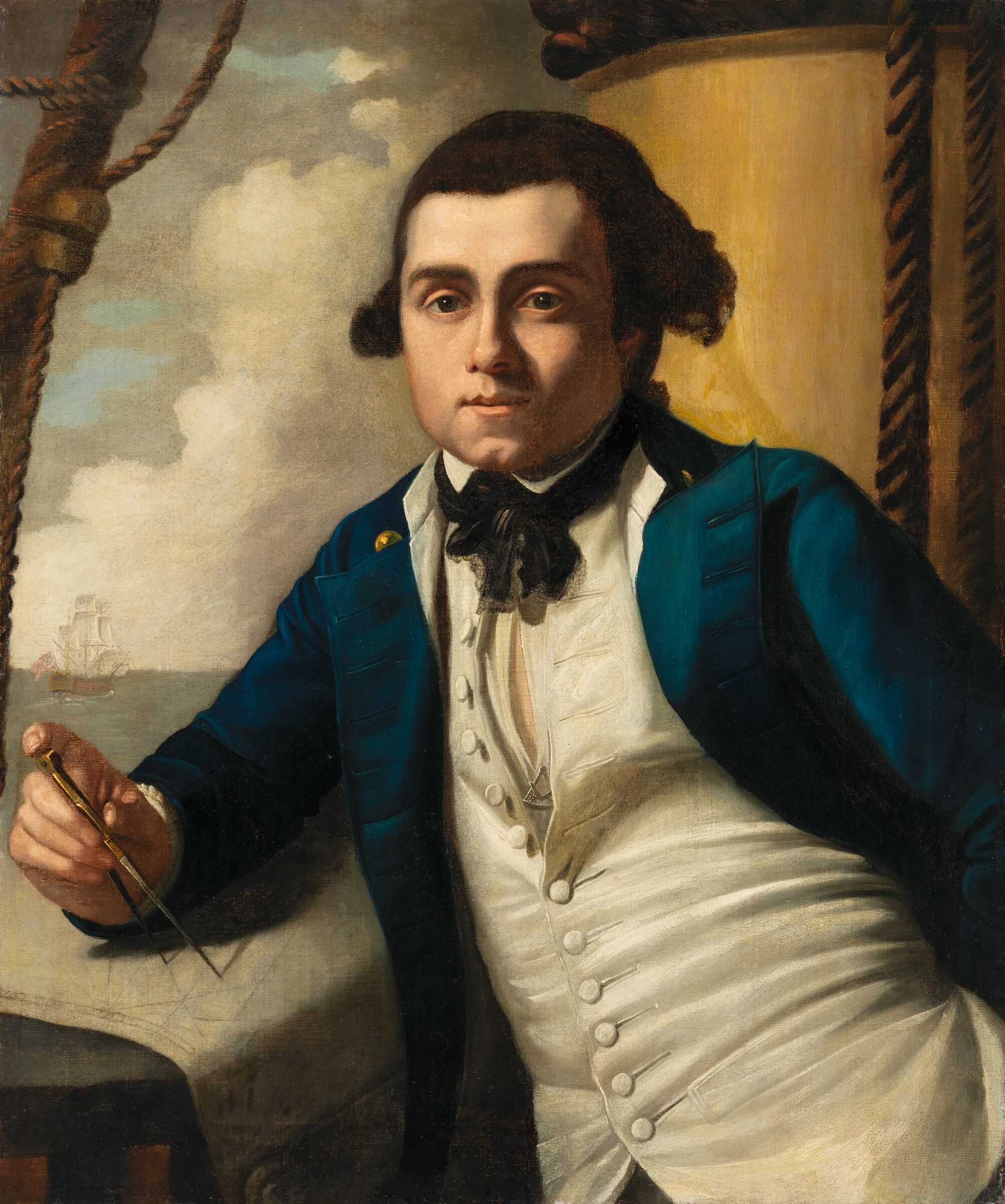
Captain William Bligh is perhaps best known for his position relating to mutiny on the Royal Navy vessel HMAV Bounty in 1789. Born in 1754 Bligh's ancestral home was Tinten Manor in St Tudy, near Bodmin. As was often usual at the time William was signed for the Royal Navy at age seven. In 1776 he was selected by Captain James Cook as sailing master of HMS Resolution for his third voyage of exploration to the Pacific Ocean. During that voyage Cook was killed and it was Bligh who ensured the safe return of HMS Resolution to England in 1780. Although a Master of two Royal Navy vessels he was only appointed a lieutenant 1781.
Serving under Lord Nelson at the Battle of Copenhagen in 1801 Bligh commanded HMS Glatton. Lord Nelson personally praised Bligh for his contribution to the British victory as his ship alone could see conflicting signals from Nelson and the fleet commander Sir Hyde Parker. Bligh chose to follow Nelson with the vessels following HMS Glatton which continued to fight leading to the victory. Apart from his naval exploits 1801 saw Bligh elected as a Fellow of the Royal Society for his distinguished contribution to navigation and botany. Later in 1806 he was appointed as Governor of New South Wales, this wasn’t a great success and included a mutiny with Bligh effectively imprisoned. Although exonerated he would never again receive an important command. He was however promoted to rear admiral and again in 1814 promoted to vice-admiral of the blue. Bligh died in London in 1817 and buried at St Mary-at-Lambeth church. His legacy is seen as being portrayed in many books, some fictional, as well as in several films by well-known actors including Charles Laughton, Trevor Howard and Sir Anthony Hopkins.
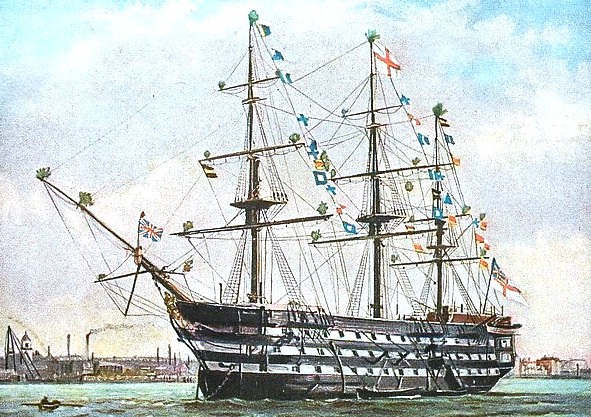
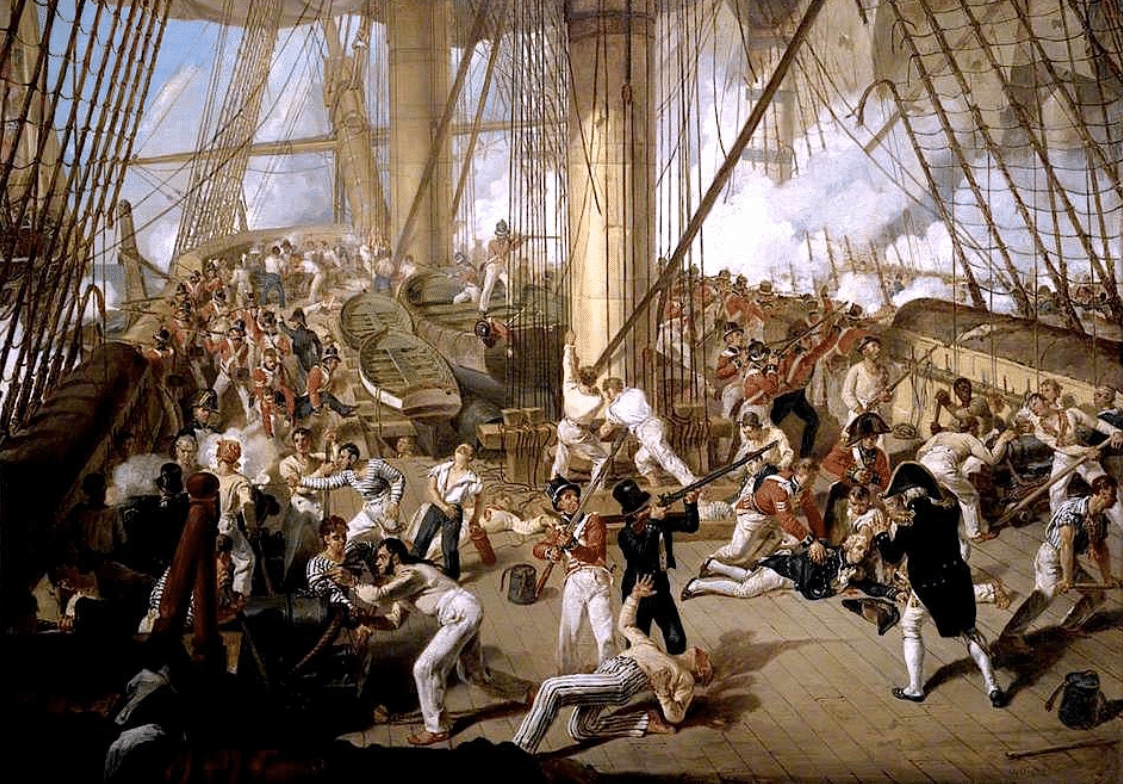
Far less well-known is a Cornish naval connection at the Battle of Trafalgar. This relates to two men who are often conflated, John Pollard and John Pasco, both who served on HMS Victory at the Battle of Trafalgar. It was John Pasco who advised Lord Nelson in forming perhaps the most famous signal in Royal Navy history. It was Lord Nelson’s practice to make the officer first on his list for promotion as Signal-Officer, in this case Pasco. Nelson requested the flag signal ‘England confides that every man will do his duty’ be raised. Pasco suggested replacing confides for expects as it would be quicker, requiring fewer flags. So, ‘England expects that every man will do his duty. Entered the history books. However, the signal began to be misquoted almost immediately and unfortunately includes on Nelson’s tomb in St Paul’s Cathedral and on Nelson’s Column in Trafalgar Square.
John Pasco’s family originated in Mevagissey, although John was born at Devonport in 1774. He would have a successful career in the Royal Navy, eventually retiring as Rear-Admiral of the Red and died in 1853.
John Pollard as a Signal-Midshipman onboard HMS Victory during the Battle of Trafalgar was one of a group of about four men in charge of carrying out signalling. Born in Cawsand in 1787 he joined the Royal Navy age twelve and after serving on various vessels was transferred to HMS Victory in March 1805. Pollard was one of those who raised the signal flags. However, his claim to fame was whilst stationed on the poop-deck during the battle he was credited with killing the sniper who shot Lord Nelson. Pollard did not have such an illustrious career as Pasco, rising to the rank of lieutenant. He was made honorary retired commander at the Royal Navy Hospital Greenwich before his death in 1868.
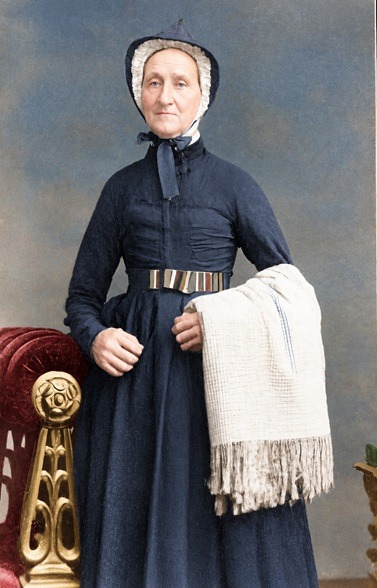
There were women too. Anne Glanville rose to fame for her prowess at rowing and known as a champion rower. Married to a ‘waterman’ her husband John fell ill and she took charge of her husband’s boat to continue his work. In the days before the bridges across the lower Tamar this involved ferrying people and goods back and forth across the river. Born in Saltash in 1796 Ann had fourteen children by her husband. The 18th and 19th centuries were when Saltash and the Hamoaze estuary of the River Tamar were busy with business and naval vessels. Sailors all knew Ann by name and she began competing in regattas with other women, very often beating the male rowers. Her achievement at Fleetwood before the queen led her to be presented to Queen Victoria. She later dined with the future King Edward VII and Admiral Lord Charles Beresford who had a high regard for Ann, becoming a regular visitor to her when coming to Plymouth.
A description of Ann by historian and author Sabine Baring-Gould is worth sharing. ‘In person Ann Glanville was tall, firmly and vigorously built, not stout, straight about the bust and waist. When young she must have been good-looking, for when old her face was handsome and always possessed great dignity. The mouth was firm. There was a kindly light in her grey eyes. She was always fond of a joke, and her character was summed up by a neighbour: "Her was honest to a farthing, clean as a smelt, and kind-hearted as a queen.’
There are many more famous Cornish seamen and women who were associated with fishing, mercantile marine and Preventive Boat Service, later part of the coastguard service. A topic for another day.
Heritage Column