Ertach Kernow - Visiting St Neot parish a moorland village

St Neot is one of the moorland villages bordering Bodmin Moor, small but certainly not insignificant. The population of the parish is around 960 people at the last census with most living in the village of St Neot. The remainder occupy scatter hamlets and farms throughout the parish. It is an ancient settlement and in 1086 was recorded in Domesday as ‘Neotstow’. Going back to prehistoric times, early peoples inhabited Bodmin Moor and the remains of their field systems and stone bases of houses can be seen there. Climate change and colder weather led those people to move to lower levels neighbouring the moor. The remains of rounds, early settlements, can be found in many of the surrounding moorland parishes including St Neot. This includes later field systems, cairns and barrows through to the Iron Age.
As always click the images for larger view
One of the major features of St Neot are the areas of water within the parish. The largest is the 900-acre Colliford reservoir constructed in 1983 serving over half of Cornwall’s population. Supporting Colliford is the nearby Park Lake, a former china clay quarry. This redundant quarry was purchased by South West Water to help augment Cornwall’s increasing need for water, especially during this period of climate change. The frenetic rate of building by developers throughout Cornwall hasn’t taken into account the limited infrastructure to support an increased population. It is to South West Water’s credit they have found ways to store water on Bodmin Moor, to use when required to help top up Colliford, without constructing new reservoirs.
The construction of new reservoirs to supplement those already used to full capacity is controversial. Not just the loss of farmland, perhaps even individual houses and hamlets but also the heritage sites drowned and lost to future generations. Colliford lake is an example with many interesting historic features dating back to prehistoric times now drowned beneath its waters.


Perhaps one of the most famous of Cornwall’s lakes is Dozmere Pool also located within St Neot parish. There are many legends about this stretch of water including its connections with King Arthur. However, these harken back to the 19th century visit and writings of the Victorian Poet Laureate Alfred Lord Tennyson. During a visit to Cornwall, when he met Roberts Stephen Hawker, the vicar of Morwenstow, he visited Dozmere Pool. It was then the story, now a local legend, of Excalibur being thrown into the lake came into being. There is also the legend of Tregeagle, an evil man who was punished with spells forcing him to empty the pool with a limpet shell with a hole in it. He is said to be heard howling across Bodmin Moor on stormy nights.
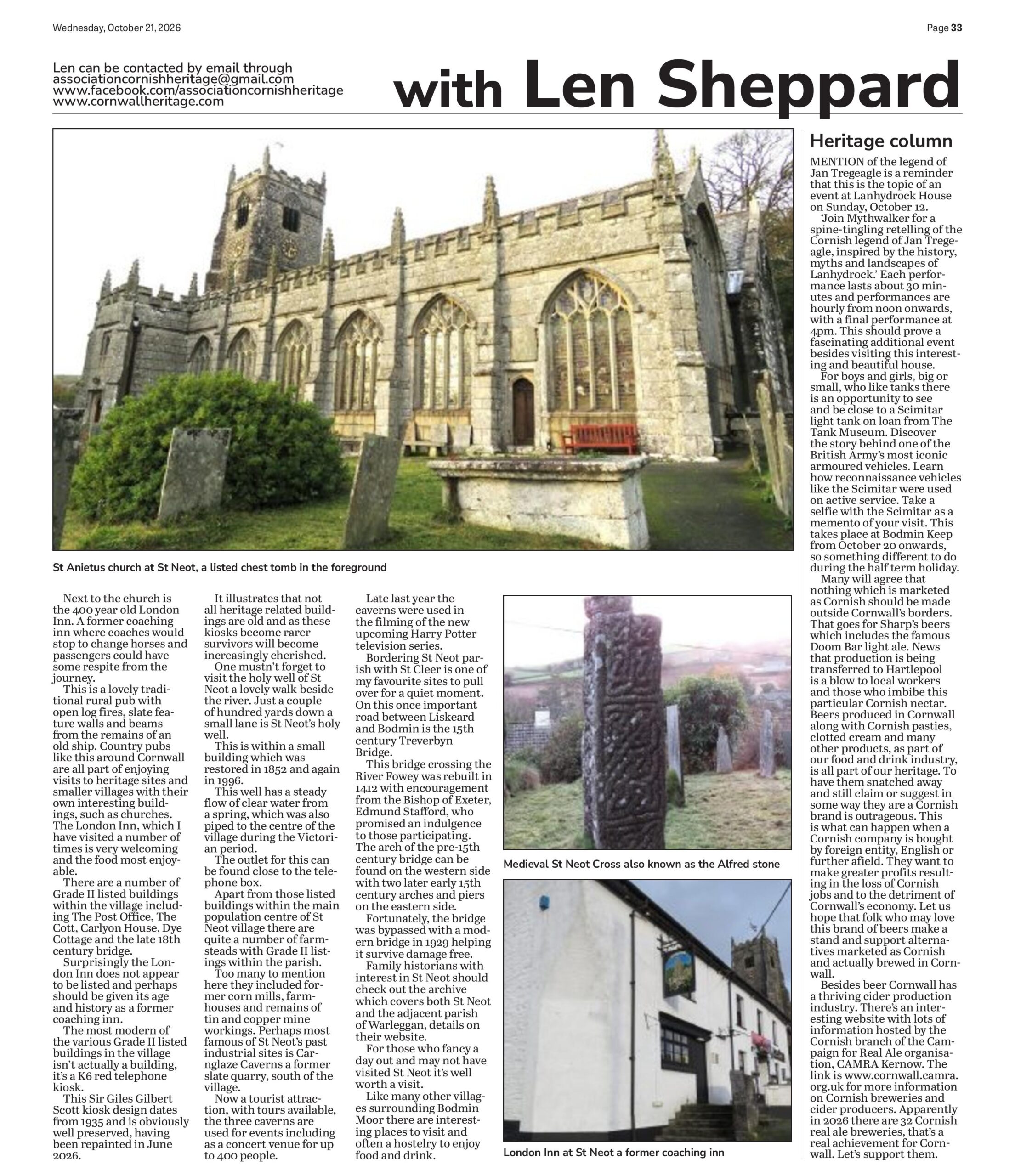
A number of the villages surrounding Bodmin Moor have features or buildings of historic interest. St Neot is definitely amongst them. Those within St Neot range from historic buildings, crosses and some prehistoric remains by way of barrows, rounds and field systems. Within the village the most important and noticeable is the Grade I listed church of St Anietus around which the village stands. Virtually all of the churches in the moorland villages have some feature and for St Anietus it is the stained-glass windows for which it is renowned. The designs are thought to be from the first half of the 16th century with some of the glass used dating back to the 1460’s. There are windows which illustrate the creation and were inspired by the Cornish medieval mystery plays, the Ordinalia. Although the windows were rebuilt during the 19th century the historic medieval glass has been used. During the Commonwealth period soldiers from the Puritan army were destroying religious icons, windows and other church interiors of which they disapproved. Local cunning prevailed and by limewashing the windows, covering the glass but letting light through they were saved from being smashed. Following the return of the monarchy in the Restoration of 1660 they were again cleaned and displayed. This is a church well worth a visit.

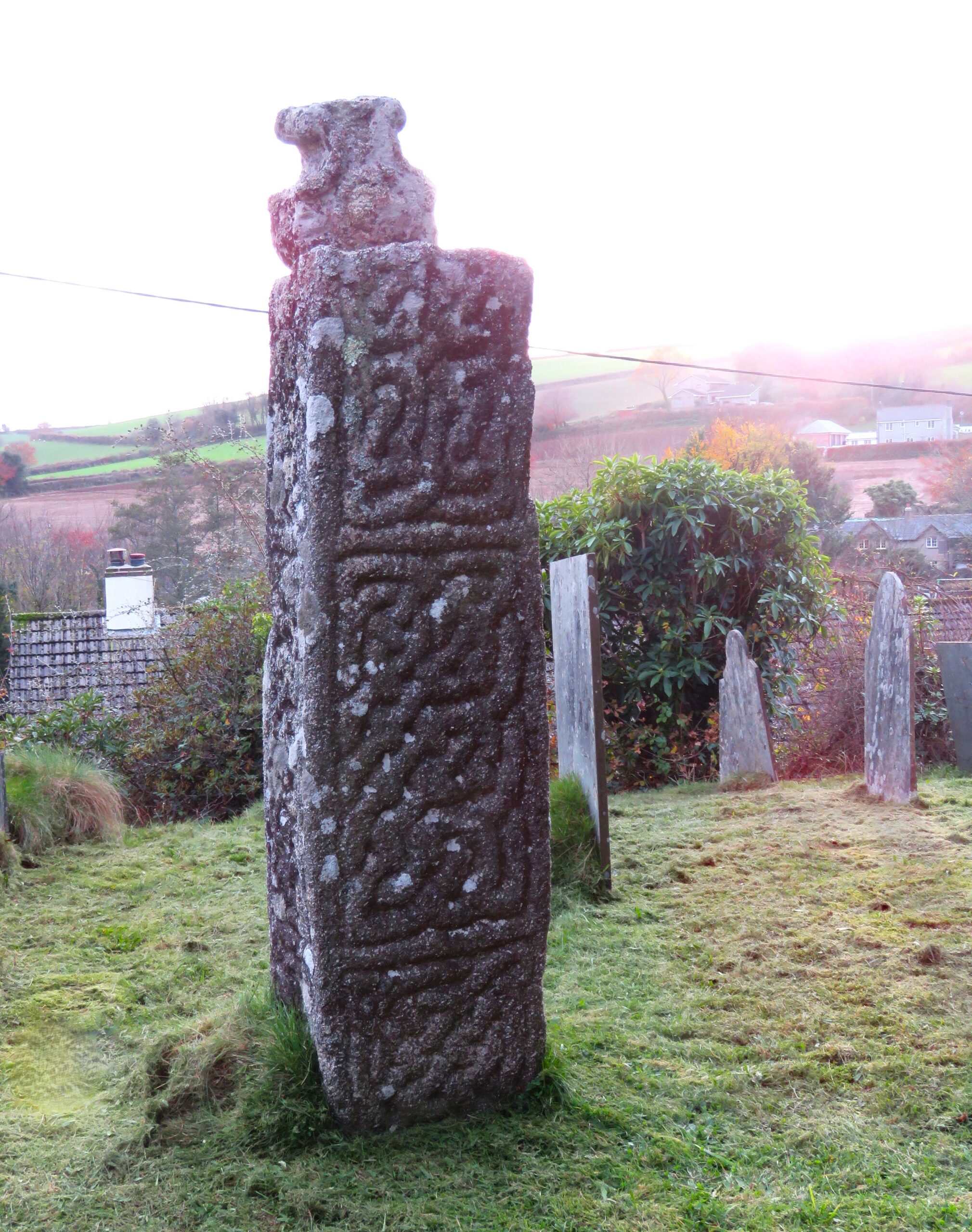
For those of us who enjoy the quiet of country churches and churchyards St Neot is a place to visit. The churchyard at St Anietus has a number of crosses and tombs which are scheduled monuments and Grade II listed. Chest tombs date from at least the 13th century with more examples still existing from the 15th and 16th centuries. Most surviving chest tombs in Cornwall date from the 18th century with four groups at St Neot. The oldest is against the south wall of the south aisle for Elizabeth Line dated 1700. The John Robyns monument about 6 metres south of south aisle in the churchyard is dated 1721 is granite with a slate tablet. Paired granite tombs to William and Olympia (1811) Morshead are attached to the east wall of south aisle. Ten metres south of the south aisle is a moulded plinth, sarcophagus shaped chest with a plain slate lid with incised border with an inscription to John Sibley, 1827. It’s interesting how designs changed over the centuries.
The crosses in the churchyard date from the mid-medieval period with the St Neots Cross, also known as the Alfred Stone being the oldest. This has been dated to the ‘Saxon’ period and is said to have been given by Prince Alfred before he became king of Wessex. The Lantern Cross is cut from Cataclews Greenstone, dating from the second half of the 15th century and mounted on a column of decorative granite known as Luxulyanite. It is the official war memorial commemorating the men of St Neot who died during the wars. Three other crosses are what are known as wayside crosses and came from locations not now known and date from the 10th century. They would have originally marked routes to an abbey or pilgrim’s way. Many such crosses were later moved and used as gate posts or in walls and buildings before being rescued.
Next to the church is the 400 year old London Inn. A former coaching inn where coaches would stop to change horses and passengers could have some respite from the journey. This is a lovely traditional rural pub with open log fires, slate feature walls and beams built from the remains of an old ship. Country pubs like this around Cornwall are all part of enjoying visits to heritage sites and smaller villages with interesting buildings, such as their churches. The London Inn, which I have visited a number of times, was very welcoming and the food most enjoyable.
There are a number of Grade II listed buildings within the village including The Post Office, The Cott, Carlyon House, Dye Cottage and the late 18th century bridge. Surprisingly the London Inn does not appear to be listed and perhaps should be given its age and history as a former coaching inn. The most modern of the various Grade II listed buildings in the village isn’t actually a building, it’s a K6 red telephone kiosk. This Sir Giles Gilbert Scott designed kiosk dates from 1935 and is obviously well preserved, having been repainted in June 2026. It illustrates that not all heritage related buildings are old and as these kiosks become rarer survivors will become increasingly cherished.

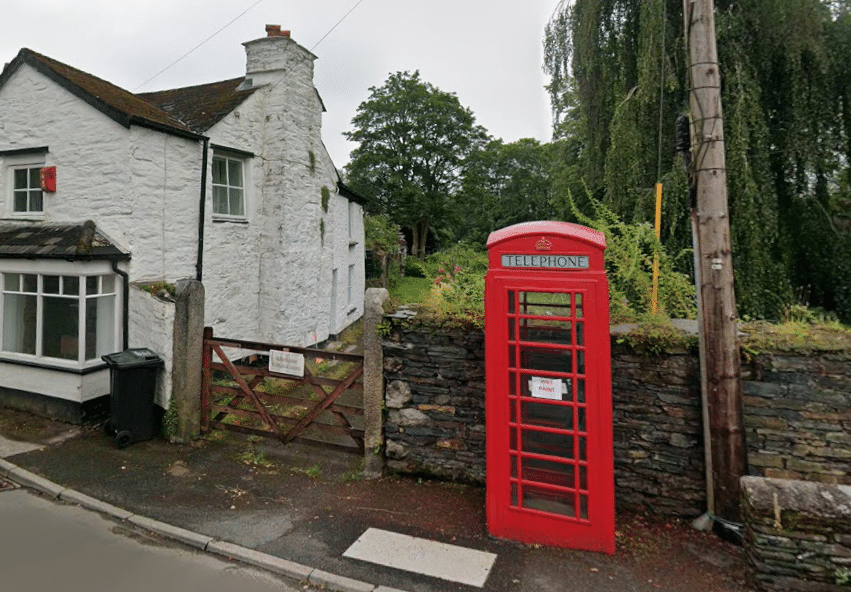

One mustn’t forget to visit the holy well of St Neot. A lovely walk beside the river, just a couple of hundred yards down a small lane is St Neot’s holy well. This is within a small building which was restored in 1852 and again in 1996. This well has a steady flow of clear water from a spring, which was also piped to the centre of the village during the Victorian period. The outlet can be found close to the telephone box.
Apart from those listed buildings within the main population centre of St Neot village there are quite a number of farmsteads with Grade II listings within the parish. Too many to mention here they included former corn mills, farmhouses and remains of tin and copper mine workings. Perhaps most famous of St Neot’s past industrial sites is Carnglaze Caverns a former slate quarry, south of the village. Now a tourist attraction, with tours available, the three caverns are used for events including as a concert venue for up to 400 people. Late last year the caverns were used in the filming of the new upcoming Harry Potter television series.
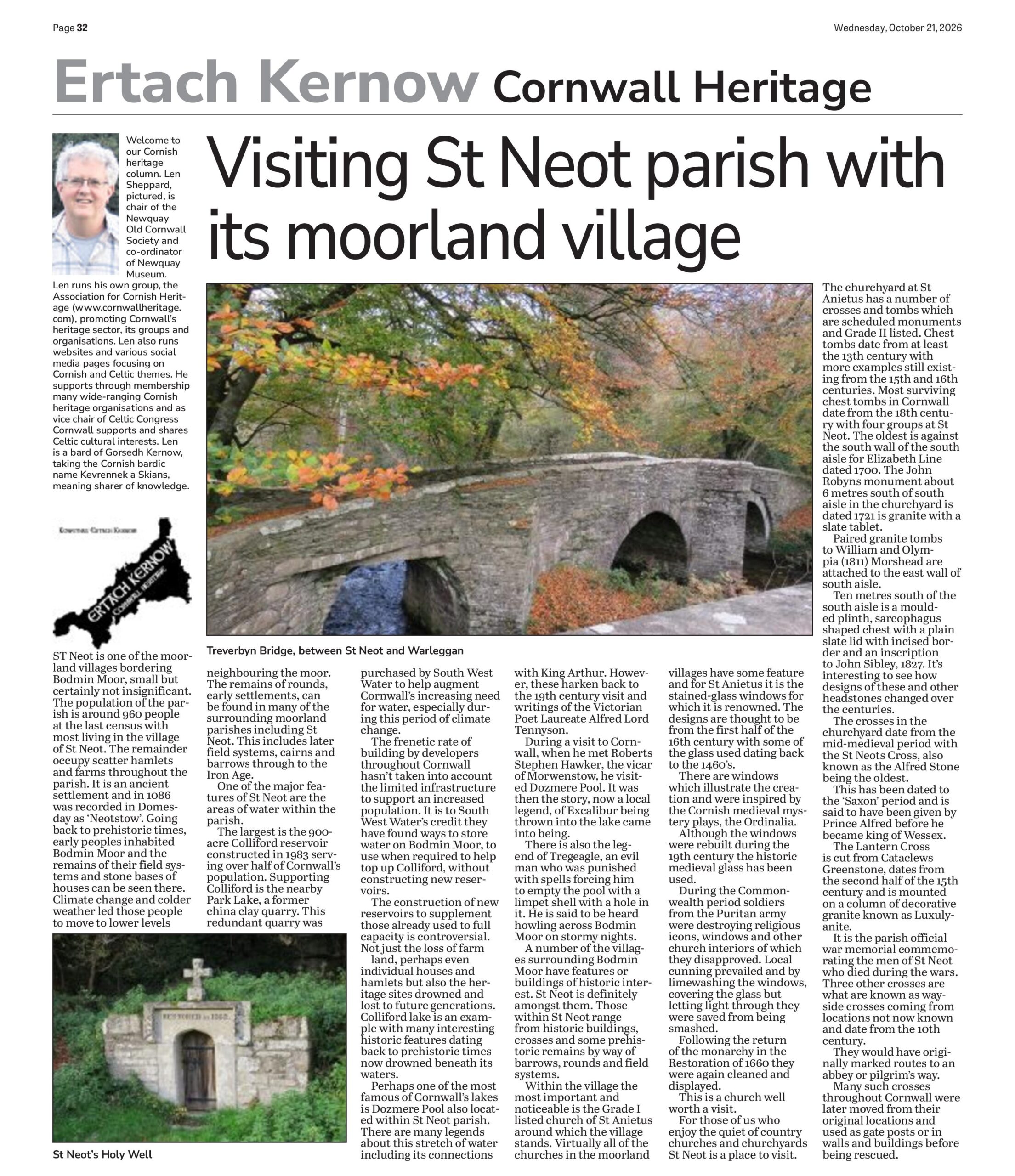
Bordering St Neot parish with St Cleer is one of my favourite sites to pull over for a quiet moment. On this once important road between Liskeard and Bodmin is the 15th century Treverbyn Bridge. This bridge crossing the River Fowey was rebuilt in 1415 with encouragement from the Bishop of Exeter, Edmund Stafford, who promised an indulgence to those participating. The remains of the pre-15th century bridge can be found on the western side with two later early 15th century arches and piers on the eastern side. Fortunately, the bridge was bypassed with a modern bridge in 1929 helping it survive damage free.

Family historians with interest in St Neot should check out the archive which covers both St Neot and the adjacent parish of Warleggan, details on their website. For those who fancy a day out and may not have visited St Neot it’s well worth a visit. Like many other villages surrounding Bodmin Moor there are interesting places to visit and often a hostelry to enjoy food and drink, such as the London Inn next to the church at St Neot.
Heritage Column