Ertach Kernow - Men who led the Cornish Prayer Book Rebellion
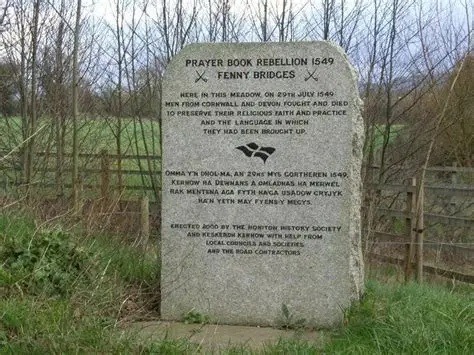
Cornish history and especially the uprisings of 1497 and 'Prayer Book' uprising of 1549 are now coming into greater focus as increasing numbers of people commemorate these events. Although not widely taught in schools and colleges this is improving somewhat. The Medieval History ‘A level’ classes at Truro College have prepared an exhibition currently on display at Newquay Museum as part of an English history curriculum which includes the Tudor period, thus enabling this to be covered.
As always click the images for larger view
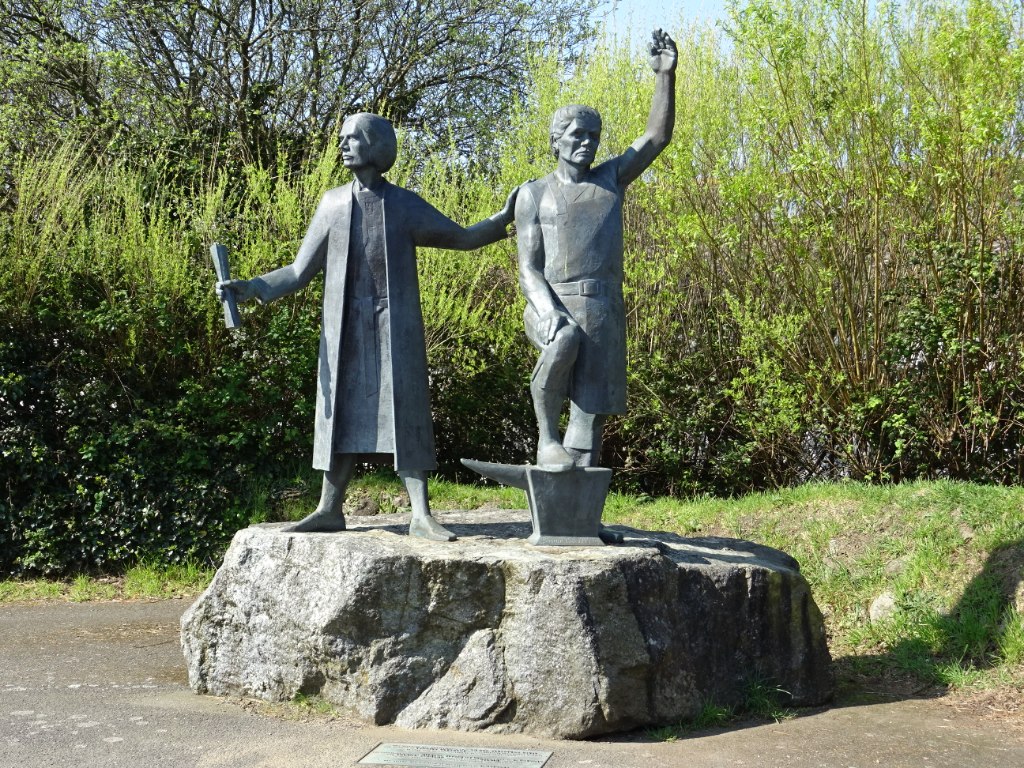
Cornish people such as Michael Joseph (An Gof) from St Kevern, Thomas Flamank from Bodmin and John Rosewarne from Camborne are commemorated each year as part of the commemoration of the 1497 uprising. The 1549 uprising known better as the ‘Prayer Book Rebellion’ is remembered in the annual church service at St Petroc’s, Bodmin memorialising those Cornish people who died including the nine-hundred prisoners murdered in cold blood. The Cornish leaders of this rebellion are less well-known that those of the 1497 uprising.
Much has been written over the centuries about the 1549 Western Uprising. An extensive work in 1913 by Frances Rose-Troup has been updated with new information in Professor Mark Stoyle’s ‘A Murderous Summer – The Western Rising of 1549’. It is not feasible to write about the events here. As with earlier rebellion the names of the vast majority of the many people who died will remain unknown. It’s only the leaders who were recorded often due to the trials and executions which took place. Here we try to share the names of some of these people who were instrumental in this conflict as a commemoration to them and the men they led.
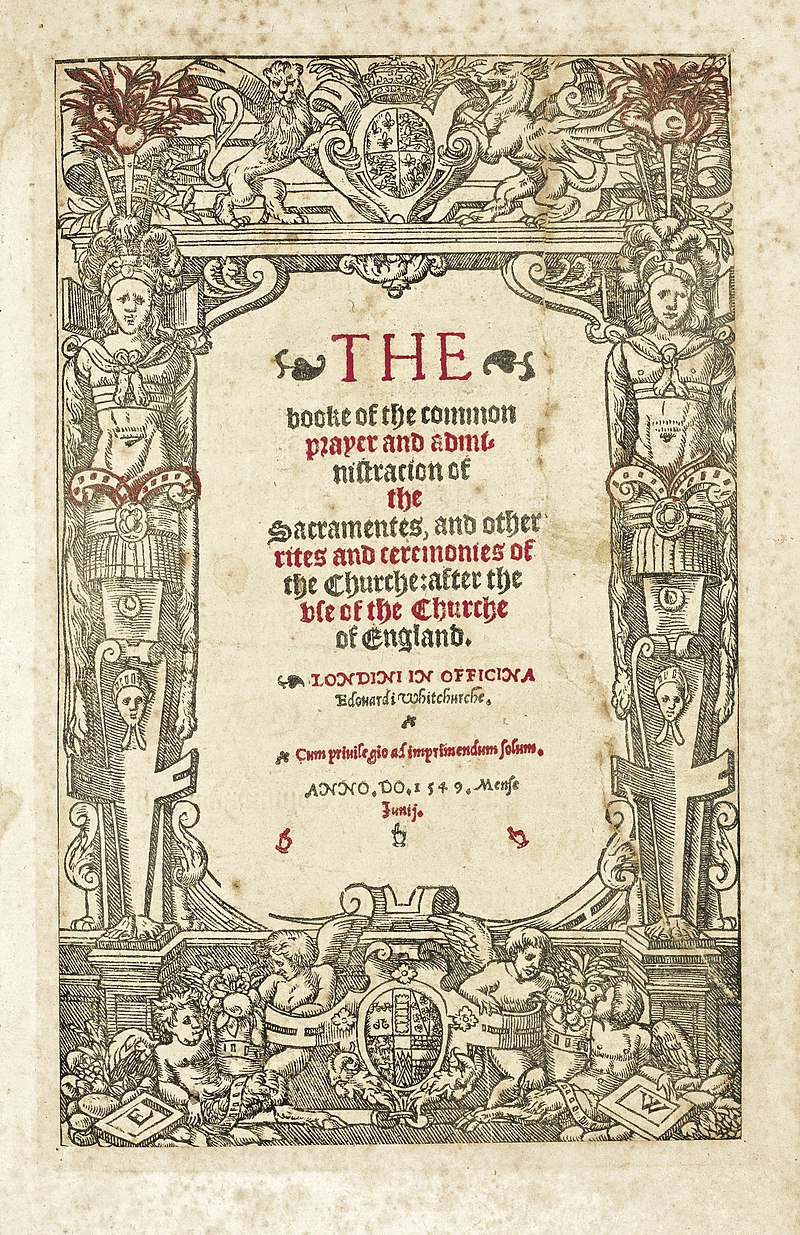
The Tudor period was a disastrous time for Cornwall, not just for the large number of deaths but also the repercussions of the Reformation which did much to diminish the Cornish language leading to its near extinction. Cornish historian Craig Wetherhill has described 1549 as ‘the blackest year in Cornish history’. The major reasons for Cornwall rising was due to the imposition of Archbishop Thomas Cranmer’s new English language prayer book replacing the Latin version. Most ordinary Cornish folk couldn’t read Latin, but it was something they traditionally understood as part of the mass. It didn’t mention of purgatory or transubstation, also calling it ‘Holy Communion’ not mass. There was also confiscation of church objects and destruction of many church images. The background to this was also economic with what we might term a cost of living crisis, unemployment and new taxes.
One William Body was sent to carry out the task of removal of church objects in Cornwall. A Helston mob of around 1,000 people, led by St Keverne priest Martin Geoffrey went to the church dragging him from his refuge. He was then stabbed to death by William Kilter and Pasco Trevian. Men were sent from London to quell the disturbance leading to Martin Geoffrey being hanged drawn and quartered in London. Others were arrested for the attack on William Body, like Kilter and Trevain, meeting the same fate as Martin Geoffrey at Launceston.
A series of fifteen articles were sent to the government which included ‘We will not receive the new service because it is like a Christmas game, but we will have our old services of Matins, Mass Evensong and procession in Latin, not English as it was before. And so, we Cornishmen utterly refuse this new English.’ This was signed by those describing themselves as the ‘Chiefe Captaynes’ Humphrey Arundell, John Bury, Thomas Underhill, John Sloman, and William Segar. Underneath these names were those of John Tompson (pryeste), Henry Bray (Mayor of Bodmin), Henry Lee (manor of Torrington) and Roger Barret (Prieste) described as ‘the foure Governors of the Campes’. Some were from West Devon and linked to Sampford Courtenay which was instrumental in the rebellion.
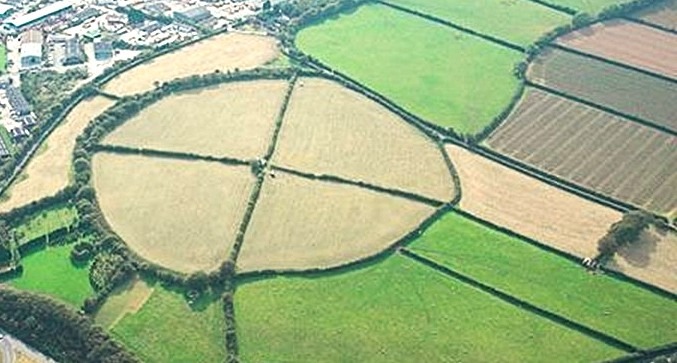
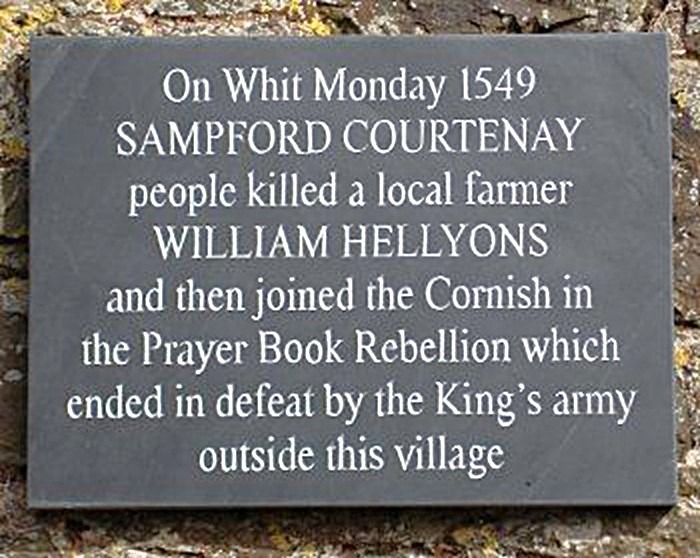
Sampford Courtenay is said to have been the beginning of the uprising. In Cornwall on June 6th, three days before any action in Sampford Courtney, a Cornish army was gathering at Castle Canyke. This ancient multivallate hillfort on the edge of Bodmin became the rallying point for Cornishmen as it had in 1497 for that uprising. Encouraged by Henry Bray the mayor of Bodmin some three thousand men gathered there. What became of Bray is unknown, it has been suggested he was captured and executed, or that he died in battle, disappearing without a trace. Perhaps he was fortunate and he escaped far worse trial and punishment handed out to others.
From Castle Canyke the main army headed for Polson Bridge, the other led by Robert Smyth of St Germans, aimed for Plymouth. Smyth’s force captured Trematon Castle, where Sir Richard Grenville had retreated, then took Plymouth. Another of the leaders was John Winslade of Tregarrick a manor in the parish of Pelynt. This parish is the home base of the famous Cornish family Trelawny. It was here that Winslade married Jane Trelawny daughter of Sir John Trelawny IV, one of the collateral ancestors of the famous Bishop Trelawny. Following the defeat of the Cornish army Winslade was captured in Bodmin and sent for trial in London. Others included Thomas Holmes of Blisland, described as a yeoman, who is credited with raising a thousand men. He was captured on 18th August and said to have been in the fray, presumably at Sampford Courtenay. John Bury was captured at Kingweston on 27th August, being the last of the ‘Chiefe Captaynes’ to be taken alive and sent to Exeter then the Tower.

Chief amongst the Cornish forces was Humphrey Arundell. From one of Cornwall’s most esteemed and oldest families and staunch Catholics. Arundell had past military experience and had led the garrison at St Michael’s Mount. The Mount was easily captured and the guns there used as part of the later campaign. Arundell led the Cornish army until he was captured on 19th August and imprisoned at Launceston then sent to the Tower.
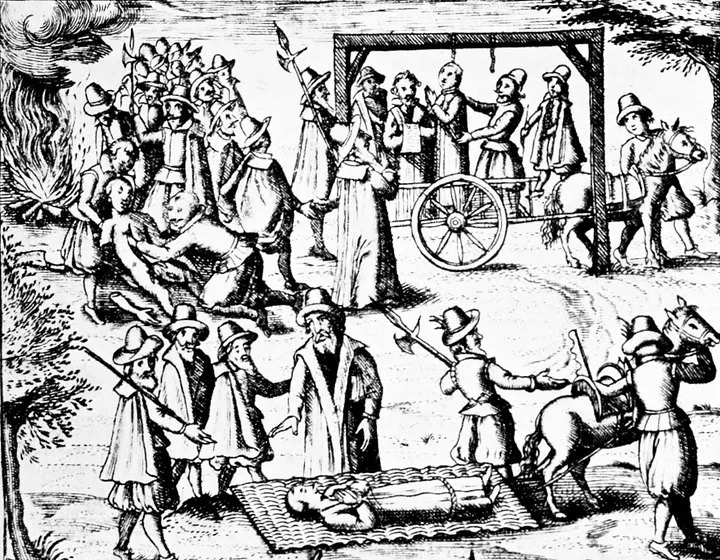
Several battles took place and following The Battle of Clyst St Mary 900 Cornishmen were captured, all of them were murdered in just ten minutes by having their throats cut. This was recorded by John Hayward, Edward VI’s own chronicler. The uprising saw some 5,000 Cornish people killed, estimated at ten percent of Cornwall’s population. Arundell, Bury, Holmes and Winslade after being held in the Tower of London and tortured, were sent for trial at Westminster Hall on 26th November. They were of course found guilty of various charges. Their fate was; ‘to be drawn on hurdles through the City of London to the gallows at Tyburn and on the gallows suspended and while yet alive to be cast down upon the ground and the entrails of each to be taken out and burnt before their eyes while yet living and their heads to be cut off and their bodies to be divided into four parts to be distributed at the King’s pleasure’. This was the traditional fate of those found guilty of treason.
Nicholas Bowyer became Mayor of Bodmin following the disappearance of John Bray. Although Bowyer was not hugely active in the rebellion he had done sufficient to draw the attention of Provost Marshal Sir Anthony Kingston who came knocking at his door. The story related by the king’s printer Richard Grafton was as follows. ‘Sir Anthony Kingstone, with his company, came, and were right heartily welcomed to the Mayor. And before they sat down to dinner, Sir Anthony, calling the mayor aside, showed him that there must be execution done in that town, and therefore willed him with speed to cause a pair of gallows to be made, that the same might be ready by the end of dinner. The mayor went diligently about it and caused the same to be done. When dinner was ended, Sir Anthony called the mayor unto him and asked him if that were ready that he spake to him of, and he answered it was ready. Then he took the mayor by the hand and prayed him to bring him to the place where the same was and he so did. And when Sir Anthony saw them, he said unto the mayor, 'Think you they be strong enough?' ‘Yea, sir,' said he, that they are. 'Well, then,' said Sir Anthony, 'get you even up to them, for they are provided for you.' The mayor cried, 'I trust you mean no such thing to me.' Sir,' saith he, 'there is no remedy. You have been a busy rebel, and, therefore, this is appointed for your reward.' So that without longer respite or tarrying then was the mayor hanged.
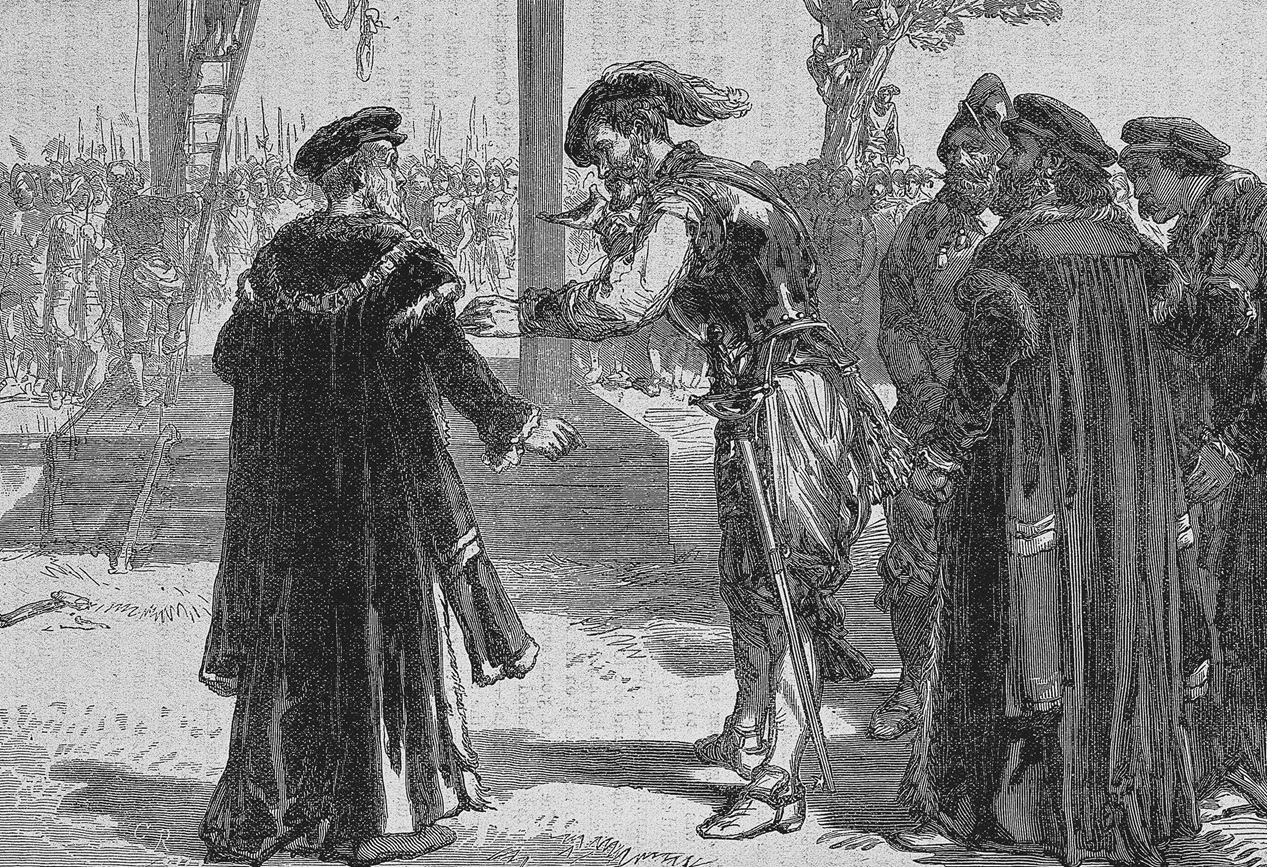
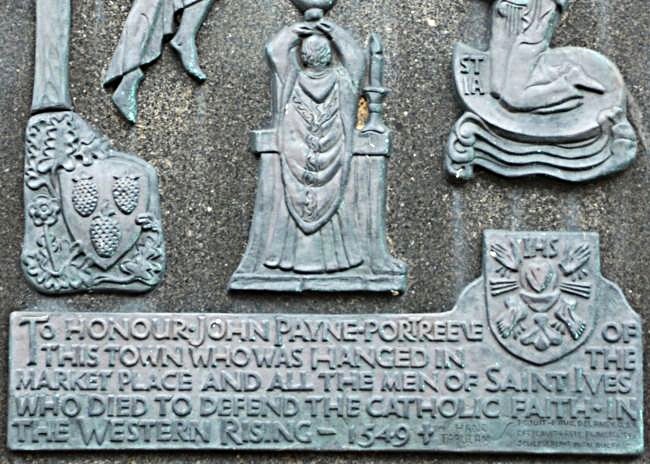
Kingston travelled about Cornwall hanging several prominent people including the portreeve of St Ives John Payne, mayor of Gluvian William Mayow and several priests. These included the vicar of St Veep and St Neot Richard Bennett, Simon Morton the vicar of Poundstock and the curate of Pillaton. Robert Voyse vicar of St Cleer, and the Vicar of St Keverne were attainted. The odious Kingston eventually met his own fate dying in 1556, perhaps by his own hand, on the way to trial in London where he would likely been found guilty of treason, meeting the usual punishment for that crime. Lord Protector Edward Seymour was beheaded in 1552. Cranmer met his fate being burnt at the stake in 1556.
Today as Cornish and Celtic peoples become aware of their own histories there is greater understanding of how England’s Westminster government has throughout the centuries controlled their identities through repression. Scottish and Welsh education curriculum now including greater knowledge about their histories, hopefully Cornwall will soon follow.
Heritage Column