Ertach Kernow - The early story of the Edgecumbe’s of Cotehele
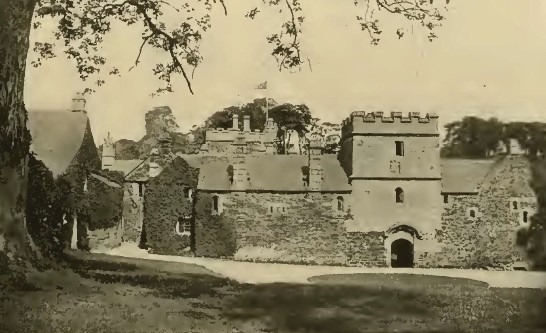
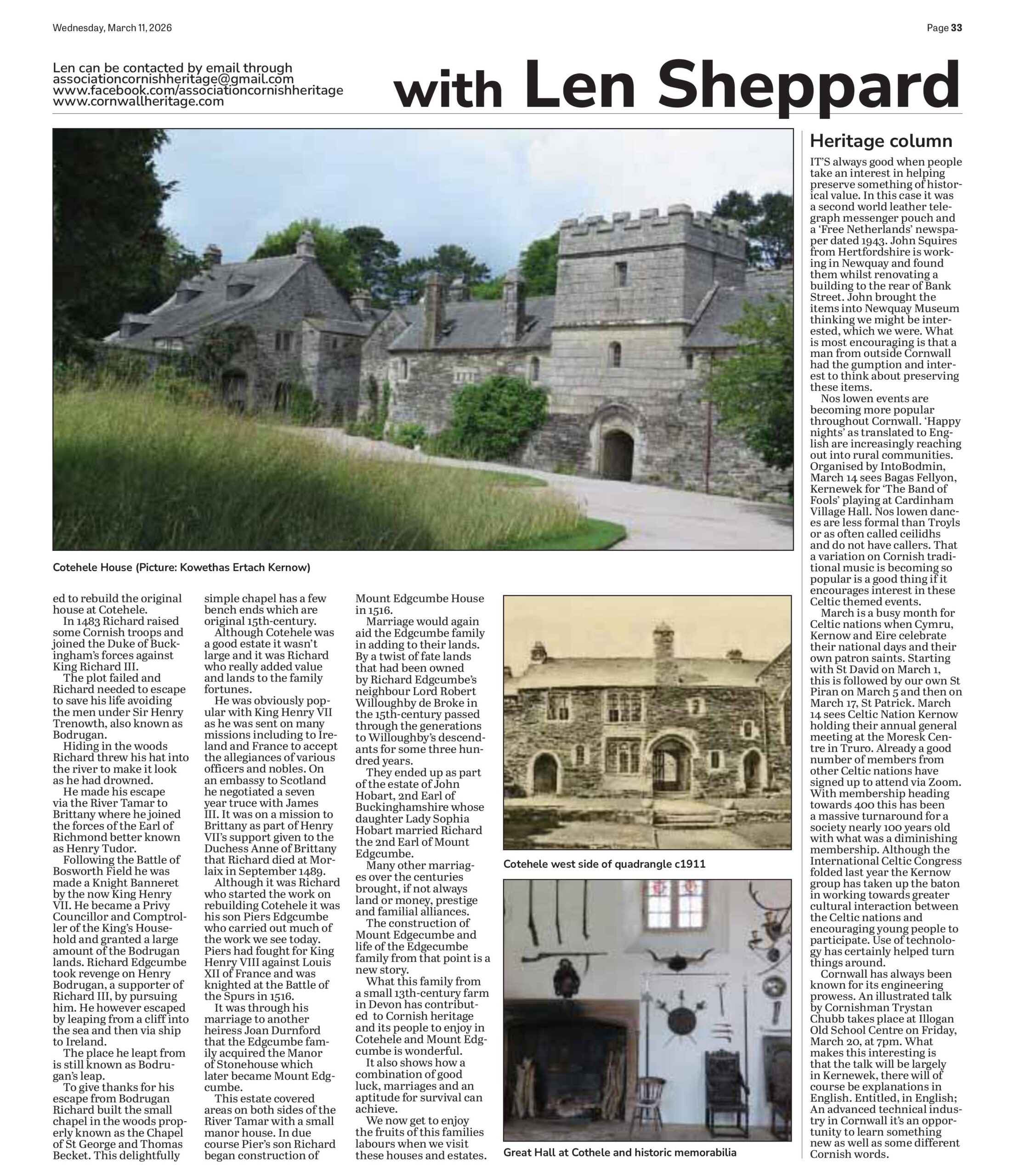
Cornish historic houses may not quite be in the same league as many throughout England but we have some very interesting buildings with great family connections. It’s always good to find mention of some of these in vintage books dating from the 19th century helping illustrate that there were writers who appreciated Cornish houses of interest. One of these was Cotehele formerly the home of the Edgcumbe family before their construction and move to the larger residence at Mount Edgcumbe.
As always click the images for larger view
We are fortunate perhaps that they did move as this left their original home on the River Tamar unaltered and in much of its original form. Also we should be thankful to those historians and writers who recorded these buildings in past centuries. One-hundred and fifty years ago in August 1876 the inaugural address of the British Archaeological Association was given by William Henry Edgcumbe the 4th Earl of Mount Edgcumbe as President of the society. Apart from his lengthy address in which he showed his pride in Cornwall and Cornish people he also spoke about the history of his family. He was followed by Edgar Philip Loftus Brock who gave a talk entitled ‘The Architectural History of Cotehele House’. Thirty five years later Cotehele was included as one of the houses written about by Alfred Henry Malan in his ‘Other famous homes of Great Britain and their stories’. The histories of houses and the families who lived there still remain of interest to many people who value historical heritage.

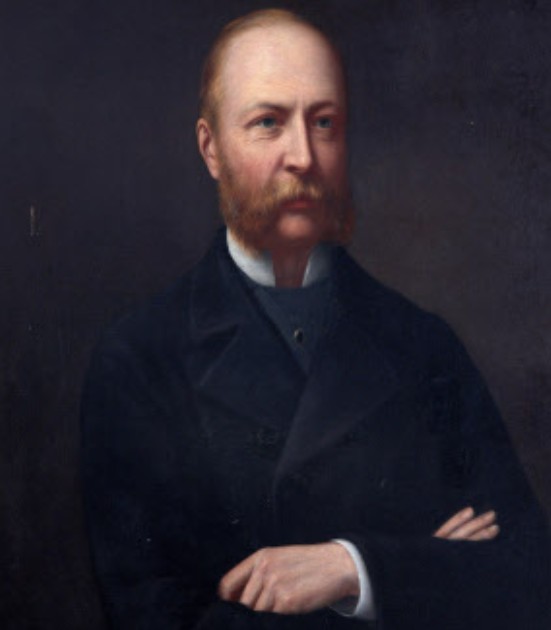
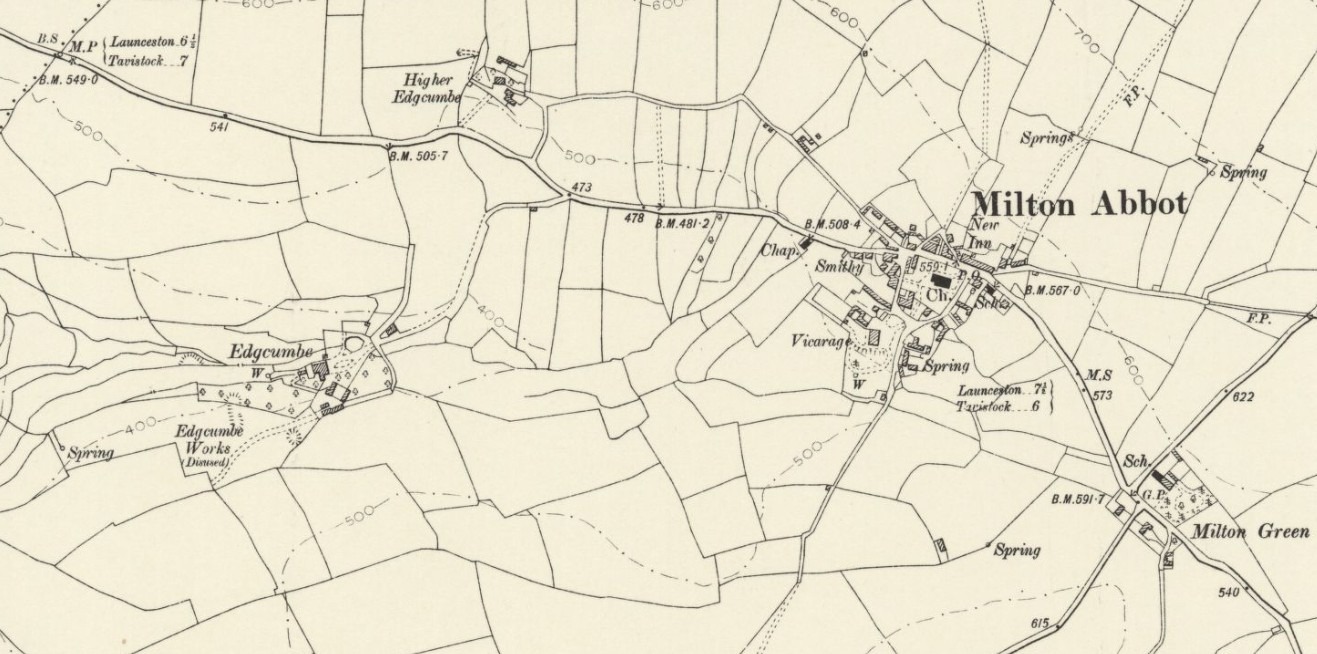
The Edgcumbe family is now firmly established as a Cornish family in most peoples minds. They can be traced back in records to William de Edgcumbe who was born about 1210. As with many historic and even in our own family trees the spelling of surnames now differs from their origins changing many times over the centuries. How a family grew its wealth and estates often came down to good luck, who they knew, who they married and how they survived tumultuous historical times. The Edgcumbe family originated across the Cornish border in Devon around a small settlement known as Milton Abbot, which was mentioned in Domesday. It’s been suggested that the name is Celtic and originated with a man’s name ‘Eggha’ prefixing the word combe meaning valley.
Records held by the Devon Archives and Local Studies Service include deeds of the property dating from around 1280 through to the 19th century for the property named as Edgcumbe House. There were two small hamlets named Higher and Lower Edgcumbe still named on early 20th century maps to the west of Milton Abbot village. Edgcumbe House was from the beginning no more than a farmhouse and has since had many alterations and additions made to it over the following centuries. The property is now a Grade II* listed building with a few remnants within from the 13th century.
The early deeds recognise the names of some early Edgcumbe’s, John born about 1250, whose father William is known from other records. John’s son was Richard and it was he who built the house at Edgcumbe in Milton Abbot in about 1292. The third name mentioned on the deed was Richard’s son, also Richard who succeeded his father in 1319. Perhaps needless to say there were many descendants of this early family many rising to local and national importance over the centuries. The family Edgcumbe has ramified throughout the world with members of this ancient line bearing the name Edgcumbe, or alternate spelling, found in the USA, and many British commonwealth countries.
The line which interests us is that which in turn led to the construction of Cotehele House and later Mount Edgcumbe. This story began with the marriage of William de Edgecumbe, the second son of Richard de Edgecumbe to Hillaria de Cotehele sister to Ralph de Cotehele. Hillaria and Ralph’s father must have died when they were young as they became wards of John of Eltham, the last earl of Cornwall and brother of King Edward III, who died in 1336. The treatment for young women could be difficult in medieval England and on Eltham’s death her wardship was passed to his steward who sold it to one Maud de Brendan who died soon after leaving Hillaria’s future uncertain. The case from claimants for Hillaria’s wardship came before the Black Prince, the first Duke of Cornwall to investigate. It would be her guardian, the owner of her wardship, who would determine who she married. At that time there were great potential benefits for whoever won. To be the guardian of an heir or heiress was potentially commercially profitable from their income or through a marriage used in creating political or military alliances. Hillaria being over the age of fourteen it seems won the case for herself and married William of Edgecumbe against many objections. Thus, as Hillaria was heir to her brother in due course Cotehele became part of the younger Edgecumbe lines estate. William a younger son had far exceeded the expectations he may have had, through a fortunate marriage. The elder Edgcumbe line continued to hold the manor estate at Milton Abbot until the 1920’s. In 1876 Lord Edgcumbe mentions that the estate was still held by the elder line in his talk to the archaeology society.
The original house which stood on the site of the current Cotehele House, which William and Hillaria resided in during the 14th century, was mostly replaced by their great grandson Richard and his son Piers from around 1485. There are still some original features remaining from the earlier building. This Richard Edgecumbe seems to have lived a charmed life. According to a document he was attacked by his neighbour Robert Willoughby, later Lord de Broke, whilst ‘he was in hys bed nakyd safe hys shurt’. There were a number of other incidents recorded and Cotehele was attacked on a number of occasions with servants kidnapped and ill treaded by Willoughby. As Lord Mount Edgcumbe notes in his speech during this period houses needed to be able to protect the residents and no wonder Richard had started to rebuild the original house at Cotehele.
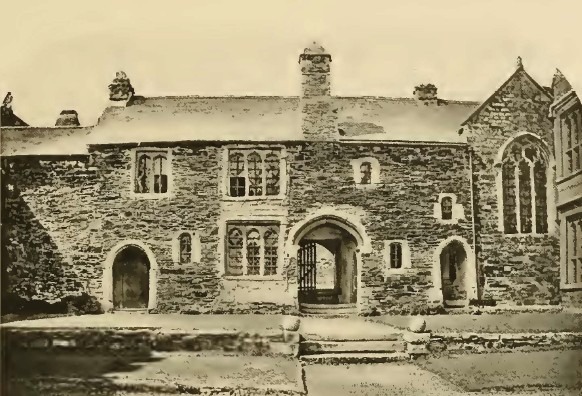
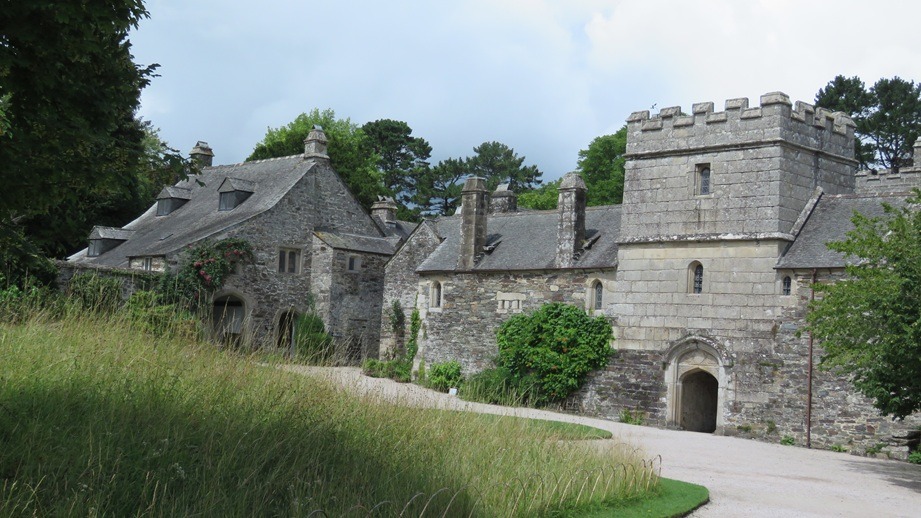
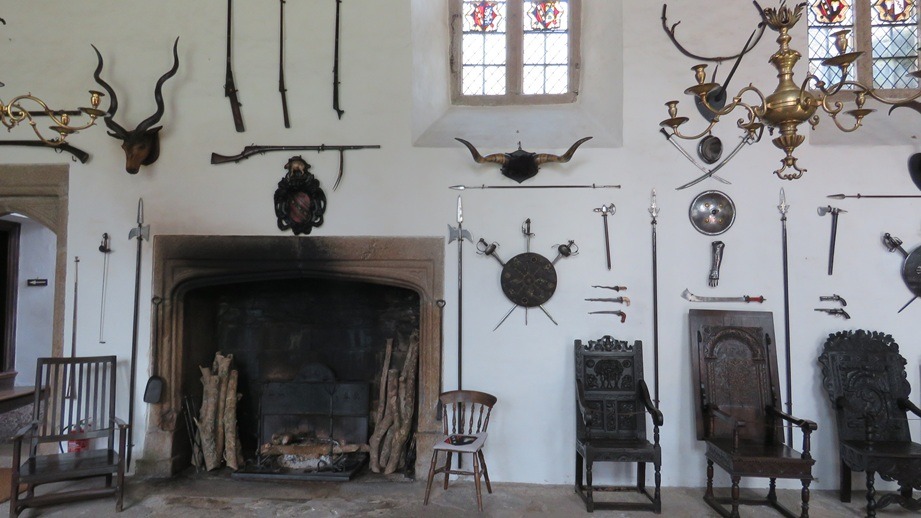
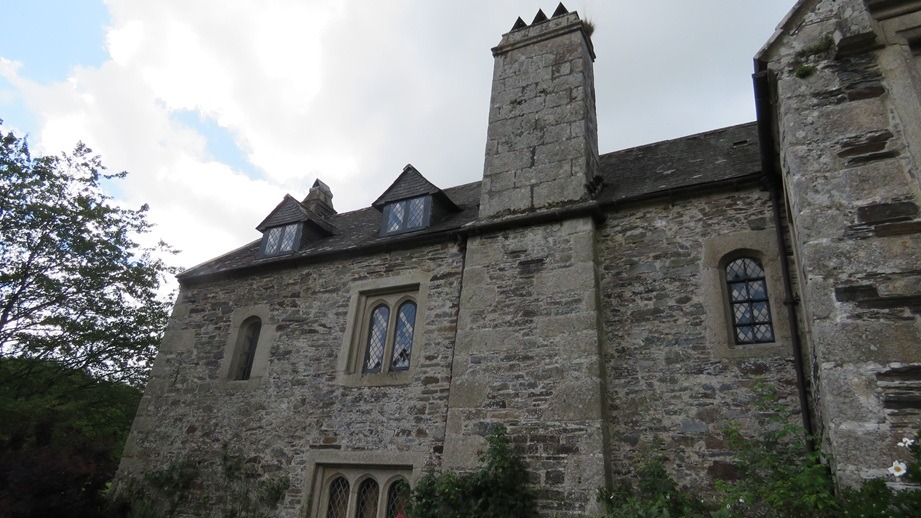
In 1483 Richard raised some Cornish troops and joined the Duke of Buckingham’s forces against King Richard III. The plot failed and Richard needed to escape to save his life avoiding the men under Sir Henry Trenowth, also known as Bodrugan. Hiding in the woods Richard threw his hat into the river to make it look as he had drowned. He made his escape via the River Tamar to Brittany where he joined the forces of the Earl of Richmond better known as Henry Tudor. Following the Battle of Bosworth Field he was made a Knight Banneret by the now King Henry VII. He became a Privy Councillor and Comptroller of the King’s Household and granted a large amount of the Bodrugan lands. Richard Edgcumbe took revenge on Henry Bodrugan, a supporter of Richard III, by pursuing him. He however escaped by leaping from a cliff into the sea and then via ship to Ireland. The place he leapt from is still known as Bodrugan’s leap. To give thanks for his escape from Bodrugan Richard built the small chapel in the woods properly known as the Chapel of St George and Thomas Becket. This delightfully simple chapel has a few bench ends which are original 15th century.
Although Cotehele was a good estate it wasn’t large and it was Richard who really added value and lands to the family fortunes. He was obviously popular with King Henry VII as he was sent on many missions including to Ireland and France to accept the allegiances of various officers and nobles. On an embassy to Scotland he negotiated a seven year truce with James III. It was on a mission to Brittany as part of Henry VII’s support given to the Duchess Anne of Brittany that Richard died at Morlaix in September 1489.
Although it was Richard who started the work on rebuilding Cotehele it was his son Piers Edgcumbe who carried out much of the work we see today. Piers had fought for King Henry VIII against Louis XII of France and was knighted at the Battle of the Spurs in 1516. It was through his marriage to another heiress Joan Durnford that the Edgcumbe family acquired the Manor of Stonehouse which later became Mount Edgcumbe. This estate covered areas on both sides of the River Tamar with a small manor house. In due course Pier’s son Richard began construction of Mount Edgcumbe House in 1516.
Marriage would again aid the Edgcumbe family in adding to their lands. By a twist of fate lands that had been owned by Richard Edgcumbe’s neighbour Lord Robert Willoughby de Broke in the 15th century passed through the generations to Willoughby’s descendants for some three hundred years. They ended up as part of the estate of John Hobart, 2nd Earl of Buckinghamshire whose daughter Lady Sophia Hobart married Richard the 2nd Earl of Mount Edgcumbe. Many other marriages over the centuries brought, if not always land or money, prestige and familial alliances.
The construction of Mount Edgecumbe and life of the Edgecumbe family from that point is a new story. What this family from a small 13th century farm in Devon has contributed to Cornish heritage and its people to enjoy in Cotehele and Mount Edgcumbe is wonderful. It also shows how a combination of good luck, marriages and an aptitude for survival can achieve. We now get to enjoy the fruits of this families labours when we visit these houses and estates.
Heritage Column