Ertach Kernow - St Ervan a rural parish researched and recorded
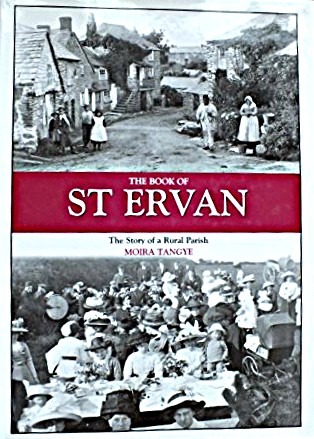
The Book of St Ervan; The Story of a Rural Parish was published in 2006. It was written and compiled by Moira Tangye who has recently passed away aged 90. Moira was a lovely person, knowledgeable, interesting with a good sense of humour. For many years she ran the Glendorgal Hotel in Newquay along with her husband the well-known Cornish author Nigel Tangye. But it is Moira’s contribution to Cornwall’s heritage which makes her stand out. Honoured with a bardship of Gorsedh Kernow in 1993 Moira had been involved with many Cornish organisations including as a founder of the outstanding Cornwall Heritage Trust. Her contribution to the Cornish Global Migration Project led to her taking the bardic Kernewek name ‘Kevrenores Kernow hag Ameryky’ (Linker of Cornwall & America) reflecting that work. I knew Moira as the President of Newquay Old Cornwall Society when I joined as Chair of the group and she was most supportive as we set up the Newquay Heritage Archive and Museum in 2014. Moira was connected with many other Cornish heritage groups and she will be remembered with great affection for her contributions to them and her kindness.
As always click the images for larger view
St Ervan as Moira mentions in the book title of her book is a rural parish. I enjoyed a visit there in 2017 as part of a Cornwall Association of Local Historians tour. Sadly this too is a group which carried out great work but folded through lack of support. Moira’s St Ervan interest began in 1976 when she visited the church. This led to her shortly afterwards working with historian Peter Sheppard in listing the parochial antiquities of St Ervan parish. This list of antiquities was included within the Cornwall Archaeological Society journal for 1979. These locations and antiquities are now part of the Cornwall and the Isles of Scilly's Historic Environment mapping website but the original list will be added to the online edition of this article.
Setting aside the medieval church until later there are a number of prehistoric sites dating from the Bronze and Iron Ages. Many can only be identified by ground penetrating radar or seen as crop circles from an aerial view. At Trenouth Farm in St Ervan parish is a site of a Middle-Late Iron Age settlement, centred on a ‘round’ which has a number of ring ditches. It seems that this site was is use from the Bronze Age through to the Romano-British period, as late as the 2nd century of the Common Era. Much information was gathered during archaeological investigations for the site prior to a solar farm being created. In 1732 Thomas Martyn who would later create the large-scale map of Cornwall in 1748 visited Trenouth and plotted and named each field. At the time this farm consisted of 551 acres. This illustrates the work that Martyn later put into his map which identified far more places in Cornwall than ever before.
A number of other small prehistoric enclosures including at Tregavone in St Ervan have been discovered. Treraval Farm is known to have been a settlement from early medieval times. It was first mentioned in records in 1286 when it is spelt Trerovel. These at least indicate that the St Ervan area was occupied very early on by folk who took advantage of the relatively good farming conditions there.
St Ervan has remained a predominantly farming district ever since with a high number of the population working in agriculture during the 19th century. The early census records often considered of little use to genealogists are useful in determining occupation and numbers within a given parish. The population has never been large and records show two hundred years ago in 1821 there were just 86 families in the parish. The number of people totalled 422 and as would be expected the vast majority of occupied persons amounting to sixty-nine were in the agricultural sector. Only nine were in other trades and manufacture of goods with eight others unspecified. There have been some changes although agriculture remains a primary use of land. What was a small farming community at Treginegar at the start of the 20th century has now expanded to become a sizeable holiday park.
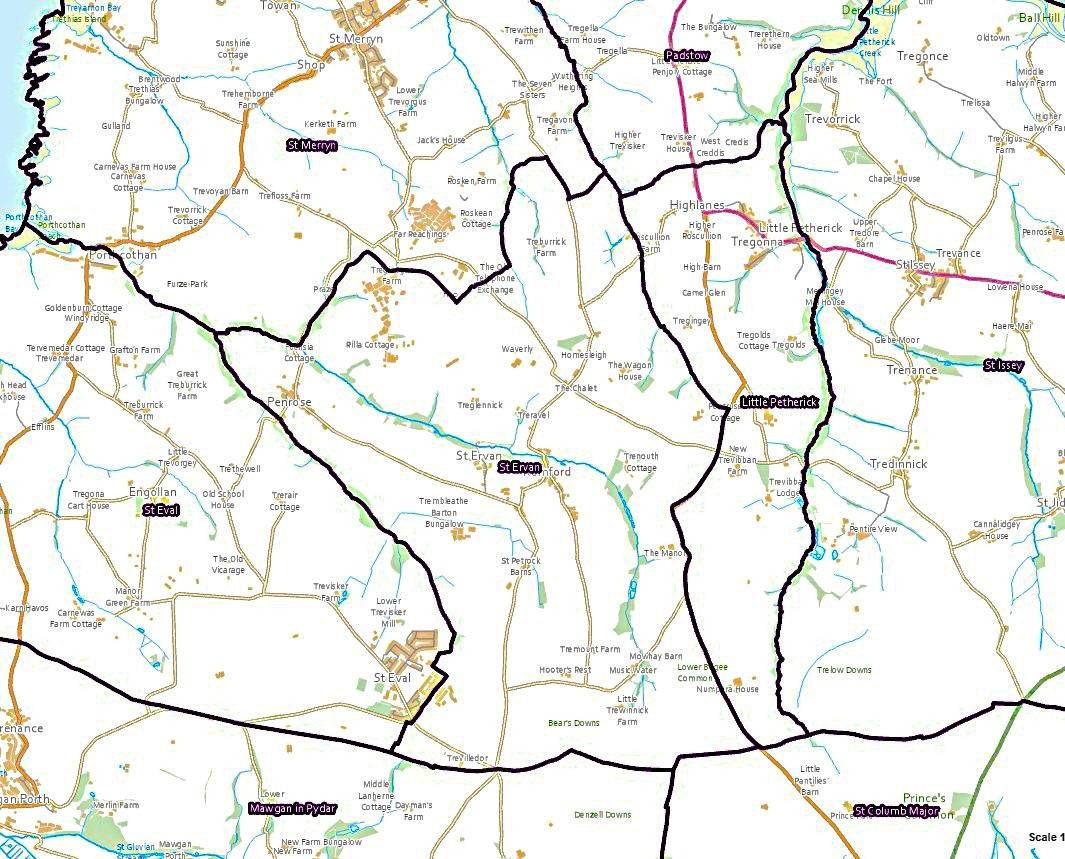
The parish besides the small churchtown village, a hamlet in reality, has few other settlements of any size. Rumford has a larger number of residential properties lying some two hundred meters to the east of the historic church town. The small hamlet at Penrose and a scattering of farms and a holiday park are virtually all else within the parish. The village of St Eval has spilled over from the adjoining St Eval parish into that of St Ervan.
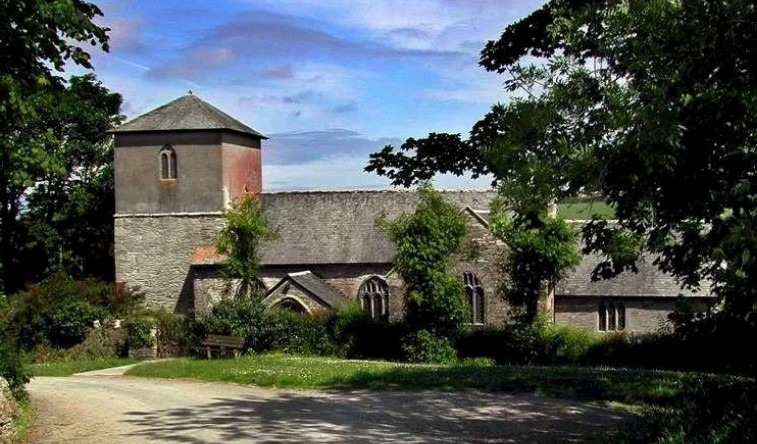
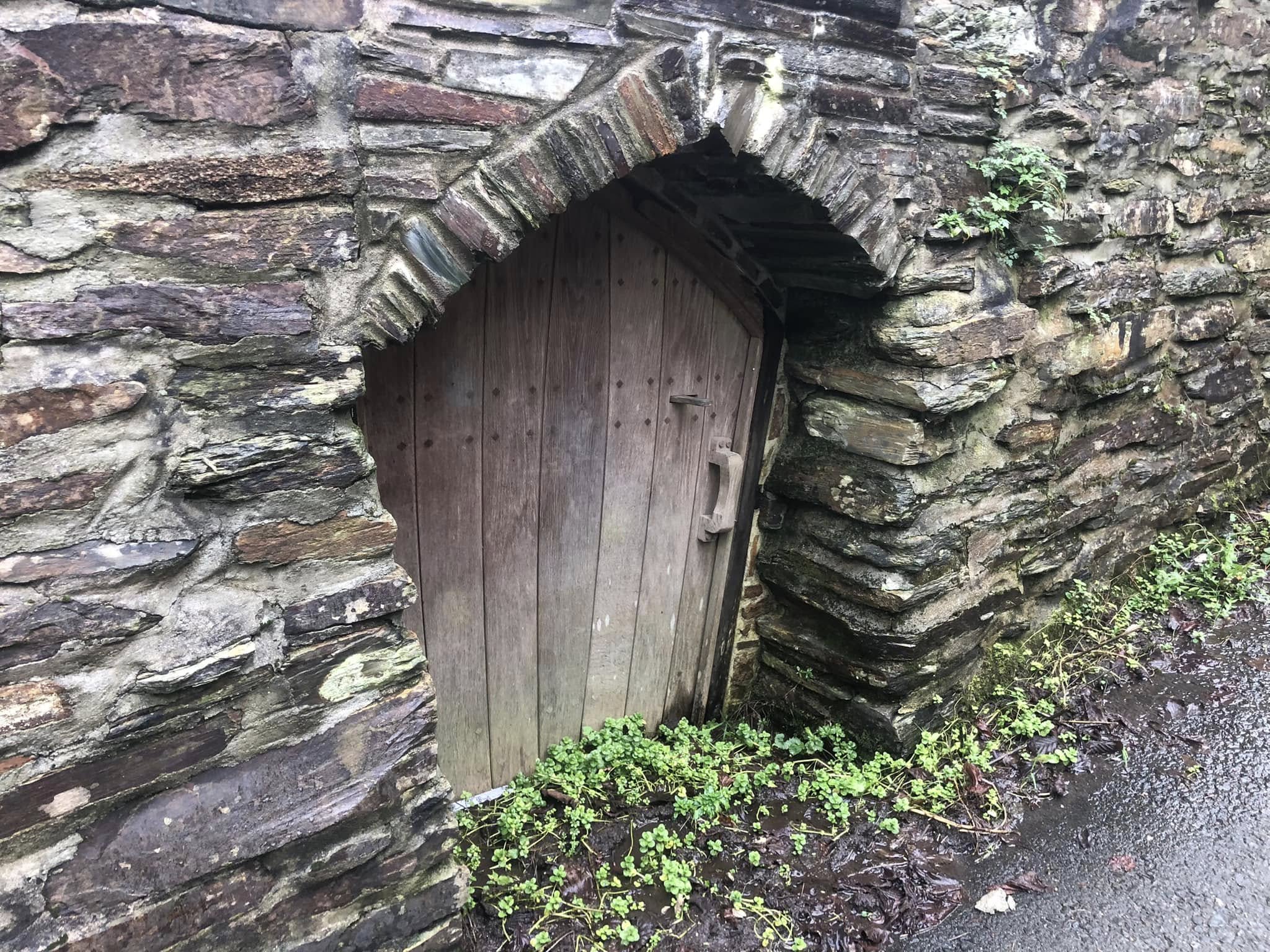
Some may be surprised describing St Hermes Church in St Ervan village as the jewel in the crown of the parish. It’s rather a strange looking little church with a low-pitched roof on its low tower but it is a Grade II* listed building. It consists of a wide nave and two conspicuously unaligned transepts, as commented on by Nikolaus Pevsner the renowned architectural historian. Largely 13th century the church had further work carried out in the 15th century which involved construction of the tower. Until their eventual fall the church was supported by the Arundell family who had lived locally at Trembleath Manor from at least the 13th century and later elsewhere including Trerice and Lanherne. There is a small holy well in the parish located in the valley below the Church. This is reached through a small low door set into a wall and water from the well is still used for christenings in the parish church.
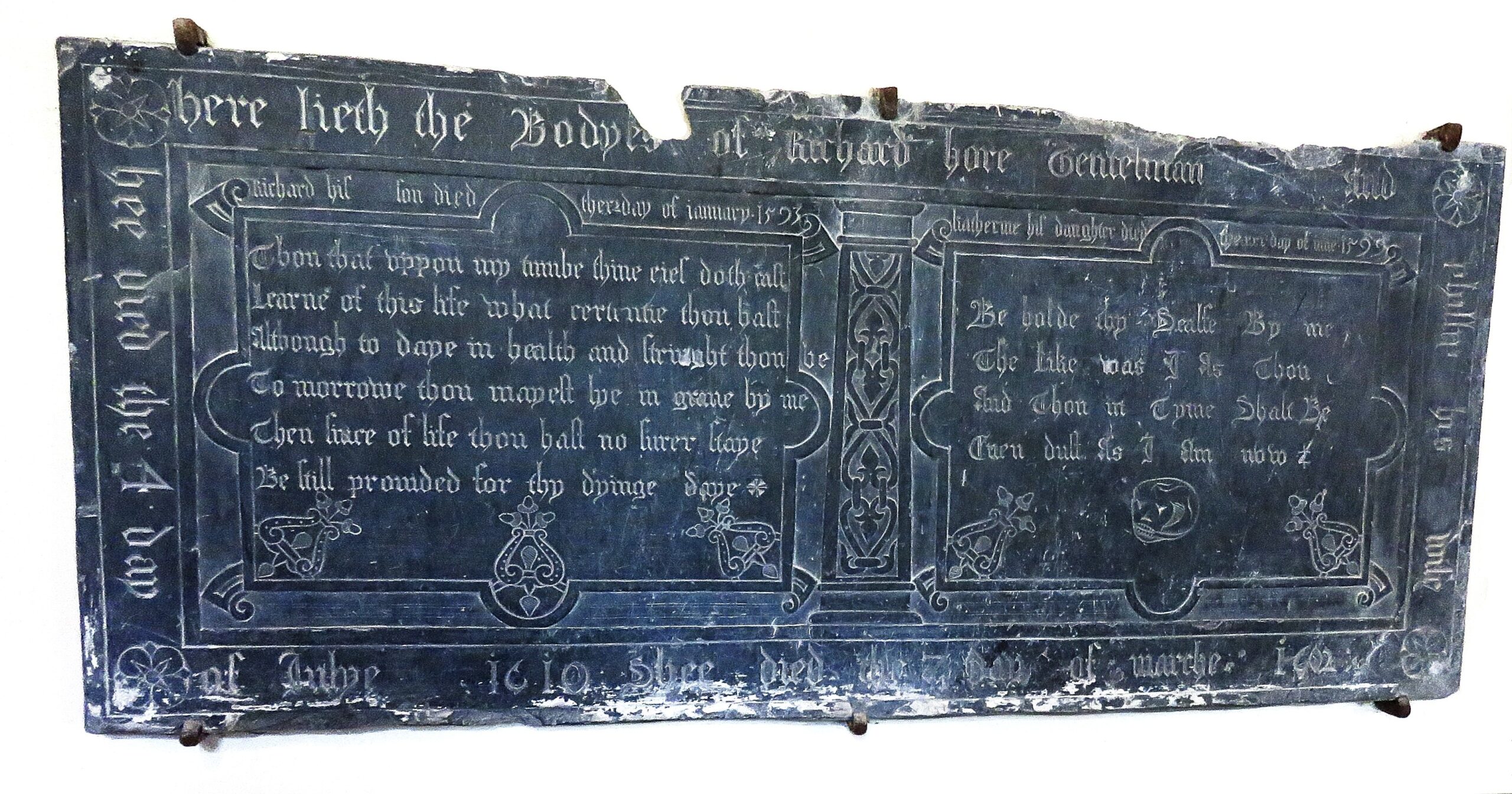
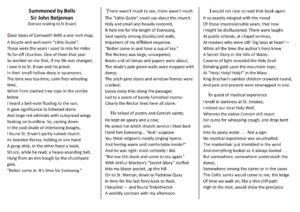
As with many churches throughout Cornwall reconstruction took place during the Victorian Period. At St Ervan this was extensive and between 1887 and 1889 all the roofs were rebuilt and the top of the tower removed using explosives. Earlier 19th century photographs show the tower then fifteen metres high and having battlements. There was evidently some structural issues to have caused this somewhat exceptional demolition of the upper tower. The tower was eventually rebuilt as seen today in 1956 but it was in its ruinous state that it was remembered and featured in Sir John Betjamen’s blank verse autobiography ‘Summoned by Bells.’ It now stands at less than half its original height at just seven metres. There remain some early parts of the church including a late 15th century corbel set into the east wall of the north transept and a late 12th or early 13th century octagonal font. For those who enjoy looking at memorial monuments St Ervan has some of great interest dating from the mid-17th century. These carved slate monuments have been preserved within the church along with the original bell mentioned by Sir John Betjamen.
Summoned by Bells by Sir John Betjeman (Extract relating to St Ervan) Download printable PDF: Click HERE
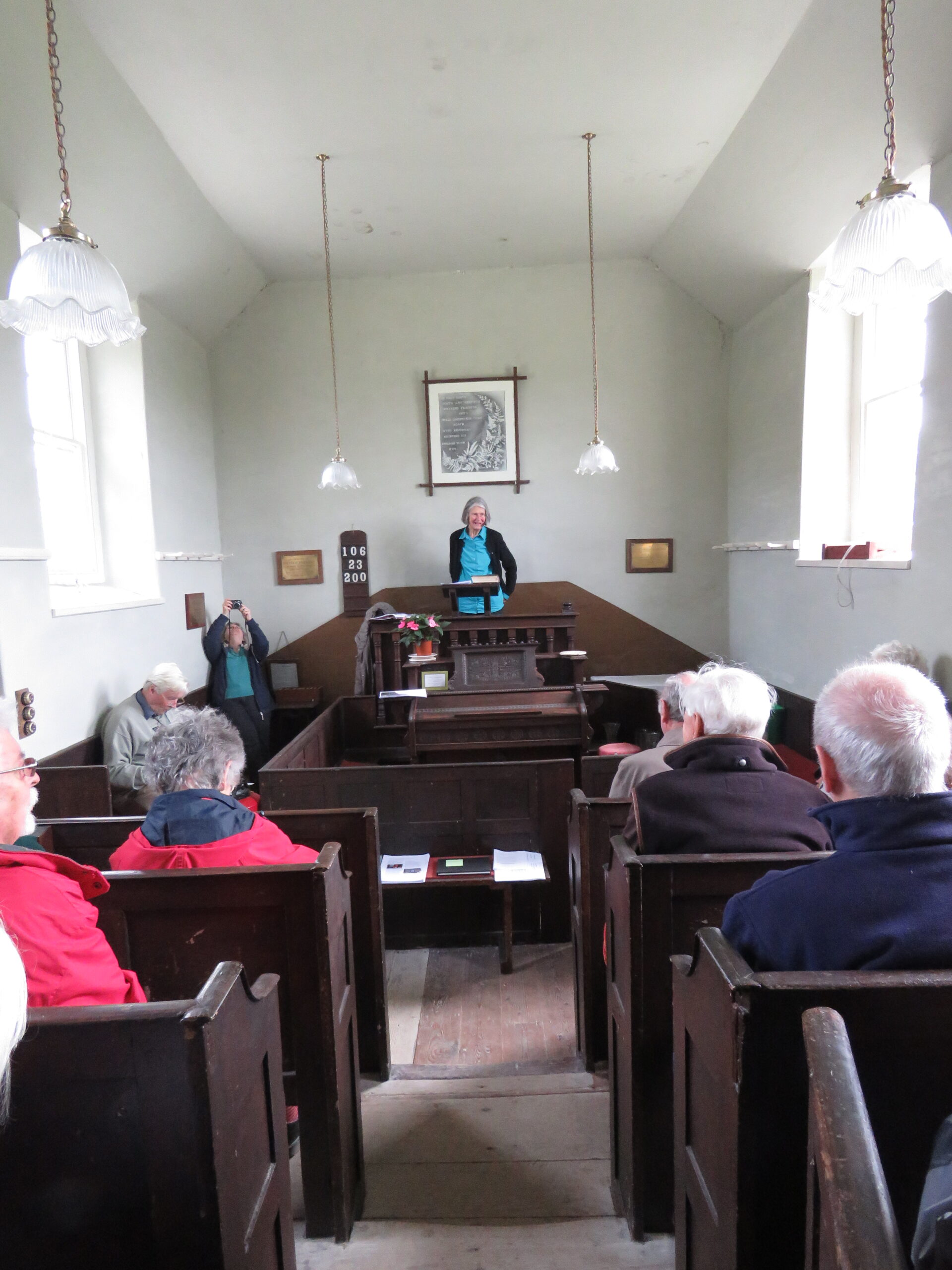
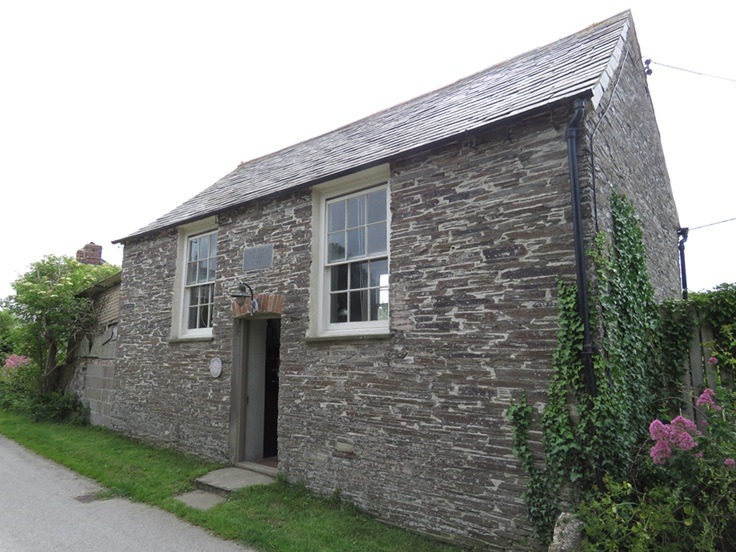
The hamlet of Penrose has a mid-19th century Methodist chapel now redundant but protected by the Historic Chapels Trust and Grade II* listed. It was local stonemasons James and William Tippett who built the chapel following the laying of the foundation stone in 1861. Although initially a Bible Christian chapel it later became Methodist following the merger of the various non-conformist denominations within the Methodist community. Successful in its early days it like many others saw decline in congregation numbers and closed in 1998. The National Heritage List says of Penrose Chapel that the chapel ‘survives as the most complete early plan arrangement of its date’. Historic England writes ‘It is an exceptionally rare survival of a small vernacular chapel with complete original interior fittings.’ Moira Tangue had connections with this small chapel and gave a talk at the time the Cornwall Association of Local Historians visited in 2017. She had compiled a small book of recollections at the time the chapel closed.
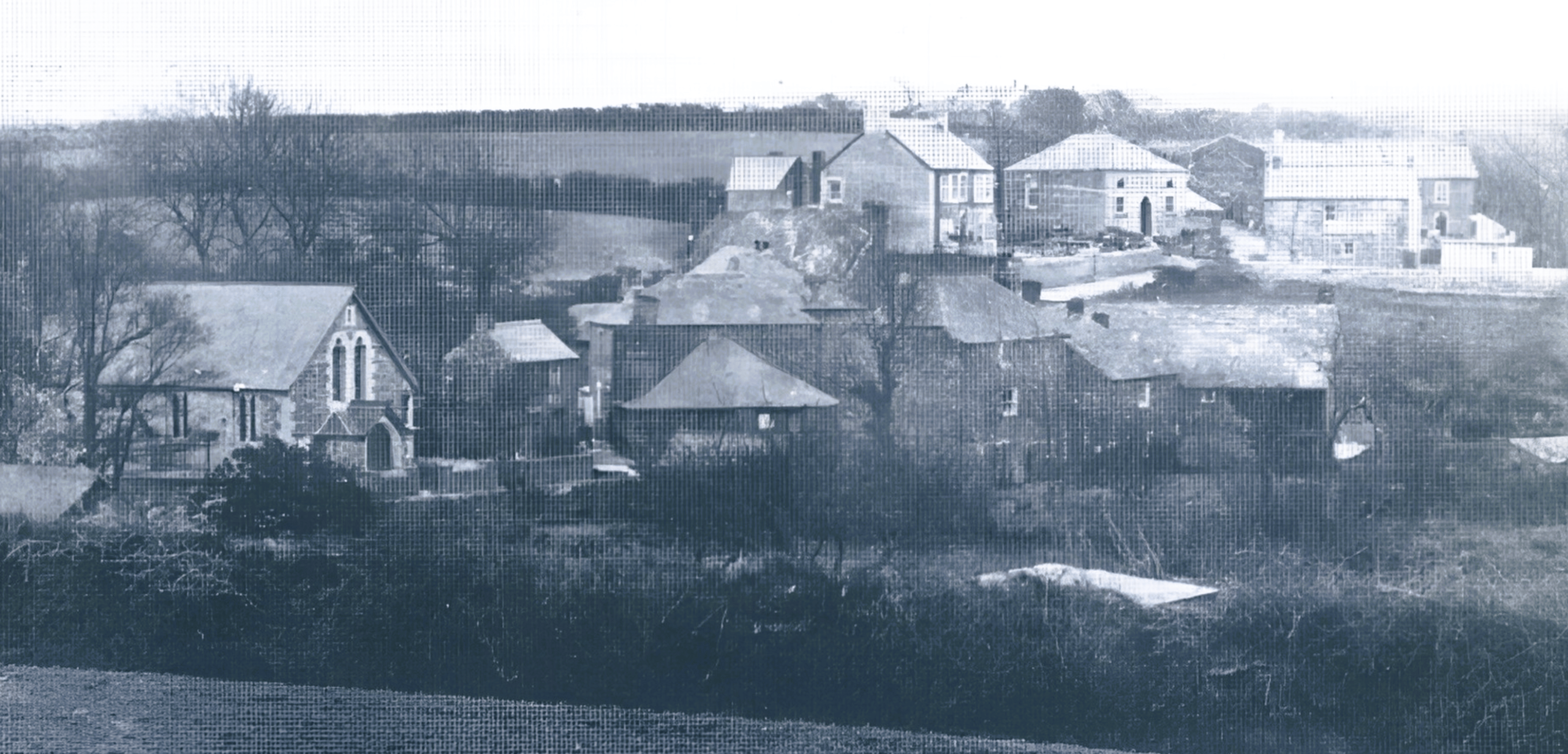
Rumford although a small community and not far from St Ervan churchtown had a Wesleyan chapel as early as 1830. This was a period when a number of non-conformist religious groups were forming hence the construction of Bible Christian chapels as well as Wesleyan. A number of Bible Christian folk built a separate chapel at Rumford in 1844. Later the amalgamation of these groups in 1907 led to the Wesleyan chapel in Rumford being enlarged to take the combined congregations, including the Bible Christians. The 1844 Bible Christian chapel was rebuilt in 1888 and later became the Sunday School for the combined Methodist group in Rumford. Happily, although no longer used for worship, these two former chapels survive having been converted to residential housing. It seems the Anglican church was under a lot of pressure in St Ervan parish during the 19th century from non-conformist groups. There are a number of other listed historic buildings such as Rumford House, which including the front garden area, wall and gate piers is Grade II listed and dates from the 1830’s.
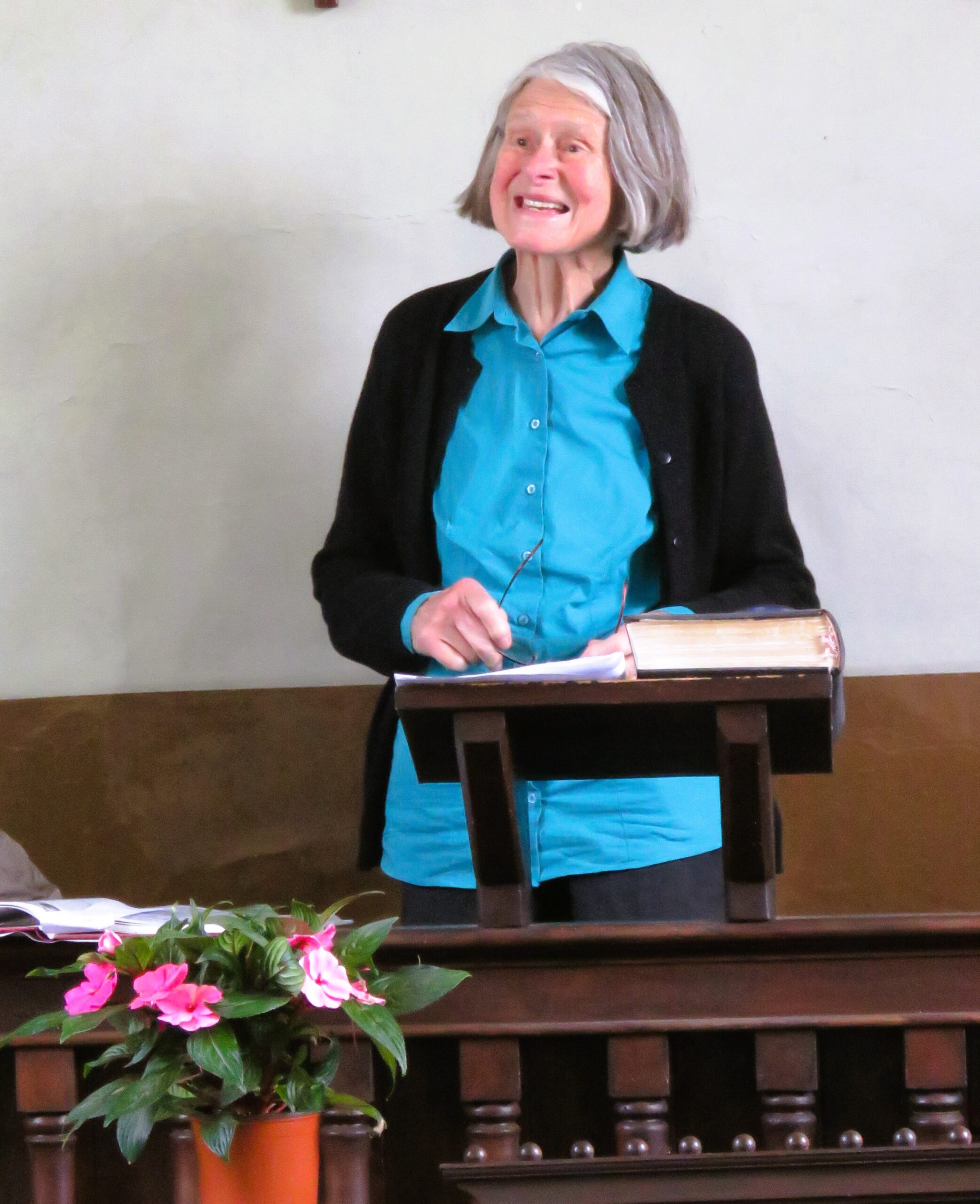
From my visits to St Ervan I can understand why people visit this scattered parish with its population of less than five hundred people. There are some lovely walks and of course there is the strange little church with its interesting slate memorials. This brief article provides just a glimpse of St Ervan. Thankfully so much more of its history has been thoroughly researched and recorded by Moira Tangye, although anyone wanting a copy of her book would be fortunate to find one for sale these days. A longer biographical obituary for Moira will be included on the Newquay Museum Group website in due course.
Heritage Column
Heritage in the News online links: