Ertach Kernow - Aspects of St Mary’s Aisle at Truro Cathedral
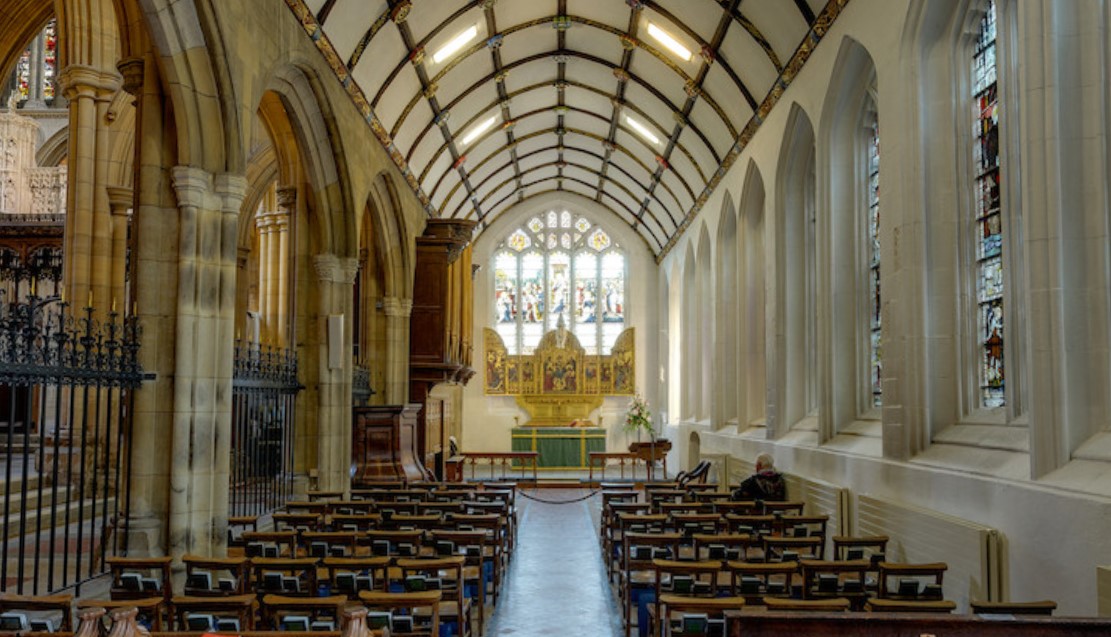
Truro Cathedral's St Mary's Aisle's history may not be well-known. Over the Christmas period many Cornish residents will no doubt visit Truro for shopping, entertainment or attended a service at Truro Cathedral. Unlike many cities throughout Britain, Truro’s cathedral is not overly historic only begun in 1880 and completed in 1910. What makes Truro Cathedral interesting is that it was built on the site of the historic St Mary’s Church and incorporated part of that building within its construction.
Truro became a city before construction of the cathedral was begun. The Diocese of Truro formed on 15th December 1876 covered Cornwall, the Isles of Scilly and two English parishes of Virginstow and St Giles on the Heath in Devon. At that time it had no cathedral just an historic church on a site first consecrated in 1259. This early church was a chapel linked to a mother church in either Kea or Kenwyn, there are differing views on which one.
The consecration was during a tour of the Diocese of Exeter by the Bishop of Exeter Walter Bronescombe. He dedicated Kenwyn Church on 27th September, the nearby chapel of St Mary’s on 28th and the church of the Dominican Friars in Truro the following day. Some future date saw alterations or enlargements to St Mary’s Chapel as there was a dedication of the High Altar in November 1328 by Bishop John de Grandisson of Exeter. The 14th century saw the population of Cornwall devastated by the Black Death. Like many communities this saw Truro falling on hard times leading to St Mary’s Church becoming dilapidated. The importance of Truro as a port from which pilgrims set out to Santiago de Compostela to visit the shrine of St James was illustrated in 1400. Pope Boniface IX granted an indulgence to penitents who gave alms for the maintenance and repair to the church. This church like many throughout Cornwall saw it being rebuilt at the start of the 16th century.
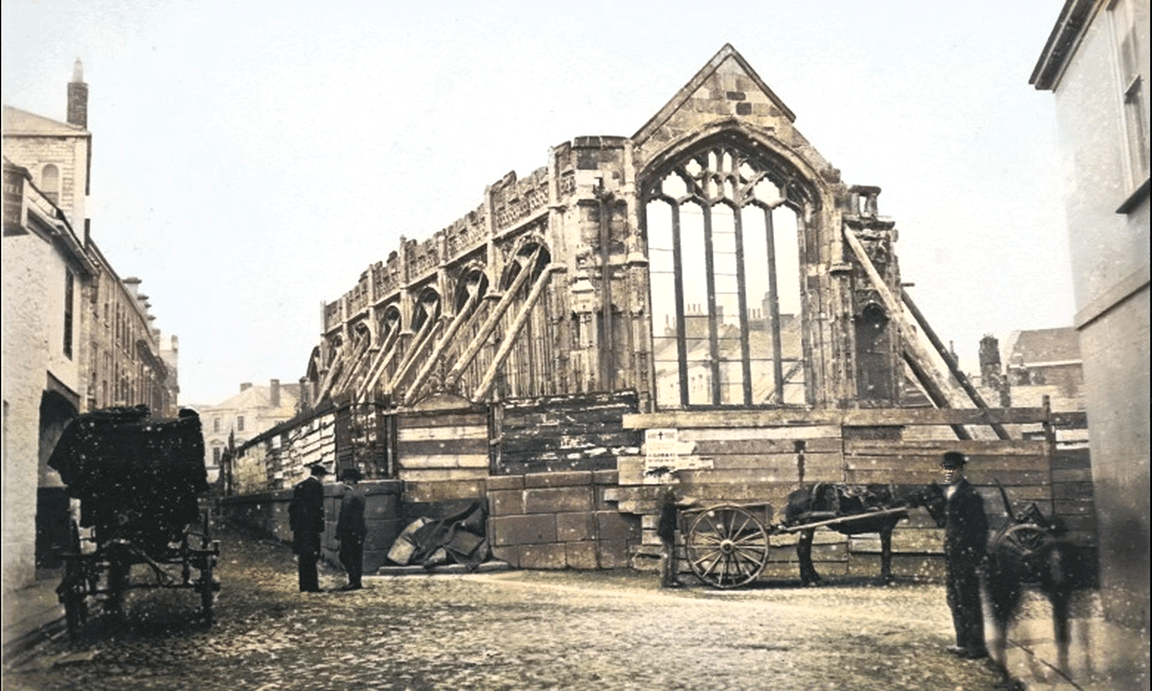
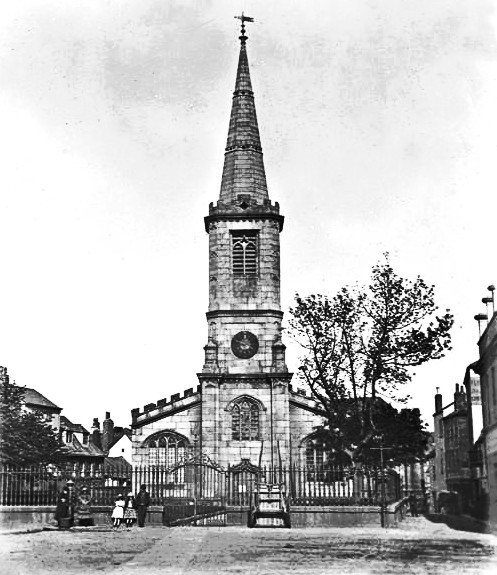
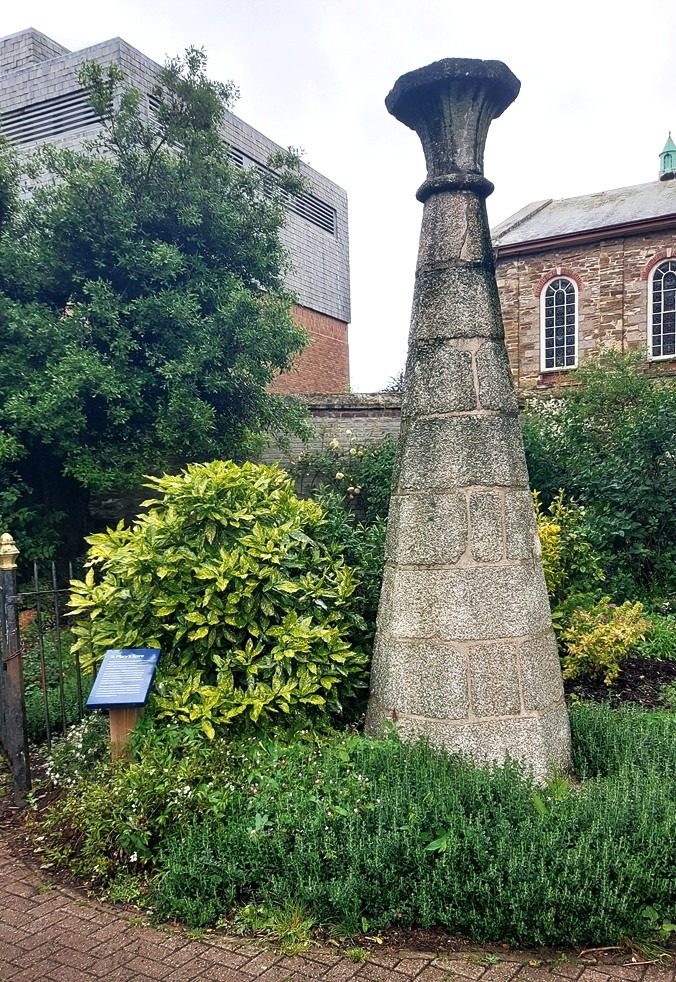
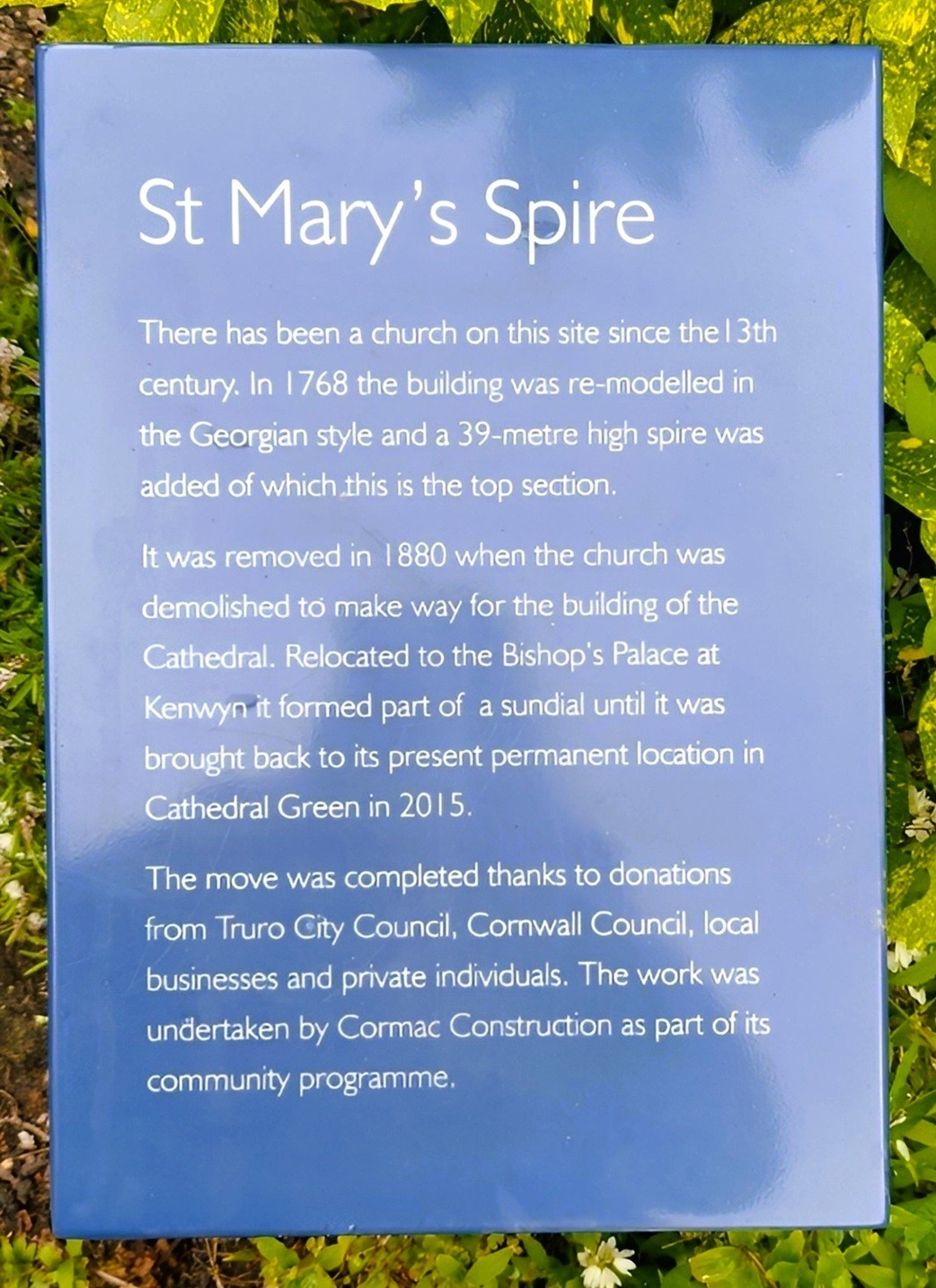
A deed dated 6th May 1504 authorised the burgesses of Truro to raise stone for the rebuilding of parish church and tower. The stone was to come from the quarry of Sir John Arundell at Truro Vean. Although said to have been completed in 1518 it seems that it did not originally include a tower as set out in the 1504 deed. However, a bell is mentioned in 1620 and again in 1663. Cornish historian William Hals states in his history of Cornwall in 1736 that ‘there was no tower or steeple of bells’, perhaps this is down to interpretation. In Andrew Brices 1759 ‘Grand Gazetteer’ he says of St Mary’s ‘this good old gothic edifice wants a handsome tower, the pitiful little thing which contains a single bell looking rather like a pigeon-house than a church tower’. It was also described as a turret with a cupola on it rising just five feet above the church roof with a small pyramidal cap. In 1768 a more substantial tower was constructed with a thirty-nine-metre spire, as seen in images prior to the demolition of the church in 1880. The top part of that spire can be seen in Cathedral Green to the rear of the cathedral.
The best known of the earlier rectors of St Mary’s was George Phippen (Fitzpen) who left a quantity of information. He became Lecturer of the church of Truro in 1619 and Rector in 1624. One important document dated 1630 and signed by him was ‘A Terrier of the Glebe-land belonging to the Rectorie of Truoe in the County of Cornwall’. The Glebe Terrier were introduced in 1571 when listings of holdings of every parish was required. Where some parishes had extensive land holdings, Truro’s were rather pitiful, only being the ruins of a rectory and a small plot of land. None are recorded in the Calendar of Cornish Glebe Terriers between 1673 and 1735, but again in 1821 with the buildings repaired.
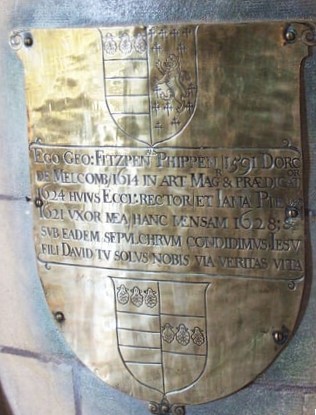
There is a shield on the wall in St Mary’s Aisle, originally fixed to a stone covering a vault below the church’s high alter, built for the burial of Reverend Phippen. Ultimately in 1651 he was buried in the churchyard at Lamorran where he was also rector.
George was also instrumental in creating a memorial to his brother Owen who was captured by north African Barbary Pirates and enslaved for seven years. He escaped in what is an exciting story and memorialised in slate tablets once placed to the side of the alter at St Mary’s. At some point after 1880 these were relocated to the crypt of the cathedral where they still are, virtually impossible to see. When I located them in 2018 they were hidden behind a shelving unit. Owen was buried in Truro following his death at Lamorran in 1636.
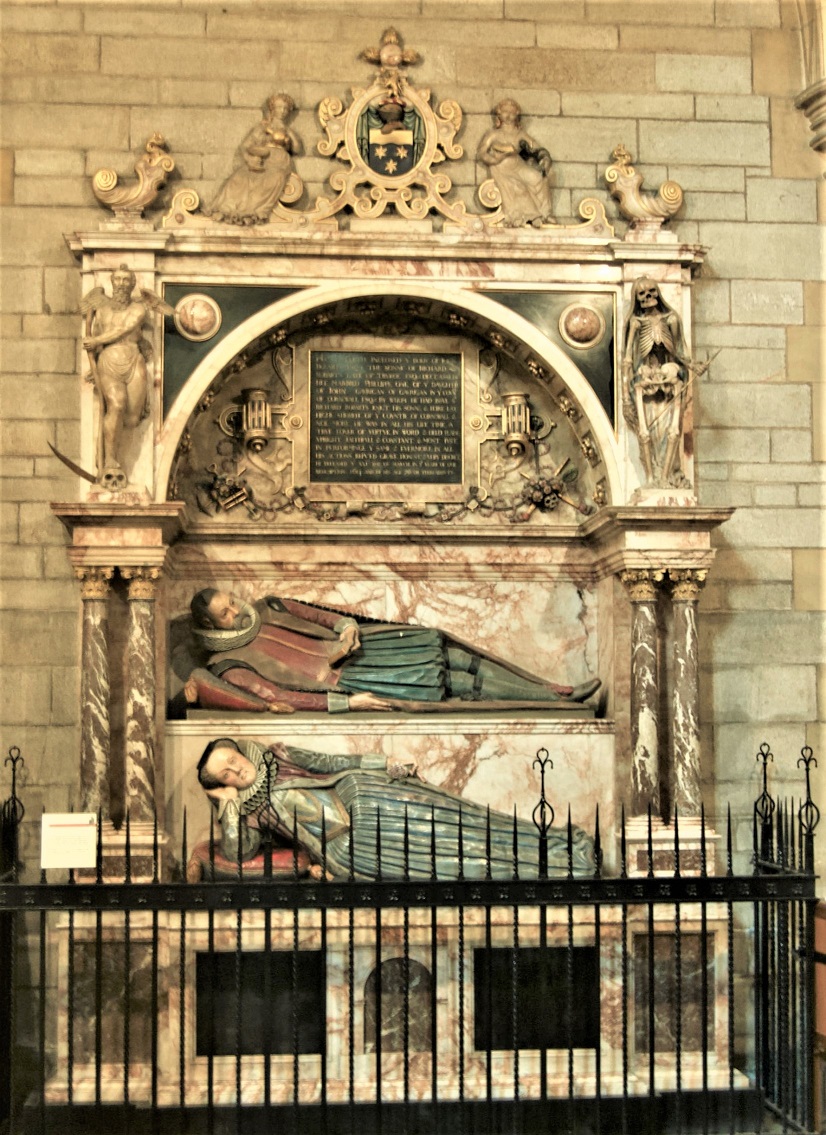
Within the cathedral there are monumental remains from the former medieval church, moved when the church was mostly demolished. There is the outstanding late medieval monument to John and Philippa Robartes ancestors of the Robarts of Lanhydrock. This memorial made of alabaster and marble now stands in the north transept of the cathedral, previously standing on the north side of the chancel of St Mary’s church. Repairs to damage to this monument was first undertaken in the late 18th century. Philippa died in 1603 and John in 1614 living lately in ‘The Great House’ roughly where HSBC Bank now stands in Boscawen Street. It was their son Richard who purchased Lanhydrock House and was later made a baronet and then becoming Baron Roberts of Truro. Two statues which relate to the Robartes family are preserved in St Mary’s aisle close to the 19th century font at the entrance.
Many travellers to Cornwall mention Truro and its church. Celia Fiennes visiting in 1698 says ‘Ye town is built of stone-a good pretty Church built all stone and Carv'd on ye outside, it stands in ye middle of ye town.’ Later in the mid-eighteenth century the Reverend Richard Pocock on his travels through Cornwall made note of St Mary’s. He wrote ‘the church is a most elegant building of around Henry VIII time, with some old painted glass in it and curious sculptures on the south and east fronts’. The mention of old glass by Pocock around 1750 was about the time a ‘modernisation’ of St Mary’s took place. This included much of the old medieval glass being replaced, but subsequent to the Reverend Pocock’s visit. The churchyard was lowered and the monuments and remains of persons buried there removed.
Although this would have been swept away when the cathedral was built it’s regrettable many interesting potential artefacts may have been lost. Like later Victorian church restorers and sadly sometimes today little value was and is placed on many items of historical interest.
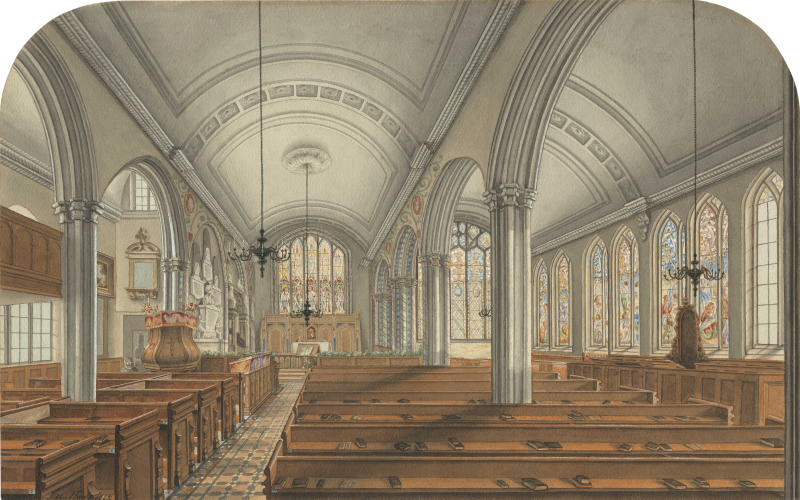

The stained glass in St Mary’s Aisle date from across a number of centuries. Windows known as The William Warrington windows were installed around 1840. Earlier windows including those from the 1750’s were allowed to deteriorate or replaced. When the church was demolished in 1880 the windows were removed and preserved. Those from the chancel were installed in St Paul’s Church Chacewater in 1892, the remainder reinserted within the east and south walls of St Mary’s Aisle. There are a number of donor memorial window and the whole aisle is light airy and most attractive.
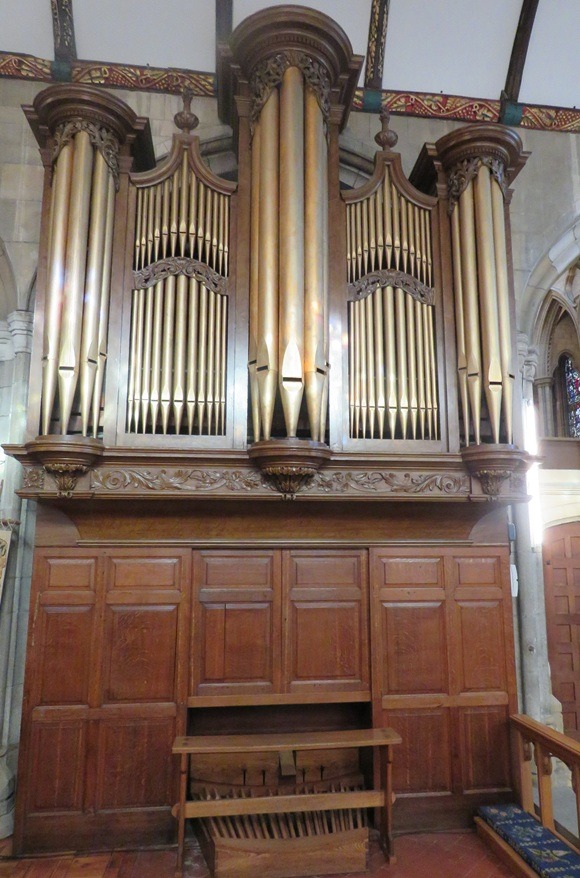
When visiting St Mary’s Aisle this past week I had the pleasure of hearing the organ being played by the young man I was meeting for a filming project. This organ built in 1750 by respected English organ builder John Byfield is amongst the oldest and most historic pipe organs in Cornwall. Whilst not having the awesome power of the more modern ‘Father Willis’ organ dating from 1887 it is a wonderful working historic object. There are many other remnants throughout the cathedral and St Mary’s Aisle from the medieval church. On construction of the cathedral there were some remains found relating to the early chapel, although no foundations which would have provided information on its size. There are very many memorials scattered throughout the cathedral, some dating back prior to its construction. It’s quite easy to miss some of these and no doubt I did as I wandered around or being unaware of their age and significance.
There is for example a small statue of St Nicholas to the left of the entrance to St Mary’s Aisle, with a handwritten description. This tells how it came from Brittany and carved by an unknown sculptor probably in the 14th century. At the saints feet are representations of three small boys who according to legend he restored to life.
I must mention that Truro Cathedral is the central hub for the Mothers' Union in the Diocese of Truro. This organisation dates back to 1876, prior to the construction of the cathedral. I had a lovely chat to two charming ladies who told me about their group which works to improve community life worldwide.
We should thank cathedral architect F L Pearson for saving St Mary’s Aisle over Bishop Bensons desire for a completely new building. Might I suggest if visiting Truro and you have time to call into the cathedral to take a look at St Mary’s Aisle. This remains the parish church for Truro as well as being part of Cornwall’s national cathedral. With so many hidden and less seen historical treasures, as I’ve mentioned many times before, it would be wonderful to see the cathedral authorities create a dedicated museum area. This would create even more interest within the cathedral showing information and highlighting its many assets.
St Mary's Church Spire
On 28th May, 1765, it was agreed that £500 be contributed by the Corporation towards the cost of a steeple 'to be erected and built near and adjoining to the church of this Borough,' according to the plan of the architect, Mr. Thomas Edwards. On 12th September, 1766, it was decided' that a further £280 be given for the same object, Mr. Edwards being the architect and 'Mr. John Goland or some other fit and proper person' to be the builder. On 3rd March, 1768, it was agreed 'that a steeple will be more ornamental at the west end of the church of the said Borough than a tower' and that Mr. Bland should be the builder. " It appears that the steeple was finished in 1769, from an entry in the Churchwardens' Book, dated August 8th Gave the men when they finished the steeple two shillings and six pence. 'The height of the steeple from the pavement is about 125 feet.'
St Mary's Clock
The Corporation had ordered on 11th May, I770, ‘that a large and handsome Clock be erected in the Tower adjoining to the Church of the said Borough at the expense of the Corporation.’ The clock was made by Mr. Richard Wills. It is mentioned in 1838 as ‘an excellent clock, which has four dial-plates, shewing the hour of the day in every possible direction.’ One of the clock faces can be seen in the 1870 image of St Mary's Church.
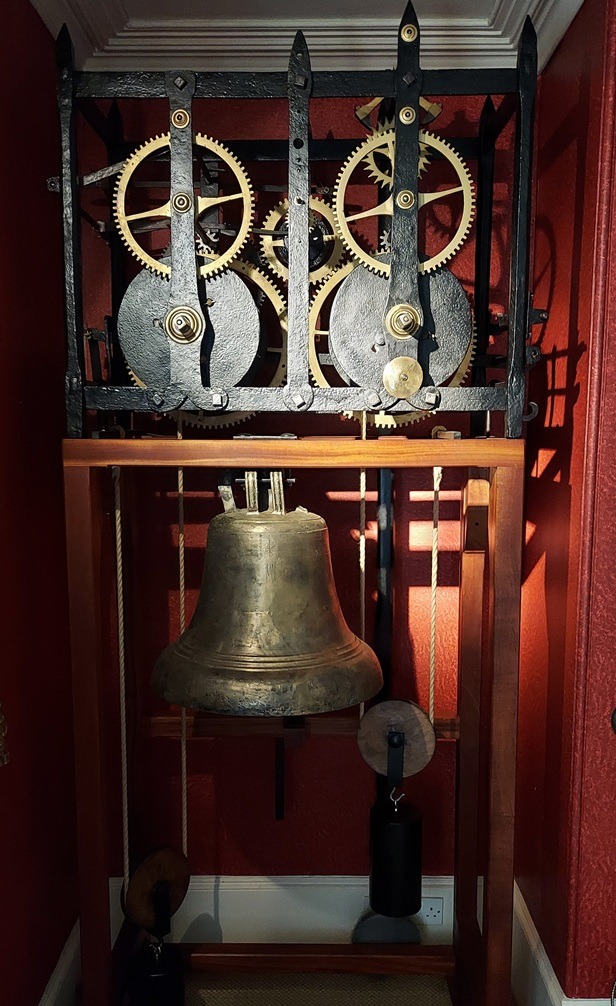
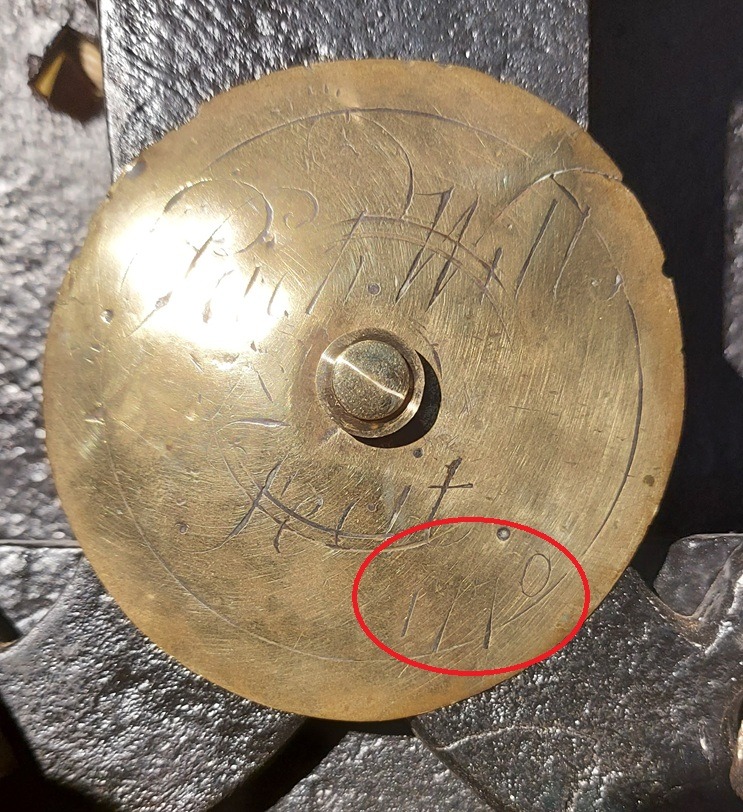
Here the date can be seen circled in red. The name of the maker Richard (Rich) Wills is also engraved above. The bell is not the original bell, but makes a fine sound when the clock chimes.
It really is wonderful that these historic clock workings have been recovered, restored and still situated in Cornwall.
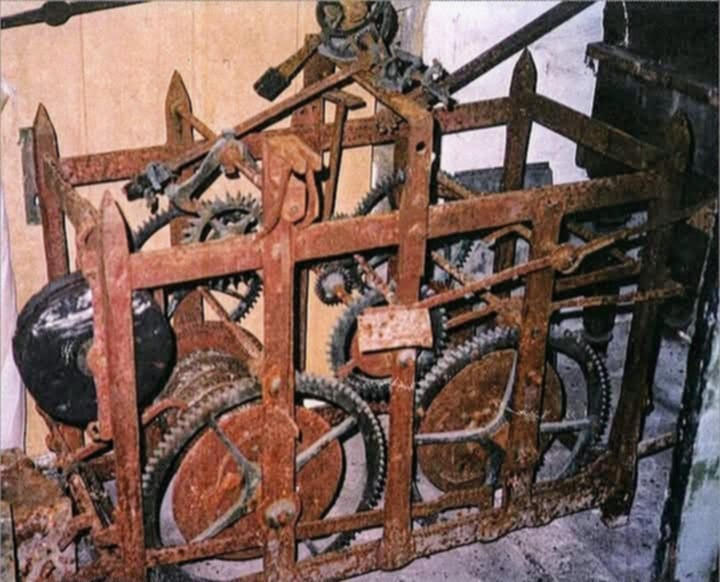
The clock was refurbished in 1887 for Queen Victoria's jubilee and it seems to have been taken out of commission about 1905 for additional work. Records show discussions held in 1915 to re-erect the clock faces, but wartime issues prevented this. In 1924 restoration of the clock was discussed but nothing decided. It appears to have been laid up in a workshop for many decades until a private person purchased it and refurbished it to a working condition.
Heritage Column